GLP-1 weight loss drugs work by mimicking a gut hormone that slows digestion and quiets appetite signals in the brain, and the evidence is clear that they outperform almost every prior weight-loss medication. Tirzepatide tends to produce the largest average weight loss, semaglutide carries the strongest heart-health track record, and both come with real gastrointestinal trade-offs and access hurdles that shape who actually sticks with treatment.
TL;DR:
- Tirzepatide offers the potential for around 20% weight loss, outperforming semaglutide’s typical 10-15%, with faster results within three months.
- Gastrointestinal side effects like nausea, vomiting, and constipation are common early and usually improve over time with gradual dose titration.
- Cost and insurance coverage heavily influence access, with diabetes indications more often covered than obesity treatments, and prescriptions require careful professional oversight.
- Important contraindications include a history of medullary thyroid carcinoma, MEN2, pregnancy, pancreatitis, or severe gastroparesis, requiring personalized medical evaluation.
- Supervised telehealth support significantly improves adherence and outcomes, as early side effects and dose adjustments are critical to long-term success.
Three molecules dominate this category, and knowing their names helps you make sense of what a prescription actually contains. Semaglutide, sold for weight management as a weekly injection, is a GLP-1 receptor agonist that also comes in a daily pill form. Tirzepatide is a dual agonist. It activates both GLP-1 and GIP receptors, a combination that appears to drive the larger average weight loss seen in trials. Liraglutide, an older daily injection, largely predates both and is prescribed less often now that weekly options exist.
The same active molecule sold for diabetes and for obesity often ships in different dose strengths and under different names, according to the National Academy of Medicine’s overview of GLP-1 facts. That distinction trips up a lot of people comparing prices or asking a pharmacist for a switch. Formulation matters too: an oral tablet requires fasting and strict timing rules that a weekly shot doesn’t, which is why some patients who struggle with pill routines do better on an injectable schedule.
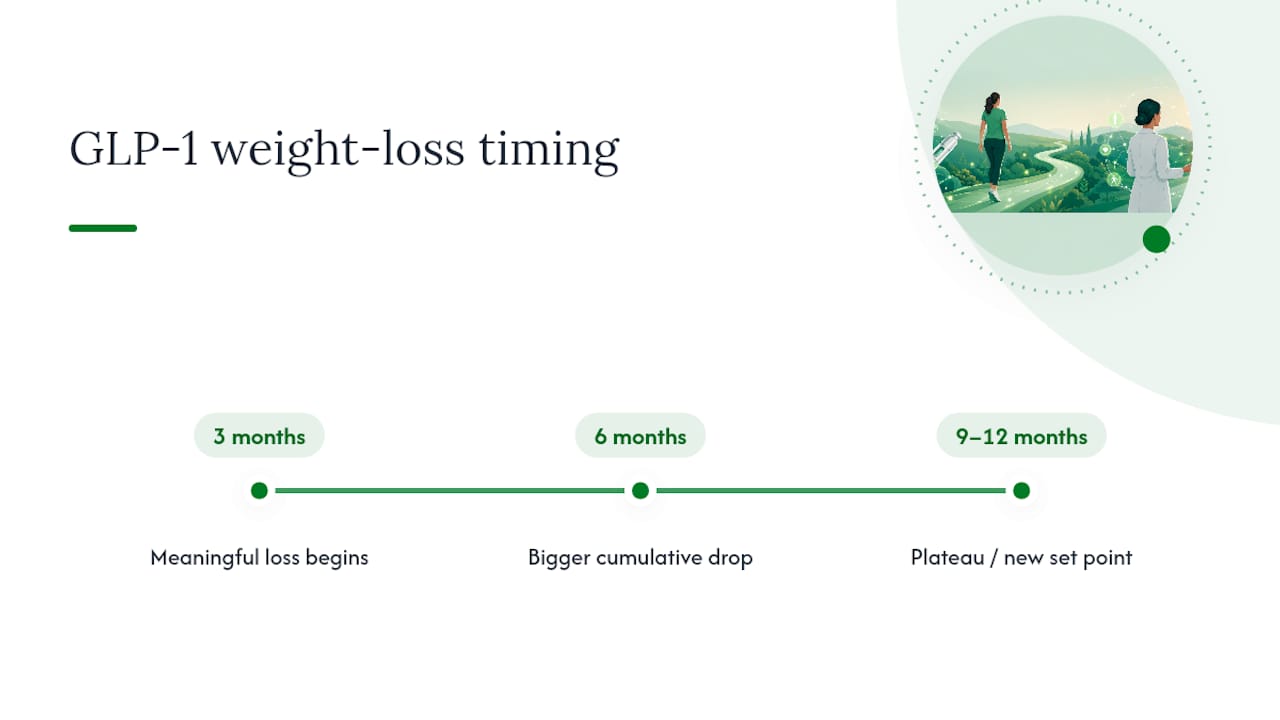
Trial data gives a fairly consistent picture, even though outcomes vary by drug, dose, and person. Semaglutide’s STEP trial program produced average weight loss in the 10% to 15% range at the highest approved dose, while tirzepatide’s SURMOUNT program pushed average losses up to about 20% at maximum doses, according to a review of GLP-1 outcomes published in PMC. Most of that drop happens in the first six months, with the rate of loss slowing noticeably as the body settles into a new set point around month nine to twelve.
By the numbers: A propensity-matched cohort of 41,222 adults found tirzepatide users were far more likely to hit major milestones than semaglutide users. The hazard ratio for reaching at least 15% weight loss was 3.24 in favor of tirzepatide, meaning tirzepatide patients cleared that threshold at more than three times the rate.
A few things explain the spread between trial numbers and what people report in real life, including factors such as real-world adherence, dose titration speed, genetics, baseline metabolic health, and diet quality.
The practical takeaway: expect meaningful loss by three months, a bigger cumulative drop by six, and a plateau developing somewhere between month nine and month twelve. Anyone chasing a specific number should compare notes with a prescriber rather than a headline statistic. For a deeper side-by-side, the semaglutide vs. tirzepatide comparison breaks down which trial results apply to which starting weight ranges.
Gastrointestinal symptoms are the price of entry for nearly everyone on a GLP-1 drug. Nausea, vomiting, constipation, and diarrhea show up early in treatment and tend to ease as the body adjusts, according to Stanford Medicine’s GLP-1 overview. That same overview notes that roughly half of adults who start a GLP-1 stop within a year, and side effects are one of the biggest reasons.
Pro Tip: Gradual titration is generally preferred to manage side effects effectively and support continued treatment adherence.
Rare but serious risks deserve real attention: pancreatitis, gallbladder disease, and a thyroid C-cell tumor signal seen in animal studies (not confirmed in humans, but taken seriously in labeling) all warrant contacting your care team immediately if symptoms like severe abdominal pain or jaundice appear. The Ozempic safety overview covers what to watch for in more detail.
A personal or family history of medullary thyroid carcinoma or Multiple Endocrine Neoplasia syndrome type 2 (MEN2) rules out GLP-1 therapy outright, and pregnancy is another firm exclusion. People with a history of pancreatitis or certain gastroparesis-related GI conditions need a careful individual conversation before starting.
Beyond exclusions, clinicians weigh cardiovascular risk, existing diabetes, and kidney function when picking an agent. Semaglutide’s SELECT trial gives it the strongest evidence for reducing major cardiac events, which matters for patients with established heart disease. None of this replaces an actual medical assessment. This is a starting point for the conversation, not a substitute for one.
Out-of-pocket costs for GLP-1 drugs run high, often several hundred dollars a month without coverage, and insurance behaves inconsistently depending on whether the prescription is coded for diabetes or for obesity. Coverage for weight-management indications lags behind diabetes coverage, and appeals or prior authorization are common hurdles, according to StatPearls’ review of obesity pharmacotherapy.
Access, not the drug’s effectiveness, ends up being the limiting factor for a lot of patients. That reality is exactly why a legitimate telehealth pathway that handles insurance verification matters as much as the prescription itself.
Most GLP-1 regimens start low and increase every four weeks to limit GI side effects, with a clinician checking in around each dose change to review tolerance and progress.
Pro Tip: Don’t wait until you’ve hit your goal weight to think about maintenance dosing. Ask your prescriber about a maintenance dose strategy before you taper off, not after the regain starts.
Picking between semaglutide and tirzepatide gets a lot of attention, but it’s the wrong first question for most people. The right first question is whether you have a clinician who will actually adjust your dose, catch a side effect early, and help you plan for what happens after you reach your target weight. The data backs this up indirectly: real-world outcomes consistently trail the numbers seen in controlled trials, and the gap is largely explained by adherence and follow-up, not biology.
That gap is where a lot of people fall through. Someone gets a prescription, struggles with nausea in week three, has no one to call, and quits. The drug didn’t fail. The support system did. AM Rx’s model of same-day video visits, ongoing provider check-ins, and direct prescription delivery is built around closing exactly that gap. Whichever agent you’re considering, talk it through with a clinician who can tailor the choice to your health history rather than a generic protocol.
— Bryan
A telehealth service can be a faster path to a real prescription than sitting on a waitlist for a primary care opening or navigating a specialty weight clinic’s intake process. Same-day video visits may allow you to talk to a licensed provider quickly, and prescriptions, when appropriate, can ship straight to your door with insurance handling built into the process.

The platform covers the full loop: same-day telehealth appointments, prescription evaluation, delivery, and support for questions that come up mid-treatment, whether that’s a side effect or a dosing question. Its GLP-1 prescription program is built specifically around the titration and monitoring cadence outlined above, not a one-time script and a goodbye.
If you’re weighing semaglutide against tirzepatide, or just want to know whether you qualify, start a consultation with AM Rx to get a clinician’s read on your specific situation.
Tirzepatide generally produces greater average weight loss than semaglutide, with trial averages approaching 20% versus 10% to 15%, but semaglutide has stronger evidence for reducing cardiovascular events. The better choice depends on whether maximum weight loss or proven heart-health benefit matters more for your situation.
People with a personal or family history of medullary thyroid carcinoma or MEN2, those who are pregnant, and anyone with a history of pancreatitis or severe gastroparesis should not take GLP-1 drugs without a thorough clinician evaluation first.
Out-of-pocket prices vary widely by drug, dose, and pharmacy, and no single agent is reliably cheapest across the board. A licensed telehealth provider can check manufacturer savings programs and coverage options rather than relying on unverified sellers.
Most people see noticeable loss within the first three months, with the steepest drop typically happening in this window before the rate slows toward month six and plateaus closer to month nine to twelve. Individual results vary based on dose, adherence, and starting weight.