Yes, same day telehealth is widely available now, and most platforms can connect you to a licensed clinician within minutes to a few hours. AM Rx offers same-day appointments through video visits with U.S.-licensed clinicians, plus prescription handling when treatment is warranted. Open the app or call now to join the queue and get seen today.
TL;DR:
- Most telehealth platforms can connect patients to licensed clinicians within minutes to a few hours for urgent but non-emergency issues.
- Common conditions treated the same day include minor infections, allergies, rashes, and routine medication refills, but serious symptoms still require in-person care.
- Prescriptions are generally available for antibiotics, topical treatments, and some medications like birth control, but controlled substances like stimulants are rarely prescribed remotely.
- Preparation, including symptom photos in daylight and a medication list, is essential to ensure a smooth virtual visit and quicker diagnosis.
- Urgent symptoms such as chest pain, major trauma, or severe difficulty breathing require immediate emergency evaluation rather than telehealth.
Booking usually happens through one of three channels: an instant virtual queue in an app, a message that escalates to video when a clinician reviews your symptoms, or a scheduled same-day slot you pick from a calendar. Hospital-affiliated services like Johns Hopkins OnDemand Virtual Care report short connection times for on-demand urgent care, often just minutes, with a clear path to escalate you to in-person treatment if your case needs it.
Once you’re in the queue, most platforms run a brief triage. A nurse or intake system asks about your symptoms, then places you in a virtual waiting room until a provider is free. Wait times vary by time of day and by provider, often ranging from a brief period to a longer wait. Evenings and Mondays tend to run busier everywhere.
Not every visit needs a camera. Some services handle simple refills or follow-ups through chat or phone, but video is typically required when a clinician needs to visually assess a rash, check your breathing, or confirm you match your medical history before prescribing anything.
Before your visit starts, gather a few things to speed up the encounter:
Regional systems such as Prisma Health list e-visits, scheduled video visits, and urgent-care video visits as distinct same-day options, and note that hours and availability shift by location.
Same-day virtual visits handle a narrower slice of medicine than an ER, but it’s a useful slice. Clinicians commonly manage:
Pro Tip: Take your symptom photos in natural daylight near a window. Rashes and swelling photographed under yellow indoor light almost always look worse or less clear than they actually are, which can slow down the clinician’s assessment.
Not everything belongs on a screen. A UTI treated through telehealth works well for classic symptoms in a healthy adult, but recurrent infections, fever, or flank pain usually need labs or an in-person exam. The same logic applies broadly: if a diagnosis depends on touch, listening with a stethoscope, or imaging, a same-day virtual visit is the wrong tool, and a good clinician will tell you that directly rather than guess.
Clinicians on same-day platforms can prescribe a real range of medications, but federal and state rules draw firm lines around certain drug classes.
Commonly prescribed through telehealth:
Generally restricted or unavailable through virtual-only visits:
If a clinician can’t prescribe what you’re asking for, a legitimate platform explains why and lays out next steps, whether that’s an in-person exam, specific lab tests, or a referral to a specialist. That transparency is a decent proxy for how trustworthy a service is; platforms that just say no without explanation aren’t doing their job.
Pricing varies more than most people expect. A single pay-per-visit consultation typically runs somewhere in the range most urgent-care telehealth services publish, while membership or subscription models spread the cost across the year and lower the price of each individual visit. Academic centers like NYU Langone note that charges vary by location and that an initial video visit may be required before certain services become available at all.
Before you book, check:
Pro Tip: If you’re paying with an HSA or FSA card, save the itemized receipt immediately. Reimbursement claims get rejected far more often over a missing place-of-service code than over the actual cost of the visit.
A little setup prevents most of the technical delays that eat into your appointment window.
Consent and privacy aren’t just paperwork. CVS Health’s accessibility guidance outlines the basic data protections patients should expect from any virtual care platform, and it’s worth confirming your provider’s credentials directly in the app before the visit starts.
Same-day telehealth is built for urgent but stable problems, not emergencies. Certain symptoms need 911 or an emergency department, full stop:
Prisma Health’s virtual care guidance is direct about this: serious symptoms require emergency evaluation, not a video call. Plenty of common complaints also need hands-on exams or imaging, like a suspected broken bone or abdominal pain severe enough to suggest appendicitis. A good telehealth clinician recognizes these limits fast and refers you out immediately rather than trying to manage something over video that needs a physical exam. If that happens, ask exactly where to go and what to bring, since a documented referral often speeds up your intake at urgent care or the ER.
The platform is designed to address the issue of getting a real diagnosis and treatment plan without waiting days for an opening. Visits run through video consultations with U.S.-licensed clinicians, and when treatment is appropriate, prescriptions can be delivered instead of requiring you to visit a pharmacy on your own.
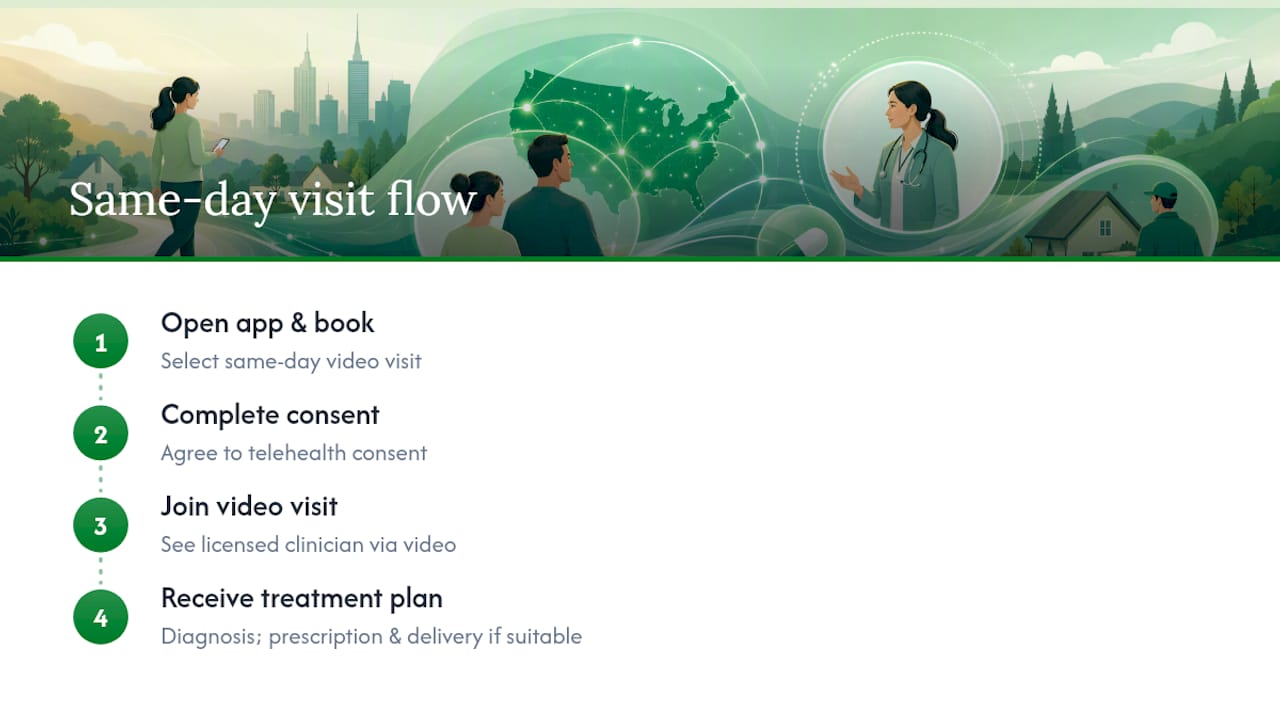
The flow is simple. You complete consent to telehealth, join a video visit, and walk away with either a prescription routed for delivery or a clear follow-up plan. For issues that go beyond a single urgent visit, AM Rx’s primary care service picks up ongoing management so you’re not starting from zero at your next appointment.
Before booking anywhere, confirm the clinician’s license is current and check real-time appointment availability directly in the platform. Transparency on both fronts is a fair test of any telehealth service, not just this one.
Waiting days for an urgent care slot can delay treatment of UTIs, rashes, or sinus infections. Some telehealth platforms offer same-day video visits with licensed clinicians, transparent pricing, and prescription delivery when appropriate.

It suits anyone who needs a real diagnosis today, not a callback next week, whether that’s a suspected UTI, a stubborn skin issue, a birth control refill, or a mental health check-in that can’t wait for a scheduled psychiatry slot. The visit flow stays the same across conditions: complete your consent to telehealth, join your video appointment, and get a treatment plan before you log off.
If you’re dealing with something that needs attention now, open the AM Rx app or site and book your same-day visit.
This article is general information, not a substitute for advice from a qualified doctor. Consult a qualified healthcare professional about your own circumstances before acting on anything here.
Yes. Most telehealth platforms, including hospital-affiliated services and direct-to-consumer providers, offer same-day video visits, often connecting you to a clinician within minutes to a few hours depending on demand.
In most uncomplicated cases, yes. A clinician can assess your symptoms over video and prescribe antibiotics when appropriate, though recurring infections or fever typically require in-person labs.
Yes, for uncomplicated infections like strep throat, sinusitis, and many UTIs, clinicians commonly prescribe short antibiotic courses after a virtual assessment.
Rarely for new patients. Controlled substances like stimulants face strict federal and state restrictions, and most platforms require an in-person evaluation before prescribing them.
Have your medication list, a brief symptom history, and clear photos of any visible symptoms ready, along with your pharmacy’s name and location in case a prescription needs to be sent.