Ozempic is reasonably safe for weight loss when prescribed by a licensed clinician who has evaluated your full medical history, but it carries real risks that demand ongoing monitoring. The drug is FDA-approved for type 2 diabetes, not weight loss. Wegovy, a higher-dose formulation of the same molecule (semaglutide), holds the FDA approval for chronic weight management. Using Ozempic off-label for weight loss is legal and common in the U.S., but it shifts the safety responsibility squarely onto the prescribing clinician and the patient’s follow-up habits.
Before anything else: if you’re experiencing severe abdominal pain, sudden vision changes, or signs of a severe allergic reaction while on semaglutide, stop the medication and seek emergency care immediately.
Pro Tip: Before your first appointment, write down your full medication list, any personal or family history of thyroid cancer, pancreatitis, or eating disorders, and your current weight and blood pressure. That 10-minute prep cuts your intake visit in half and gets you to a decision faster.
Ozempic is reasonably safe for weight loss under proper clinical supervision, but nearly half of users experience adverse effects, and long-term safety data for weight-loss indications are still accumulating.
| Point | Details |
|---|---|
| Off-label status matters | Ozempic is FDA-approved for diabetes; weight-loss use is off-label and requires informed consent and monitoring. |
| Side effects are common | Approximately 48.6% of trial participants reported adverse effects; nausea and vomiting led at 36.6%. |
| Serious risks are rare but real | Pancreatitis, gallbladder disease, and thyroid signals require screening before starting and monitoring throughout. |
| Stopping usually means regaining | Weight commonly returns after discontinuation; many clinicians treat obesity as a chronic condition needing ongoing therapy. |
| AM Rx provides supervised care | AM Rx offers telehealth evaluation, lab requisitions, and follow-up monitoring for patients considering semaglutide. |
Semaglutide belongs to a class of drugs called GLP-1 receptor agonists (glucagon-like peptide-1). GLP-1 is a hormone your gut releases after eating. It signals your pancreas to release insulin, tells your brain you’re full, and slows gastric emptying so food moves through your stomach more gradually. Semaglutide mimics that signal at a sustained level, which reduces appetite and calorie intake over time.
The key distinction between Ozempic and Wegovy is dose and indication. Ozempic tops out at 2 mg weekly and is labeled for blood sugar control in type 2 diabetes. Wegovy reaches 2.4 mg weekly and is specifically studied and labeled for weight management. As the Cleveland Clinic explains, prescribing Ozempic for weight loss is off-label use, which means the FDA has not reviewed that specific application. Clinicians can still prescribe it legally, but the safety labeling, insurance coverage, and monitoring expectations are built around the diabetes indication.
Off-label means a drug is used for a purpose, population, or dose not listed in its FDA-approved label. It is not illegal or inherently unsafe, but it does mean less formal regulatory guidance for that specific use.
Quick glossary for the rest of this article:
| Feature | Ozempic | Wegovy |
|---|---|---|
| Approved indication | Type 2 diabetes | Chronic weight management |
| Max weekly dose | 2 mg | 2.4 mg |
| Use for weight loss | Off-label | On-label |
| Insurance coverage for weight loss | Usually denied | More likely covered |
| Titration schedule | 4-week intervals | 4-week intervals up to 2.4 mg |
Nearly half of people taking semaglutide experience at least one adverse effect. U.S. clinical trial data show that approximately 48.6% of participants reported an adverse event, with nausea and vomiting accounting for the largest share at 36.6%.
Most of these effects are dose-dependent and peak during the titration phase. They typically improve within a few weeks once your body adjusts to a stable dose.
Nearly 1 in 2 people taking semaglutide in U.S. trials reported at least one adverse effect, with GI symptoms by far the most common. Source: University of Queensland School of Public Health, citing U.S. trial data.
Practical ways to reduce GI side effects:
Serious adverse events are uncommon but not theoretical. Clinical trials and postmarketing surveillance have identified several low-probability, high-consequence risks that every patient should understand before starting semaglutide.
Pancreatitis was observed in a small percentage of trial participants. The signal is real enough that the FDA requires a warning in the labeling. Symptoms include severe, persistent pain in the upper abdomen that may radiate to the back, often accompanied by nausea and vomiting.
Rapid weight loss itself increases gallstone risk, so semaglutide adds to a pre-existing biological tendency in people losing weight quickly.
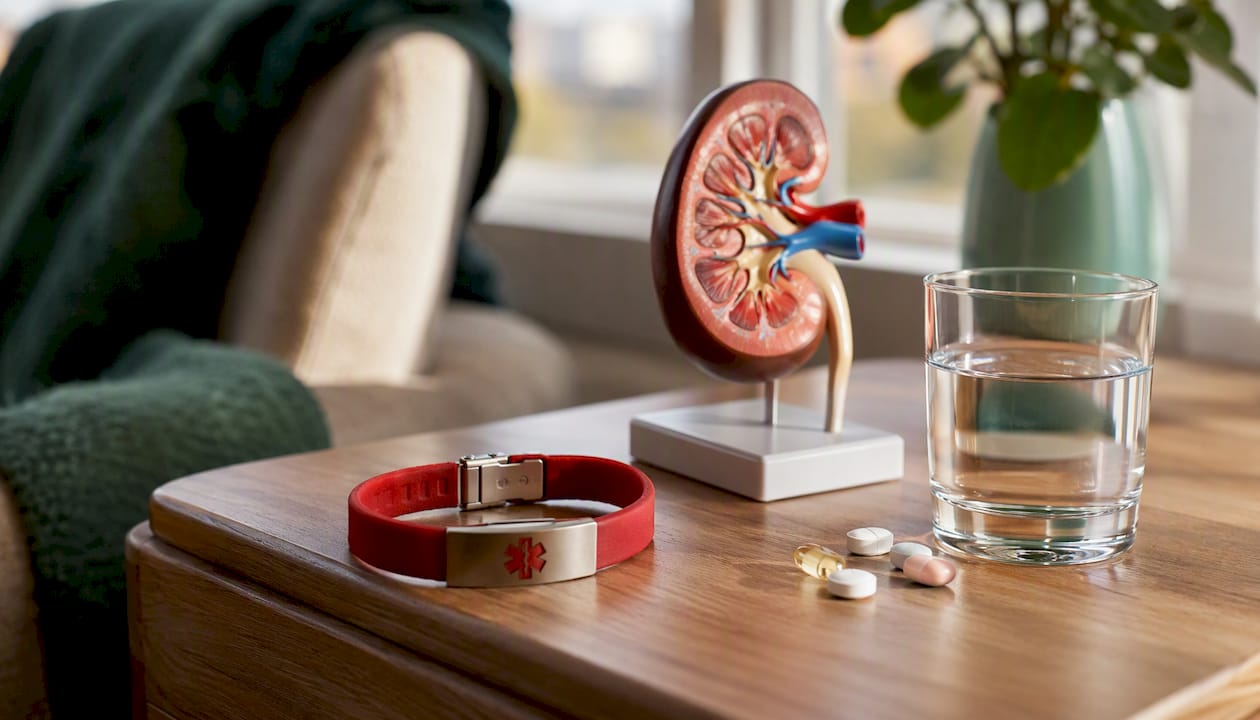
Kidney injury has been reported, largely as a secondary consequence of severe dehydration from vomiting or diarrhea. Patients with pre-existing kidney disease face higher risk.
Thyroid tumor signal: Animal studies showed a dose-dependent increase in thyroid C-cell tumors with semaglutide. Whether this translates to humans is not confirmed, but the FDA requires a boxed warning. Anyone with a personal or family history of medullary thyroid carcinoma (MTC) or Multiple Endocrine Neoplasia type 2 (MEN2) should not take semaglutide.
Gastroparesis-like presentations: Peer-reviewed case series have identified rare but serious gastric-motility problems, including gastroparesis-like symptoms, in patients on GLP-1 therapy. Severe nausea, vomiting, and bloating that persist well past the titration phase warrant evaluation.
Diabetic retinopathy worsening: Rapid blood sugar improvement in people with pre-existing retinopathy can paradoxically worsen eye disease in the short term.
Red-flag symptoms requiring urgent care: severe or worsening abdominal pain; sudden vision changes; swelling of the face, lips, or throat; signs of dehydration (no urination, extreme dizziness); yellowing of the skin or eyes. Stop the medication and call 911 or go to an emergency room if these occur.
The connection between GLP-1 medications and psychiatric effects is an active area of monitoring, not a settled science. Surveillance databases logged 481 psychiatric adverse events associated with semaglutide-class drugs between January 2021 and May 2023, including reports of depression, anxiety, and suicidal ideation. Passive reporting systems like these cannot prove causation. People with obesity already carry elevated rates of depression and anxiety, which complicates any signal.
That said, the FDA has flagged psychiatric events for ongoing monitoring across GLP-1 drugs. Clinicians should screen before prescribing, not after a crisis.
Screening questions a clinician should ask before starting semaglutide:
Appetite suppression is the drug’s mechanism, and for someone with a restrictive eating history, that suppression can reinforce dangerous patterns. Clinicians should monitor weight loss pace, protein intake, and mood at every follow-up, not just blood sugar and body weight.
Pro Tip: If you’re seeing a telehealth provider, complete a PHQ-9 (depression) and GAD-7 (anxiety) screening before your first visit and share the results. Most telehealth platforms can send these digitally. A provider who doesn’t ask about mental health before prescribing a powerful appetite suppressant is skipping a critical step.
Some contraindications are absolute. Others require specialist input before proceeding. Knowing where you fall before your appointment saves time and protects your safety.
Absolute contraindications:
Conditions requiring extra caution or specialist input:
Drug interactions to watch:
Pregnancy and breastfeeding advisory: Stop semaglutide at least two months before a planned pregnancy. The drug’s long half-life means it stays in your system for weeks after the last dose. There is no established safety data for breastfeeding; most clinicians advise against use while nursing.
Ozempic’s FDA approval covers type 2 diabetes management. Wegovy’s covers chronic weight management in adults with a BMI of 30 or higher, or 27 or higher with at least one weight-related condition (hypertension, type 2 diabetes, or dyslipidemia). That distinction matters for safety labeling, insurance, and what monitoring your clinician is expected to provide.
Off-label prescribing is legal in the U.S. and widely practiced. A physician can prescribe Ozempic for weight loss after evaluating your history and obtaining informed consent. The practical consequence: insurance plans frequently deny coverage for off-label use, leaving patients with significant out-of-pocket costs. Insurance pathways for semaglutide for weight management remain complex and inconsistent across plans.
The more serious regulatory concern is the market for compounded and unapproved GLP-1 products. The FDA has explicitly warned that unapproved or compounded versions of GLP-1 drugs have not been reviewed for safety, effectiveness, or quality, and they pose significant safety risks. These products are sold through online storefronts, sometimes without a real prescription, and their actual semaglutide content, sterility, and dosing accuracy are unverified.
Pro Tip: To verify a legitimate semaglutide prescription, check that the medication has an NDC (National Drug Code) on the label, comes from a pharmacy accredited by NABP (National Association of Boards of Pharmacy), and matches the exact brand name (Ozempic or Wegovy) with Novo Nordisk’s labeling. If the packaging looks different, the price is dramatically lower than the brand price, or the pharmacy is operating outside the U.S., treat it as a red flag.
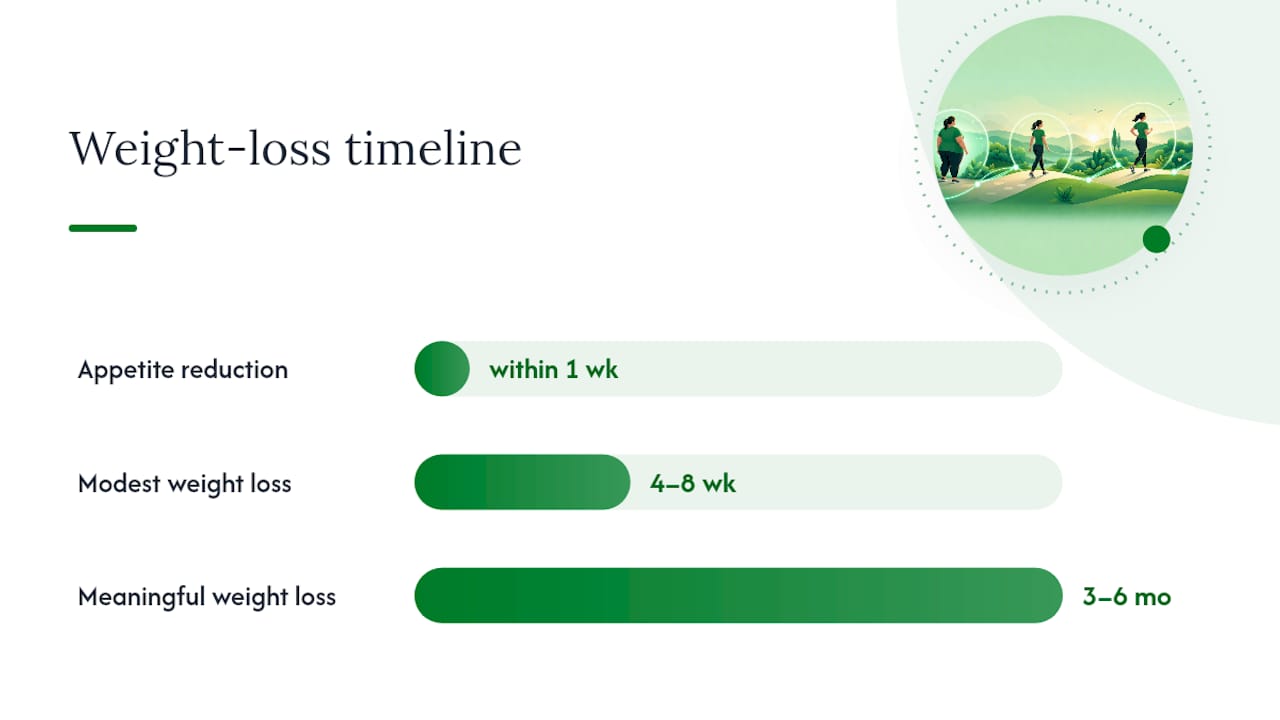
Semaglutide reduces appetite within the first week for most people, but measurable weight loss takes longer. The typical pattern: appetite decreases noticeably in weeks 1–4, modest weight loss (a few pounds) appears in weeks 4–8, and more meaningful loss accumulates over months 3–6 as the dose titrates upward.
Losing 20 pounds on semaglutide is achievable for many people, but the timeline varies widely depending on starting weight, diet, physical activity, and dose reached. For someone starting at 200 pounds, that’s roughly 30 pounds over 16 months. Losing 20 pounds could take anywhere from 4 to 12 months depending on individual response. There is no reliable shortcut.
What happens when you stop:
Stopping semaglutide commonly leads to substantial weight regain. The drug suppresses biological hunger signals rather than producing a permanent metabolic reset, so when the signal disappears, appetite returns. The Cleveland Clinic notes that many clinicians now treat obesity as a chronic condition requiring ongoing therapy for durable results, similar to how hypertension or high cholesterol is managed.
Steps to take if you’re stopping or pausing semaglutide:
Good monitoring is what separates safe semaglutide use from reckless prescribing. The MedlinePlus semaglutide monograph outlines key counseling points and precautions that translate directly into a practical monitoring checklist.
Baseline evaluation before starting:
Titration cadence: Standard titration starts at 0.25 mg weekly for 4 weeks, then 0.5 mg for 4 weeks, increasing by 0.5 mg every 4 weeks as tolerated up to the target dose. If GI side effects are severe, pause the increase and hold the current dose for an additional 4 weeks before attempting to go higher.
Ongoing monitoring:
Practical telehealth workflows that include baseline labs, eye exams for patients with diabetes, and early follow-up reduce safety risks and improve adherence to the titration schedule.
When to stop immediately: severe or worsening abdominal pain (possible pancreatitis), signs of a serious allergic reaction, acute vision changes, or sustained vomiting preventing hydration. These are not “wait and see” situations.
Telehealth has made semaglutide more accessible, but access without structure is where safety breaks down. A reputable telehealth provider follows a defined intake and monitoring workflow, not a quick questionnaire followed by a prescription.
What a proper telehealth intake should include:
Remote monitoring workflow:
Prescription verification practices:
You can learn more about what to expect after your first Ozempic dose and how the first weeks of titration typically feel, which helps you distinguish normal adjustment from a warning sign.
Pro Tip: Before your telehealth video visit, photograph your current medications and supplements, note your resting heart rate and blood pressure if you have a home cuff, and write down any GI symptoms you’ve had in the past month. Providers who see organized patients spend less time gathering basics and more time on clinical decision-making.
Semaglutide has an extensive track record in people with type 2 diabetes, where it has been used for years without new widespread safety signals emerging. Experts note that current evidence does not indicate alarming long-term risks, but they are equally clear that ongoing monitoring is necessary, particularly for weight-loss indications where the patient population differs from diabetes trials.
The honest answer on long-term safety for weight loss specifically: the data are still accumulating. Wegovy’s pivotal trials ran 68 weeks, which is meaningful but not a decade. Postmarketing surveillance is the mechanism that catches rare events clinical trials miss, which is exactly why the FDA’s pharmacovigilance system and your clinician’s follow-up visits both matter. Semaglutide is not a drug you start and forget.
One underappreciated risk in the weight-loss context is muscle loss. Significant appetite suppression can lead to inadequate protein and calorie intake, and unintended lean mass reduction. Older adults especially should monitor muscle mass and consider working with a registered dietitian and incorporating resistance exercise while on therapy.
The World Health Organization and several expert groups recommend conditional, long-term use of GLP-1s for obesity alongside behavioral therapy, precisely because the long-term data remain limited and lifestyle support improves outcomes. Semaglutide is a tool used alongside lifestyle changes, not a standalone permanent solution.
Getting a legitimate semaglutide prescription with real clinical oversight doesn’t require a months-long wait for an in-person specialist. AM Rx offers supervised weight-loss care through same-day telehealth appointments with licensed providers who conduct full medical history reviews, order baseline labs, and build a monitoring plan before writing any prescription.

The difference between AM Rx and an unsupervised online prescription service is follow-up. AM Rx providers check in during titration, review your labs, and adjust your plan based on how you’re actually responding, not just whether you filled the form correctly. Insurance handling is built into the process, so you’re not navigating coverage questions alone. For adults in the U.S. who want semaglutide evaluated properly and prescribed safely, the next step is straightforward: start your telehealth consultation and get a clinical assessment from a licensed provider who can tell you whether semaglutide is appropriate for your specific situation.
This content is for general informational purposes only and is not a substitute for individualized medical advice. Confirm current prescribing guidelines and your eligibility with a licensed clinician.
The following primary sources were used in this article. Sharing them with your clinician can support a more informed conversation about semaglutide.
Ozempic can be used safely for weight loss in adults without diabetes when prescribed and monitored by a licensed clinician, but it is off-label use and carries real risks including GI side effects, rare pancreatitis, and a thyroid tumor signal that requires screening.
Serious but uncommon risks include pancreatitis, gallbladder disease, kidney injury from dehydration, and a thyroid tumor signal seen in animal studies. Seek urgent care for severe abdominal pain, sudden vision changes, or signs of a severe allergic reaction.
Losing 20 pounds typically takes 4–12 months depending on starting weight, dose reached, diet, and activity level.
The most common reasons are GI side effects (nausea, vomiting, diarrhea), cost and insurance barriers for off-label use, and the practical burden of weekly injections. Some patients also stop when supply shortages occur or when weight loss plateaus.
Weight commonly returns after stopping because semaglutide suppresses hunger signals rather than changing underlying metabolism. Baseline labs, mental health screening, and a clear monitoring plan are all part of responsible prescribing, and AM Rx can coordinate those steps through a same-day telehealth visit.