Coordinating mental and physical health remotely means managing both dimensions of your wellbeing through a unified digital system, where your therapist, primary care doctor, and any specialists share data, align treatment plans, and communicate in real time. Without that coordination, you get care fragmentation: duplicate lab orders, conflicting prescriptions, and providers making decisions without knowing what the other has already tried. The fix is not just telehealth access. It is integrated remote care built on shared electronic health records (EHRs), Remote Patient Monitoring (RPM), and Behavioral Health Integration (BHI).
The core components of effective remote coordination include:
Centralized platforms that pull RPM device data, EHR entries, and mental health notes into one view are the backbone of effective remote coordination. When a patient’s blood pressure spikes and their therapist notes increased anxiety in the same week, a unified dashboard surfaces both signals together. That connection is what makes intervention timely rather than reactive.
Licensed Practical Nurses (LPNs) and care managers handle the human side: enrollment calls, initial assessments, medication reconciliation, and monthly follow-ups. These roles exist specifically to keep patients from falling through the gaps between specialties. Automated alerts for declining oxygen levels, elevated readings, or missed medication doses notify the care team before a problem escalates into a hospitalization.
Key coordination tools and methods include:
Pro Tip: Schedule a standing monthly check-in with your care coordinator, not just your individual providers. That single call is where medication conflicts get caught, referrals get followed up, and your care plan actually stays current.
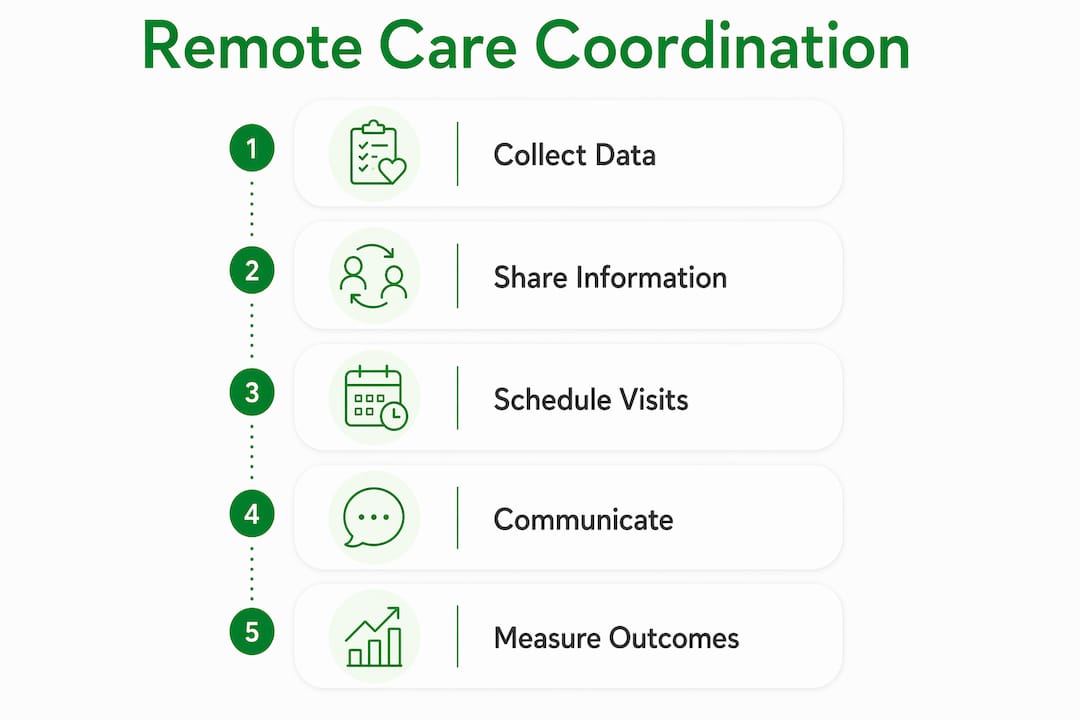
Patients who lack a central point of contact in their care often describe the experience as managing everything alone. Remote coordination changes that by turning care into an ongoing documented relationship rather than a series of disconnected appointments. Regular check-ins, medication reviews, and lifestyle guidance happen on a schedule, not only when something goes wrong.
Patient portals and mobile apps extend that connection between visits. When you can view your health metrics, message your care team, and access personalized education from your phone, you are more likely to follow through on your care plan. That active participation directly improves adherence and outcomes in remote integrated care.
Social determinants of health, such as housing instability, food insecurity, and transportation barriers, affect how well remote coordination actually works for a given patient. Programs that screen for these factors and connect patients to community resources address the full picture, not just the clinical one.
Strategies that improve the patient experience in remote integrated care:
AM Rx brings mental health teletherapy, primary care, and specialty services together on one platform, so patients are not left coordinating between providers on their own. Same-day appointments mean a mental health concern does not wait a week for attention. Transparent insurance handling removes the billing confusion that often causes patients to delay or skip follow-up care.
The platform integrates video consultations with prescription delivery and continuous support from medical professionals, covering weight management, mental health, erectile dysfunction, and primary care within a single patient record. That structure makes it possible for a prescribing provider to see a patient’s therapy notes before adjusting a medication, which is exactly the kind of coordination that reduces adverse outcomes.
AM Rx’s core coordination offerings include:
Integrated telehealth platforms like AM Rx, which combine video visits, prescription management, and continuous provider support in one place, address the coordination gap that causes most remote care failures.
AM Rx’s consent to telehealth process formalizes the patient-provider relationship from the first interaction, setting clear expectations about data use, privacy, and the scope of remote care.
HIPAA governs how every piece of patient data moves between providers in a remote care environment. That means end-to-end encryption for messages and video calls, role-based access controls so only authorized team members see sensitive records, and documented consent before any data is shared across specialties.
Informed consent is not a formality. When a patient agrees to telehealth services, they are authorizing a specific scope of data sharing and remote treatment. Providers who skip or rush that step create legal exposure and, more practically, erode the patient trust that makes ongoing engagement possible.
Key privacy and compliance measures for remote integrated care:
Transparency about how data is used builds the kind of trust that keeps patients engaged long-term. Patients who understand what is shared, with whom, and why are more likely to stay in a coordinated care program.
The biggest coordination failure between mental and physical health providers is not technology. It is the absence of a shared protocol for when and how they communicate. A therapist and a primary care physician treating the same patient need more than access to the same EHR. They need a defined handoff process: who initiates contact when a patient’s condition changes, what format the update takes, and how quickly a response is expected.

Structured communication tools, such as secure messaging within a shared platform, standardized referral templates, and scheduled case conferences, reduce the ambiguity that causes delays. How mental health and primary care connect in practice depends on whether providers have agreed on those protocols before a patient crisis forces the question.
Secure health messaging between providers also creates a documented record of clinical decisions, which matters for both continuity and liability. When a new provider joins a patient’s care team, that message history is part of the clinical record.
Outcome measurement in remote integrated care goes beyond patient satisfaction scores. The metrics that matter most are: hospital readmission rates, medication adherence rates, time-to-intervention after an alert fires, and the percentage of patients who remain engaged in the program at 90 days. Retention rates above 90% in well-run remote coordination programs signal that patients are finding the model worth staying in.
On the clinical side, track changes in biometric readings over time, depression screening scores at regular intervals, and whether care plan goals are being updated as conditions evolve. A care plan that has not been revised in six months is almost certainly not reflecting the patient’s current situation.
The PRYM Health platform offers biomarker tracking and program analytics that give care teams a structured view of these metrics across a patient panel, which is useful for practices building out remote coordination programs.
Most people trying to manage mental and physical health remotely end up as their own care coordinator: scheduling separate appointments, relaying information between providers, and hoping nothing falls through the gaps. AM Rx is built to take that burden off the patient.

With same-day access to licensed providers, prescription delivery, and a single platform covering mental health, primary care, and specialty services, AM Rx handles the coordination that fragmented care systems leave to the patient. Insurance is handled transparently, so cost surprises do not become a reason to skip follow-up. The consent and privacy process is clear from the start, so patients know exactly what they are agreeing to.
If you are ready to stop managing your care across disconnected providers, review AM Rx’s telehealth consent and services to see what integrated remote care actually looks like in practice.
Coordinating mental and physical health remotely requires shared data, defined communication protocols, and continuous patient engagement, not just telehealth access.
| Point | Details |
|---|---|
| Shared data prevents harm | Unified EHRs and RPM data stop conflicting prescriptions and duplicate testing across specialties. |
| Continuous contact drives outcomes | Monthly check-ins and proactive outreach keep patients engaged and catch problems before they escalate. |
| Privacy compliance builds trust | HIPAA encryption, documented consent, and role-based access are non-negotiable in remote integrated care. |
| Provider protocols matter as much as tools | Defined handoff processes and secure messaging between specialties prevent the communication gaps that cause care failures. |
| AM Rx consolidates the coordination | AM Rx combines video visits, prescription delivery, and ongoing support across mental health and primary care on one platform. |