Mental health affects physical health through direct biological pathways involving the hormonal, immune, and nervous systems, making psychological well-being a measurable factor in physical disease risk. This is not a philosophical claim. A 2026 study published in Nature found that genetic liability to major depressive disorder causally increases risk across 13 medical categories, including respiratory, circulatory, and endocrine diseases. The connection between mental and physical health is bidirectional, meaning each system actively shapes the other. Understanding why mental health affects physical health is the first step toward treating both together.
The strongest recent proof of the mind-body connection comes from genetics. A 2026 study from the University of Colorado Boulder found that genetic risk factors overlap between mental and physical disorders 42% of the time. That figure explains why people with psychiatric conditions so often develop physical illnesses at the same time, and vice versa.
The same research found that 38% of the global population carries multiple chronic conditions, and 41% of people with a psychiatric disorder meet criteria for four or more separate disorders. These are not coincidences. They reflect shared biological architecture at the DNA level.
“Shared genetic markers explain comorbidity between psychiatric and physical illnesses and can help reduce patient self-stigma. The mind and body operate as an integrated feedback system; treating only physical symptoms often overlooks the underlying mental stress driving illness.”
This genetic overlap has a practical implication beyond biology. When people understand that their depression and their heart disease share a common genetic root, they are less likely to blame themselves for either condition. Shared genetic markers reduce stigma and open the door to integrated care that addresses both conditions at once.
The 2026 Nature findings identified the strongest evidence for 105 medical traits linked to depression. Respiratory diseases, circulatory conditions, and endocrine disorders all showed causal connections to depressive disorder through Mendelian randomization, a method that uses genetic variants to test cause and effect. This approach removes the confounding variables that weaken traditional observational studies.
| Medical Category | Connection to Depression |
|---|---|
| Respiratory diseases | Causal link confirmed via genetic liability |
| Circulatory conditions | Elevated risk with depressive disorder |
| Endocrine disorders | Shared genetic pathways identified |
| Immune system conditions | Inflammation markers overlap with mood disorders |
| Metabolic diseases | Co-occurrence explained by shared genetic risk |
The body translates psychological stress into physical damage through three main systems: the hormonal axis, the immune system, and the brain’s structural response to chronic stress.

Cortisol is the primary stress hormone, and chronic cortisol dysregulation disrupts cardiovascular, immune, and metabolic function simultaneously. When the body stays in a stress state for weeks or months, cortisol levels remain elevated far past their useful window. The result is suppressed immune function, elevated systemic inflammation, and measurable damage to the hippocampus, the brain region central to memory and mood regulation.
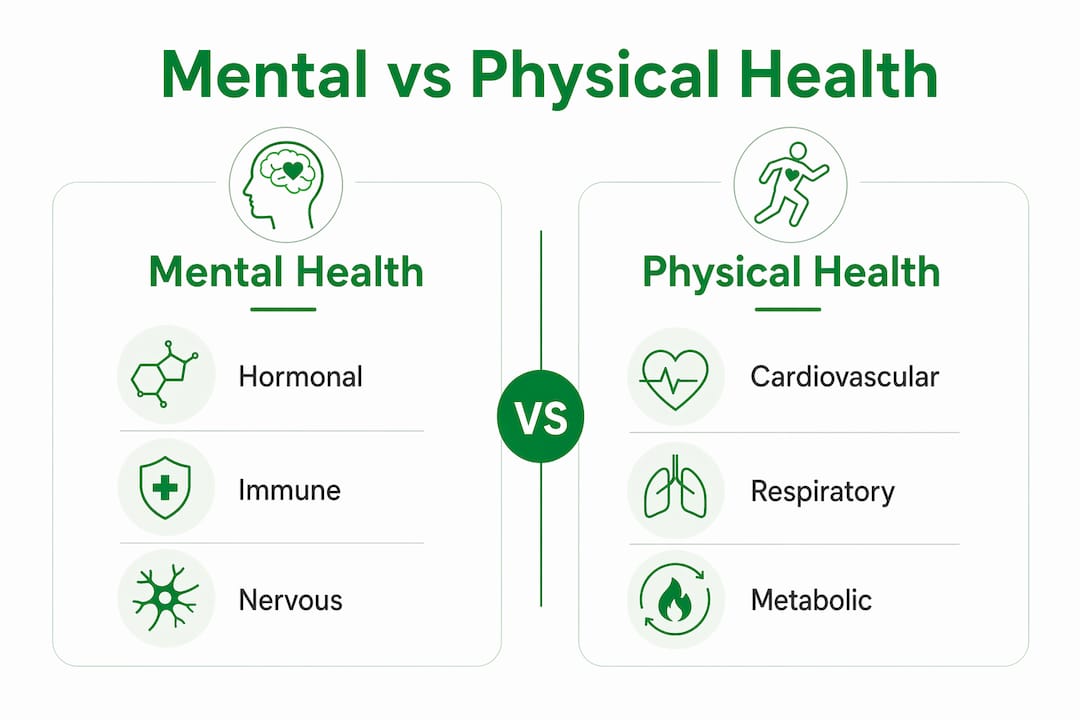
The field of psychoneuroimmunology documents exactly how mental states alter immune behavior. Chronic psychological stress suppresses the production of protective immune cells while increasing pro-inflammatory cytokines. These cytokines circulate through the bloodstream and contribute to conditions including cardiovascular disease, type 2 diabetes, and autoimmune disorders. The mental health influence on illness is not metaphorical. It is biochemical.
Three brain structures sit at the center of this process:
These changes do not stay in the brain. Hormonal and immune signals travel throughout the body, altering organ function, disrupting sleep architecture, and accelerating cellular aging.
Pro Tip: If you experience persistent physical symptoms like fatigue, frequent illness, or unexplained pain alongside low mood, ask your provider to assess both systems together rather than treating each in isolation.
Positive mental states produce the opposite effect. Optimism and strong social support correlate with lower inflammatory markers and improved cardiovascular function. The same biological pathways that carry stress signals can carry protective ones.
Mental health conditions change behavior in ways that directly damage the body. Depression and anxiety are linked to poor sleep, reduced physical activity, poor nutrition, and increased substance use. Each of these behaviors carries its own physical health cost.
The behavioral pathway works like this:
The reverse is equally true. Exercise produces measurable improvements in both mood and physical health by raising brain-derived neurotrophic factor (BDNF), a protein that supports neuron growth and reduces depression symptoms. A 30-minute walk changes neurochemistry. That is not motivational language. It is documented biology.
Pro Tip: Sleep and exercise are the two behavioral levers with the strongest simultaneous impact on mental and physical health. Prioritize both before adding supplements or other interventions.
Stress also affects fertility through hormonal disruption. Research on stress and reproductive health shows that elevated cortisol interferes with reproductive hormones, reducing fertility in both men and women. The behavioral and hormonal effects of mental health extend further into physical systems than most people realize.
Integrated care, treating mental and physical health in the same clinical framework, produces better outcomes than treating each in isolation. Combined treatment decreases chronic disease burden and improves quality of life more effectively than sequential or siloed approaches.
The most effective self-care practices work on both systems at once:
The table below compares two approaches to managing a condition like depression with comorbid cardiovascular risk.
| Approach | Mental health outcomes | Physical health outcomes |
|---|---|---|
| Mental health treatment alone | Symptom improvement | Limited physical benefit |
| Integrated mental and physical care | Symptom improvement | Reduced inflammation, better cardiovascular markers |
Addressing mental health proactively yields measurable improvements in physical health parameters, including inflammation levels and cardiovascular markers. This means mental health treatment is not just psychological care. It is preventive medicine.
Research also shows that gut health connects directly to mental state through the gut-brain axis. Studies on conditions like H. pylori infection reveal that gut-related inflammation can drive anxiety symptoms, and treating the physical condition improves mood. The relationship runs in every direction.
Mental health and physical health share genetic, hormonal, and immune pathways, making integrated care the most effective approach for improving outcomes in both systems.
| Point | Details |
|---|---|
| Genetic overlap is real | 42% of genetic risk factors are shared between mental and physical disorders. |
| Cortisol drives physical damage | Chronic stress elevates cortisol, suppressing immunity and accelerating disease. |
| Behavior is the middle layer | Depression and anxiety alter sleep, diet, and exercise, each of which harms the body. |
| Integrated care outperforms siloed care | Treating mental and physical health together reduces chronic disease burden more effectively. |
| Proactive mental health care is preventive medicine | Clinical trials show mental health interventions improve cardiovascular and inflammatory markers. |
Most people treat mental health as a separate category from physical health, something to address after the “real” medical problems are handled. That framing is wrong, and the 2026 genetic research makes it harder to defend.
What strikes me most about the Mendelian randomization findings is not the size of the effect. It is the breadth. Depression does not just raise the risk of one or two physical conditions. It raises risk across 13 medical categories. That is not a side effect of mental illness. That is a central feature of how the body works.
The other thing most articles miss is the directionality problem. Physical illness makes mental health worse, which then worsens the physical illness. A person with chronic pain develops depression. The depression reduces their motivation to exercise or follow treatment plans. The physical condition deteriorates further. Breaking that cycle requires treating both ends simultaneously, not one after the other.
I also think the behavioral pathway is underestimated. People focus on the dramatic biology, cortisol, cytokines, hippocampal atrophy, and miss the simpler truth: mental health conditions make it harder to do the basic things that keep the body healthy. Sleep, movement, and eating well are not optional extras. They are the floor. When mental health removes access to that floor, the body pays the price.
The practical takeaway is not complicated. If you have a physical condition that is not responding to treatment, ask whether mental health is part of the picture. If you are managing a mental health condition, treat your sleep and exercise as medical interventions, not lifestyle preferences.
— Bryan
The science is clear: mental and physical health require attention at the same time, not in sequence. Getamrx offers telehealth mental health services alongside primary care, giving you access to providers who treat both systems in a single, connected experience.

Same-day appointments, video consultations with experienced providers, and prescription delivery make it practical to get care without rearranging your life. Whether you are managing anxiety, depression, or a physical condition that keeps cycling back, Getamrx’s integrated primary care approach addresses the full picture. You can also review the consent to telehealth process to understand exactly how virtual care works before your first visit.
Mental health conditions alter cortisol levels, immune function, and inflammatory markers, all of which drive physical disease. The brain communicates with every major organ system through hormonal and neural pathways.
Yes. A 2026 Nature study using Mendelian randomization found that genetic liability to major depressive disorder causally increases risk across 13 medical categories, including cardiovascular and respiratory diseases.
Genetic risk factors for mental and physical disorders overlap 42% of the time, explaining why comorbidity is common rather than coincidental.
Clinical trials show that mental health interventions produce measurable improvements in physical markers including inflammation levels and cardiovascular function.
Regular aerobic exercise raises serotonin and BDNF while reducing cardiovascular risk and inflammation, making it the single behavior with the strongest simultaneous impact on both systems.