The single most important check when you choose a telehealth provider is who’s actually treating you: confirm the clinician is licensed in your state and that the intake and follow-up process actually matches your medical need. A five-minute video call with someone who never asks about your medical history is not care. It’s a transaction with a stethoscope emoji attached.
Before you hand over a credit card, run these three checks:
Choosing a telehealth provider comes down to verifying licensed clinicians, matching the platform to your condition, and confirming follow-up access before you pay for a single visit.
| Point | Details |
|---|---|
| Verify clinician licensure first | Confirm the provider is licensed in your state before evaluating price or convenience. |
| Match platform to condition | Urgent care, mental health, and weight management each need different clinical models. |
| Test the intake process | A thorough intake asks about history and medications, not just symptoms and payment. |
| Confirm follow-up access | Ongoing conditions need scheduled check-ins and a way to reach your clinician between visits. |
| AM Rx covers the core checklist | AM Rx offers licensed clinicians, same-day video visits, prescription delivery, and transparent insurance handling. |
This article is general information, not a substitute for advice from a qualified doctor. Consult a qualified healthcare professional about your own circumstances before acting on anything here.
Comparing telehealth platforms doesn’t require hours of research. It requires asking the right five questions in the right order, because the wrong order wastes time on pricing before you’ve confirmed the provider is even legitimate.
Independent comparison platforms generally rank telehealth options using this same combination: service type, pricing clarity, accessibility, and reputation. That’s not a coincidence. It’s what actually predicts whether a platform delivers real care instead of a fast checkout page.
Pro Tip: Open the intake form before you pay anything. If it takes less than two minutes to complete for anything beyond a simple prescription refill, that’s a signal the platform is optimizing for speed over safety.
Legitimate platforms make licensure easy to find, usually on the provider’s bio page, a “Meet Our Clinicians” section, or the footer of the service page you’re booking through. If you can’t find a name attached to a license number or state within a minute or two of looking, treat that as a warning sign rather than an oversight.
Watch for these red flags:
The most useful consumer checks are the fastest ones: named clinicians with licensure statements, a visible intake questionnaire, and transparent pricing tend to separate legitimate platforms from low-quality ones almost immediately. Controlled substances and psychiatric medications carry extra scrutiny for good reason. Legitimate care in these categories requires ongoing clinical oversight, not a single unmonitored script.
Not every health issue needs the same kind of visit, and platforms vary in what they’re actually built to support.
Telemedicine platforms generally split into these categories: video or chat visits, asynchronous messaging, and remote monitoring, with specialized programs layering in behavior-change support for conditions like obesity. Some situations still require in-person care, particularly when physical exams, imaging, or complex labs are involved, so check whether your platform coordinates with local labs or leaves that step entirely on you.
Pricing structures vary more than people expect, and the sticker price on the homepage rarely tells the whole story.
Membership pricing models, similar to what’s offered through subscription telehealth plans, can meaningfully reduce per-visit costs for people without insurance. Before signing up, confirm whether labs, shipping, and follow-up messages are included or billed as extras.
Pro Tip: Call or message support and ask directly: “What’s the total cost if I need a follow-up visit next month?” A platform that can’t answer that clearly in one message probably has fees it’s not eager to advertise.

Large retail-affiliated programs, like MinuteClinic’s virtual care service, illustrate what broad insurance acceptance and payment flexibility can look like, and readers tracking prescription costs into 2026 should also watch policy shifts like the new drug cost cap that could affect out-of-pocket spending on maintenance medications.
A single prescription and a good ongoing care plan are not the same thing, and mixing them up is where a lot of telehealth experiences go wrong.
Comprehensive intake, appropriate lab work, and consistent clinician oversight are what separate legitimate telehealth from a quick script mill, particularly for conditions that require monitoring over months rather than a single transaction.
Run AM Rx through the same checklist you’d apply to anyone else, and the pattern holds up. AM Rx pairs patients with licensed providers for remote video consultations, with same-day appointment availability for people juggling work and family schedules.
Each of these maps directly to a checklist item covered above: credentialed clinicians, real intake, clear follow-up, and stated pricing.
Most telehealth advice treats every criterion as equally important, and that’s the mistake. Pricing transparency matters, but it matters far less than clinician credentials, because a cheap visit from an unlicensed or poorly supervised provider isn’t a bargain. It’s a liability wearing a discount.
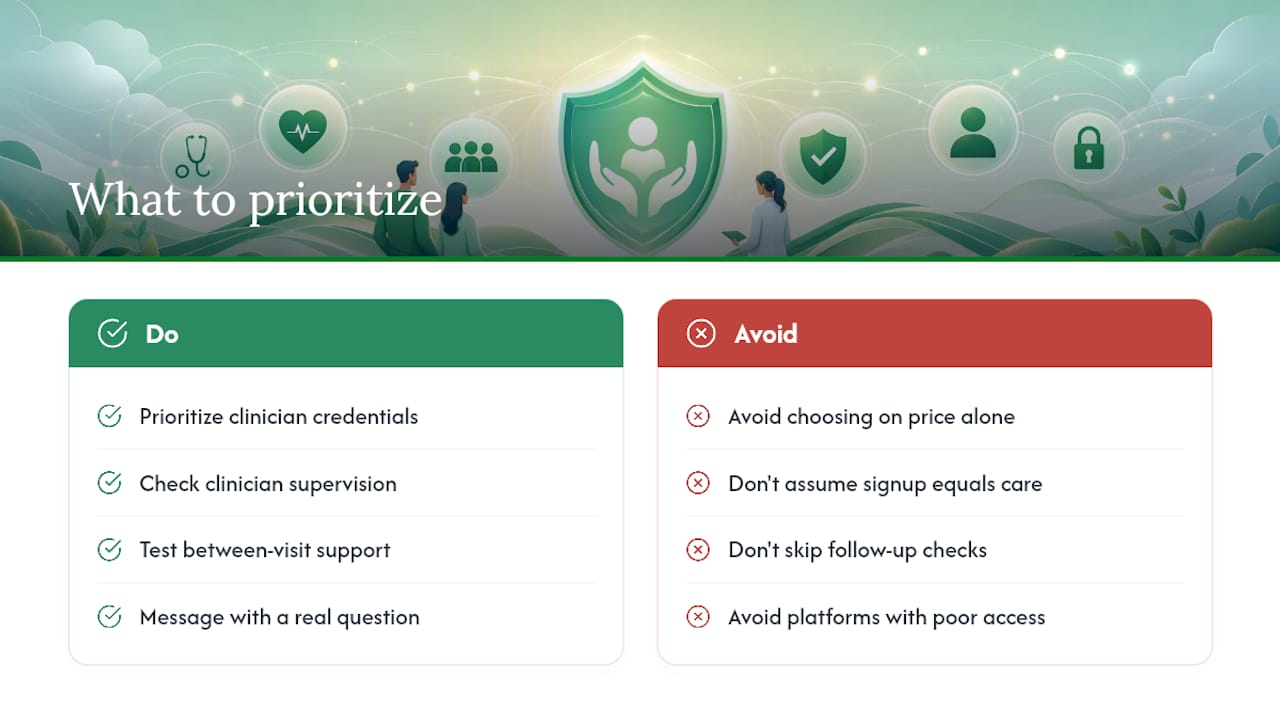
The overlooked variable is follow-up design, not intake. Plenty of platforms nail the first visit: good questions, a real clinician, a clean interface. Where they fall apart is month two, when the medication needs adjusting or a side effect shows up and there’s no clear way to reach the person who prescribed it. That gap is where telehealth’s reputation for feeling transactional actually comes from.
If you’re evaluating options for an ongoing condition like weight management or a psychiatric medication, spend less time comparing homepage pricing and more time testing the support channel before you commit. Message them with a real question. See who answers and how fast. A platform that treats between-visit access as an afterthought will treat your actual care the same way, no matter how polished the sign-up flow looks.
— Bryan
AM Rx was built around the exact criteria this guide walks through: licensed clinicians, real intake, transparent pricing, and follow-up that doesn’t disappear after the first visit. Instead of piecing together a generalist urgent-care app for one need and a separate specialty service for another, you get weight loss, mental health, ED, and primary care handled through one platform with same-day appointment availability.

Prescriptions ship directly to your door, insurance and self-pay options are laid out before you book, and follow-up visits are part of the process rather than something you have to chase down. If you’re ready to see how it works for your situation, start your telehealth consultation and complete the intake process at your own pace.
Verify that the clinician is licensed in your state and that the intake process matches the complexity of your condition, not just the price or appointment speed.
Look for a named provider with a visible license number and state, along with a real intake questionnaire that asks about your history and current medications.
Yes, but it requires a platform built for scheduled follow-up and lab monitoring rather than a single prescription. AM Rx structures its weight loss and mental health programs around this kind of ongoing oversight.
Coverage depends on the platform and your plan, so confirm in-network status and FSA/HSA acceptance before booking; many platforms, including AM Rx, list this information upfront.
Instant approval for complex medications, no named clinicians, and vague intake forms that skip your medical history are all signs to look elsewhere.