In head-to-head trials, tazarotene performed better on some acne measures than tretinoin, but it also showed more irritation at some time points, so tolerability is part of the trade-off. A randomized acne trial and FDA prescribing information support that picture. Strength and formulation matter, and so does whether you keep using it. Tazarotene is contraindicated in pregnancy, so talk with a clinician, including through AM Rx, before starting.
TL;DR:
- In a 12 week trial of 143 people, tazarotene 0.1% gel reduced open comedones and total noninflammatory lesions more than tretinoin 0.025% gel.
- For photoaging, the 2025 analysis found tretinoin and retinol improved fine wrinkles, while tazarotene ranked strongest for coarse wrinkles but carried more adverse event risk.
- To limit irritation, start twice weekly or every other night, apply only a pea’s worth of product to dry skin, and increase frequency as tolerated.
- Avoid tazarotene during pregnancy; its label contraindicates use, and people who are pregnant or trying to conceive should discuss any topical retinoid with a clinician.
- Tazarotene gel is labeled for acne and plaque psoriasis, while Arazlo lotion targets acne in people 9 and older; formulation and strength can affect irritation.
Most of what we know about tretinoin vs tazarotene comes from a handful of randomized trials and one recent network meta-analysis. They show differences in some efficacy measures, while tolerability also matters.
The cleanest acne comparison is a 12-week randomized trial of 143 people that put once-daily tazarotene 0.1% gel against once-daily tretinoin 0.025% gel on the face. Tazarotene reduced open comedones and total noninflammatory lesions more than tretinoin (P ≤ .05). Irritation was higher with tazarotene at some time points, but average dryness, burning, itching, redness and peeling stayed near trace levels, and discontinuation was low in both groups: two people in each arm stopped because of treatment-related side effects.
A second randomized, double-blind trial compared tazarotene 0.1% gel with a different tretinoin product, 0.1% microsponge gel, in 169 people. Tazarotene came out ahead on treatment success, with 67% reaching at least 50% global improvement versus 49% (P = .03). Tolerability was generally comparable and few people dropped out because of side effects.
Here is how the evidence breaks down when you line the studies up:
That last point deserves weight. The American Academy of Dermatology acne guidelines recommend topical retinoids as a cornerstone of acne care based on moderate-certainty evidence, and they note that existing comparisons do not clearly show one topical retinoid beating another across all settings. Tolerability, the guidelines add, varies with concentration and formulation. Read the trials as showing a real edge for tazarotene in certain measures, not a blanket knockout.
For photodamage, the most useful single piece of evidence is a 2025 network meta-analysis of topical treatments for facial photoaging. It found that tretinoin and retinol significantly improved fine wrinkles, while tazarotene was most effective for coarse wrinkles. The safety side mattered just as much: tretinoin had the most favorable profile, and tazarotene carried a higher risk of adverse events.
Takeaway from the 2025 network meta-analysis: tazarotene ranked strongest for coarse wrinkles, but tretinoin had the more favorable safety profile. In other words, the stronger option on paper comes with more skin reactions, and that bill comes due in the first weeks.
A word on concentration, since people often compare the wrong pairs. When you read a comparison, check which strengths were used before drawing a conclusion about the molecules themselves.
Both drugs are retinoids, so both share a familiar set of local effects while your skin adjusts. Expect these early on, usually in the first several weeks:
The tazarotene prescribing information lists itching, burning, redness and peeling as the local irritation risks, and tretinoin products cause the same family of effects. What differs is how hard they hit. In the 12-week acne trial, average symptom scores were trace for both agents, yet tazarotene showed more irritation at certain visits. That is a useful reminder that an average score can hide a rough week for one person.
Concentration and formulation change the odds. Strength and formulation can affect how a retinoid feels on the skin. The network meta-analysis showing a higher adverse event risk for tazarotene than tretinoin fits what clinicians see in practice: the more potent option asks more of your skin.
Photosensitivity is the other thing to plan around. The label advises sunscreen use, and you should avoid sunlamps and tanning beds while on a retinoid. Tell your prescriber about other medicines you take when discussing retinoid use.
Here is the part that gets overlooked. If irritation makes you quit, the stronger drug did not win. A retinoid you stop using cannot provide ongoing treatment, while a gentler one that you can tolerate may be easier to use consistently. Dropout rates in the trials were low, but those participants were monitored closely and coached through the rough patches. Outside a study, irritation can lead someone to stop treatment.
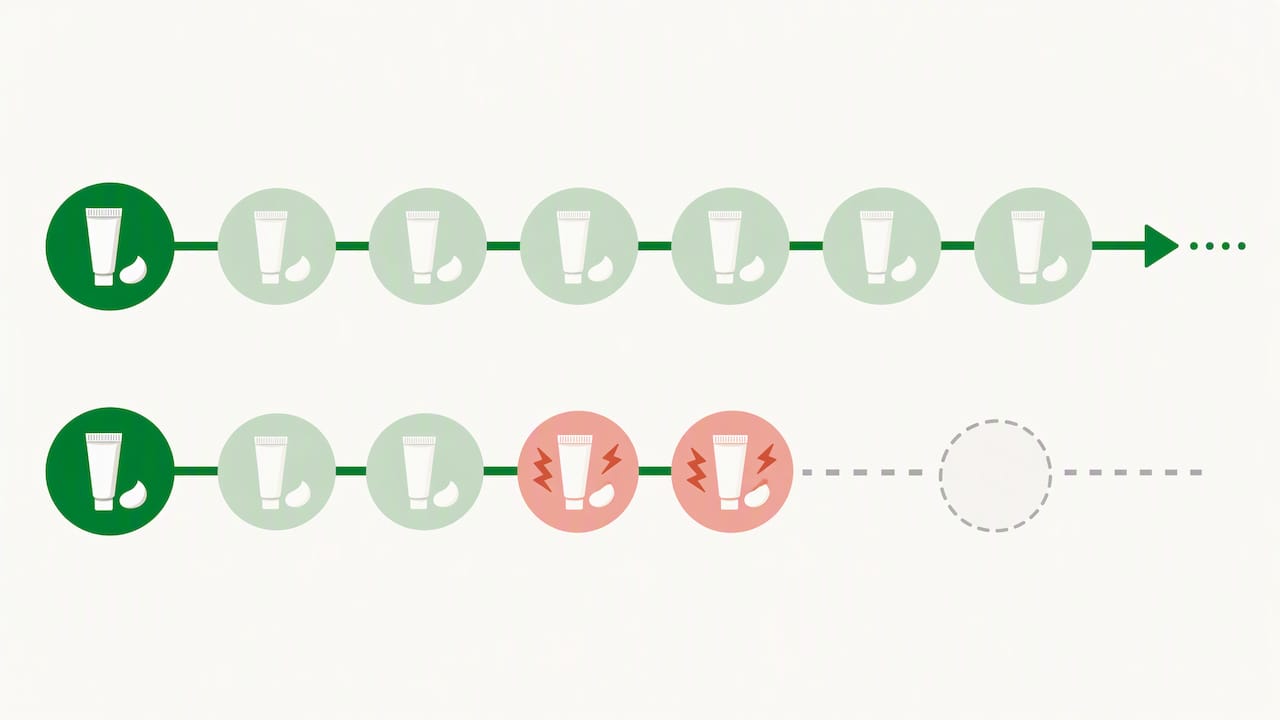
Pro Tip: If your skin is easily irritated, ask for the lower strength and a cream base first. Moving up later is easy, and starting too strong is the most common reason people quit.
For more on layering a moisturizer with a retinoid, our provider team has written about using tretinoin and moisturizer together.
Both drugs work by binding retinoid receptors in the skin, but they are not the same molecule and they do not behave the same way. A clinician’s guide to topical retinoids describes the receptor selectivity differences. Tretinoin is all-trans retinoic acid, which acts across the retinoic acid receptors and indirectly engages the retinoid X receptors as well. Tazarotene is a synthetic agent with relative selectivity for the RARβ and RARγ receptors. Researchers connect that narrower targeting to how tazarotene performs, though the clinical meaning of the selectivity is still being worked out, so treat it as context rather than a rule you can apply to your own skin.
What matters more day to day is what each product is actually approved to treat. Based on the prescribing information in our sources:
If you have heard of Arazlo vs Tazorac, the short version is that both contain tazarotene. They differ in vehicle and strength: Tazorac comes as a gel, while Arazlo is a lotion, and the Arazlo label points to a different, acne-focused use. Tazarotene’s psoriasis approval is a major point of separation from tretinoin, which is not approved for that use.
Formulation matters as much as the active ingredient. Tretinoin comes in many creams, gels and microsphere versions, and the clinician’s guide explains that microsphere technologies and photostable options can reduce irritation and improve adherence. Tazarotene comes as creams, gels, foam and lotion in 0.05% and 0.1% strengths. Concentration and vehicle shape both efficacy and irritation, so two products with the same active ingredient can feel very different on your face.
If you are looking at tretinoin for uneven tone, our team explains how tretinoin is used for hyperpigmentation.
The people who succeed with either drug mostly share one habit: they ease in. A stepwise start can help you manage irritation while your skin adapts. A clinician’s guide to topical retinoids backs the main tolerance-building techniques below.
The sandwich method and short-contact therapy are the two techniques the clinician’s guide highlights for improving tolerance and adherence. They work by buffering how much active ingredient reaches the skin at first, which is why they suit people with sensitive skin or anyone moving up to a stronger retinoid.
If photolability or irritation is a concern, ask about a microsphere or photostable tretinoin formulation, which the same guide describes as a way to ease irritation. And if you are moving from tretinoin to tazarotene, one expert review notes you may see faster results but need to be disciplined with sun protection and tolerance-building, since misuse can cause marked irritation or peeling.
Some people are curious about numbing creams for the discomfort. That is a separate topic, though one partner blog discusses when numbing cream use alongside retinoids is safe (the page is in Polish). Talk with your prescriber before layering anything extra onto retinoid-treated skin.
Pro Tip: Ask your prescriber whether to avoid other exfoliating products, such as scrubs and strong acids, while using a retinoid. Combining products may irritate your skin.
Call your clinician if you develop severe blistering or swelling, signs of infection, or if you are pregnant or planning a pregnancy. If you develop severe blistering or swelling, signs of infection, or are pregnant or planning a pregnancy, contact a clinician promptly. Ask a clinician about symptoms that concern you.
Cost is part of sticking with a plan, too, so it helps to read about what tretinoin costs online before you commit.
Evidence only becomes useful when you map it to your situation. These are practical patterns clinicians weigh, built on the trial data above rather than on a fixed rulebook.
A pragmatic approach is to discuss starting with a lower-strength option and building tolerance with your clinician. If your skin is calm but results are insufficient, ask whether a different strength or product might suit you. This can help you assess how your skin reacts.
A few safety points are not negotiable, and the labels spell them out clearly.
Safety note from the label: tazarotene is contraindicated in pregnancy and carries embryofetal toxicity warnings.
If you use a hormonal method and want to confirm your birth control options while on a retinoid, our team can help through our birth control service.
Here is where I land after reading the evidence: the best retinoid is the one you will use consistently, safely and for long enough to see change. Potency is a headline number. It only matters if your skin tolerates the product well enough that you do not stop.
That is why I lean toward a patient, stepwise approach. Tazarotene performed better on certain measures, but also had a higher adverse-event risk in the photoaging analysis. A treatment that you cannot tolerate may be difficult to use consistently. Tretinoin’s gentler track record makes it a strong foundation, with tazarotene as an option to revisit once your skin is calm and your clinician is watching.
Working with a clinician makes this far easier, and telehealth has made that realistic for many people. At AM Rx we offer consultations, prescription delivery and ongoing messaging with our providers, so you can discuss adjusting a plan if your skin reacts. That follow-up is exactly what keeps a retinoid routine alive.
— Bryan
If you have acne, sun-damaged skin, or a retinoid that has been giving you trouble, we can help you sort out the next step. Our online dermatology consultations let you describe your skin, get evaluated, and, when appropriate, receive a prescription.

Here is what that looks like with us:
If you are dealing with active breakouts, stubborn pigmentation, or irritation that has made you pause your current retinoid, book a visit on our online dermatology consultation page. We will review your history, including pregnancy plans, and build a routine you can actually keep.
This article is general information, not a substitute for advice from a qualified doctor. Consult a qualified healthcare professional about your own circumstances before acting on anything here.
Both contain tazarotene, but Arazlo is a lotion indicated for acne in people 9 years and older, while Tazorac gel is labeled for acne and plaque psoriasis. The Arazlo label and the Tazorac label both warn against use in pregnancy.
Tretinoin improves acne and, in the 2025 network meta-analysis, significantly improved fine wrinkles while showing the most favorable safety profile of the agents compared. It also comes in many strengths and gentler formulations, which helps people stay on it.
Tazarotene is generally the stronger of the two in head-to-head trials. In a randomized acne trial, tazarotene 0.1% reduced open comedones and noninflammatory lesions more than tretinoin 0.025%, though it can irritate more.
No, not without clinician guidance. Tazarotene is contraindicated in pregnancy, and topical retinoids as a class raise fetal risk concerns, so talk with a clinician before using one if you are pregnant or trying to conceive.
Start slowly, use a pea-sized amount, and add moisturizer. A clinician’s guide recommends the sandwich method and short-contact therapy to build tolerance, along with daily sunscreen.