Use a gentle, barrier-repair moisturizer with tretinoin: an open sandwich, where you apply moisturizer either before or after tretinoin rather than both, preserves tretinoin’s activity while cutting down on redness and peeling. Follow your prescription’s exact instructions, wear sunscreen every morning, and call your prescriber if irritation turns severe instead of waiting it out.
TL;DR:
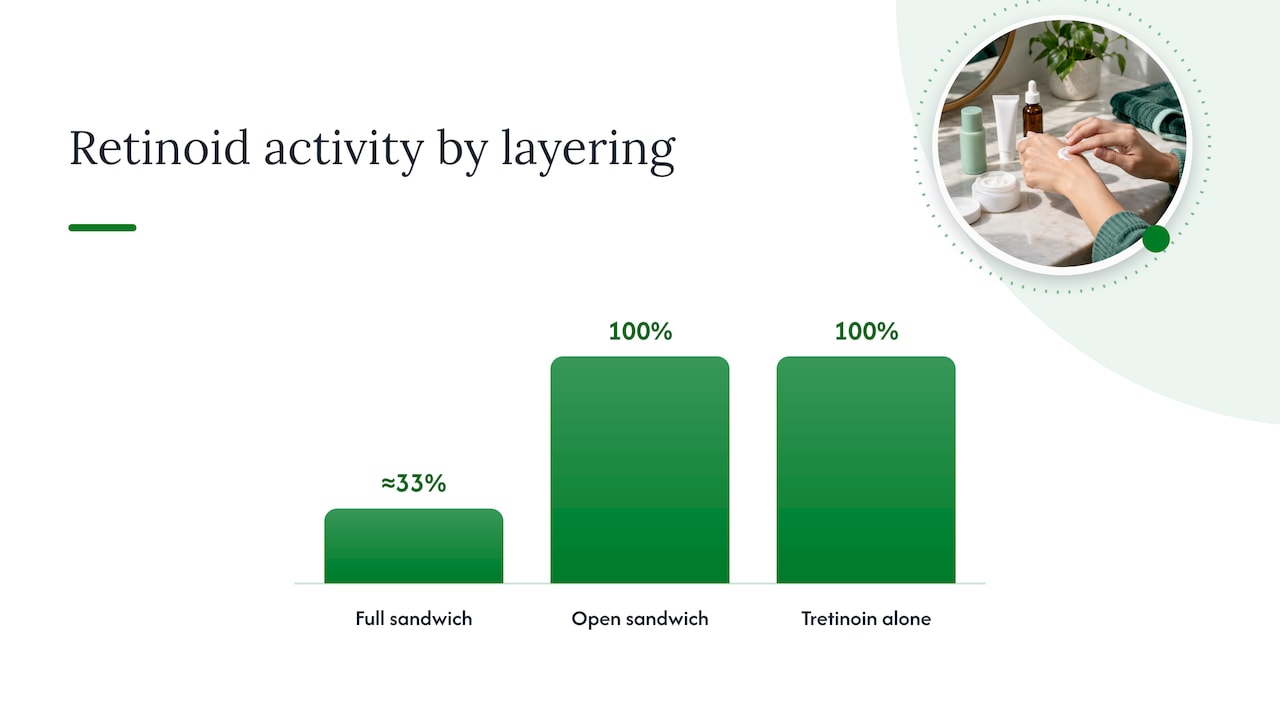
- Applying tretinoin with a single layer of moisturizer before or after preserves its durability, while sandwiching with two layers can reduce its effectiveness by up to threefold.
- Most users tolerate a thin moisturizer after tretinoin, but sensitive skin benefits from moisturizing first to blunt irritation without diminishing the medication’s activity.
- Oily skin performs better with a lightweight gel moisturizer, whereas very dry skin may require a thicker cream or ointment for comfort during treatment.
- Starting with a gradual schedule of applying tretinoin two to three nights weekly and increasing frequency supports skin adaptation with fewer side effects.
- Avoid using fragrance, harsh alcohols, or physical exfoliants in moisturizers to prevent added irritation during tretinoin therapy.
Start by washing your face with a gentle, fragrance-free cleanser and patting it completely dry. Tretinoin works best on dry skin, and residual water can increase how much of the medication absorbs, which raises irritation risk.
Normal skin usually tolerates a thin cream after tretinoin. Oily or acne-prone skin often does better with a lightweight gel moisturizer, while very dry or flaking skin may need a thicker cream or a spot-applied ointment on rough patches. FDA prescribing information for tretinoin products instructs patients to wash gently, apply a topical moisturizer, and avoid abrasive or drying products while on therapy.
In the morning, skip tretinoin entirely. Apply moisturizer followed by a broad-spectrum sunscreen, since retinized skin burns more easily.
These three terms describe different ways to combine moisturizer and tretinoin, and the differences matter more than most routines account for.
A 2025 ex vivo study found that full sandwiching reduced retinoid bioactivity roughly threefold, while open sandwiching preserved activity comparable to tretinoin applied alone, according to research presented in JAAD. Dermatology Times covered the same findings at AAD 2025, reinforcing that trapping tretinoin between two moisturizer layers appears to blunt its effect, while a single layer on either side does not.
In practical terms, full sandwiching can still serve a narrow purpose: it’s a reasonable short-term tactic for someone whose skin is so reactive that any other approach causes them to quit tretinoin altogether. But it shouldn’t become a long-term habit, since it works against the medication you’re paying for.
For most people, the open sandwich is the better default. Sensitive skin benefits from moisturizing right after tretinoin to blunt the sting without diluting the dose. People managing more severe acne, who need full tretinoin strength, often do better moisturizing beforehand on a dry base. Once your skin reaches maintenance, either direction works, so pick whichever fits your evening routine.
The right moisturizer supports your skin barrier rather than just sitting on top of it. A few ingredient categories do most of the work:
Gels suit oily and acne-prone skin, especially in humid months. Creams work for most people most of the year. Ointments and petrolatum-based balms are worth keeping on hand for winter dryness or isolated flaking spots rather than daily use everywhere.
Skip anything with added fragrance, denatured alcohol high on the ingredient list, or physical exfoliating beads, since all three compound tretinoin’s drying effect. Choose labels marked non-comedogenic if you’re acne-prone, so the moisturizer itself doesn’t contribute to clogged pores. The AAD’s guidance on moisturizer selection points to the same short list: ceramides and humectants over fragrance and harsh additives. For ingredient-level comparisons when you’re shopping, Miami Beach Bum’s rundown of daily moisturizer ingredients is a useful consumer-facing reference.
Pro Tip: Patch test a new moisturizer on your jaw or neck for three nights before putting it on your whole face, and give it two full weeks before judging whether it’s helping, since tretinoin irritation fluctuates on its own during that window.
Most of the redness and peeling people blame on tretinoin is retinization, a temporary adjustment phase, not an allergic reaction. A slow start with moisturizer support gets you through it with far less drama.
If you develop redness, flaking, or stinging, drop back a step in frequency rather than stopping outright, and layer a richer emollient or spot ointment over any rough patches. Our tretinoin purge timeline breaks down what counts as normal adjustment versus what warrants a pause.
Contact a clinician, or stop therapy, if you develop blistering, severe swelling, or pain rather than ordinary dryness. A telehealth follow-up can help you adjust strength or frequency without waiting weeks for an in-person slot.
If you’re also using benzoyl peroxide or a topical antibiotic for acne, space them from tretinoin, applying one in the morning and the other at night, since combining active ingredients in the same application multiplies irritation without adding benefit.

A few habits consistently undo the tolerance you’re trying to build:
FDA prescribing information specifically warns against abrasive or drying cosmetics during treatment and flags weather extremes, wind and cold in particular, as common triggers for flare-ups.
Starting tretinoin usually means getting a prescription and someone to check in as your skin adjusts. We offer online dermatology consultations that include a video visit, prescription evaluation, and medication delivery. Appointments are available to help you get started or report a reaction promptly.
Telehealth works well for routine tretinoin starts, strength adjustments, and troubleshooting irritation. In-person dermatology still makes more sense for unusual lesions, suspected infections, or anything that needs a hands-on exam. For a tretinoin routine, ongoing messaging with a provider between visits often solves problems faster than either option alone.
Go slower than you think you need to, keep a ceramide moisturizer within arm’s reach every single night, and don’t skip sunscreen the morning after. Most people who quit tretinoin do it in week two, right before their skin would have settled down. Give it time, and talk to a clinician the moment irritation stops feeling ordinary.
— Bryan
Skipping the in-office wait doesn’t mean skipping the guidance you actually need. Our online dermatology consultations pair a video visit with a provider who can prescribe tretinoin, walk through a moisturizing routine suited to your skin, and adjust your plan as you go, all without leaving home.

Prescriptions can be shipped to your home once your visit is complete, and follow-up messaging may be available if irritation flares before your next check-in. Visit our skincare page to book a consultation and get started.
This article is general information, not a substitute for advice from a qualified doctor. Consult a qualified healthcare professional about your own circumstances before acting on anything here.
Either works, as long as you don’t layer moisturizer on both sides in the same application. Research on the open-sandwich method found that moisturizing once, before or after tretinoin, preserves its effectiveness, while sandwiching it between two moisturizer layers cuts its activity substantially.
Yes, and dermatologists generally recommend it. The American Academy of Dermatology advises pairing moisturizer with drying acne treatments like tretinoin to support the skin barrier and improve how well patients tolerate the medication.
Prescribing labels for tretinoin note that applying it to damp or recently washed skin can increase absorption and irritation, so a short wait after washing or moisturizing lets skin fully dry first. Open-sandwich findings suggest this wait can often be shorter once your skin has adjusted to treatment.
Avoid moisturizers with added fragrance, high levels of drying alcohol, or physical exfoliating particles, since all three add irritation on top of what tretinoin already causes. Favor fragrance-free formulas with ceramides or hyaluronic acid instead, as recommended in AAD guidance on moisturizer selection.