A basic self-pay telehealth visit runs $29 to $90 for most people without insurance, depending on whether you use a message-based service or a live video appointment. Specialty care and mental health visits often start higher. Before you book anything, do three things: confirm the posted cash price, check whether the visit is message or video (the price gap between them is real), and ask about the platform’s refund and prescription policy.
That visit fee is rarely the whole story.
Cash-rate surveys consistently show this same pattern of tiered pricing by format, which means the “cost of telehealth” question really has two answers: the visit price and the total episode price. Budgeting for only the first one is how people get blindsided by a $40 pharmacy charge they never saw coming.
Self-pay telehealth costs $29 to $90 for most visits, but the total episode cost depends on prescriptions, labs, and follow-up care billed separately.
| Point | Details |
|---|---|
| Know the price band | Budget $29 for message care and up to $90 or more for video and specialty visits. |
| Separate the extras | Plan for pharmacy, lab, and follow-up costs beyond the visit fee itself. |
| Use HSA/FSA dollars | Pay with pre-tax funds when eligible to lower your effective cost. |
| Verify Medicare coverage | Expect 20% coinsurance after your Part B deductible for covered telehealth visits. |
| Choose AM Rx for transparency | AM Rx posts self-pay pricing upfront and offers same-day visits with prescription delivery. |
This article is general information, not a substitute for advice from a qualified doctor. Consult a qualified healthcare professional about your own circumstances before acting on anything here.
Price depends almost entirely on how much provider time you’re buying. A quick asynchronous message thread with a nurse practitioner costs less than a 20-minute video call with a physician, and that logic holds across nearly every self-pay platform.
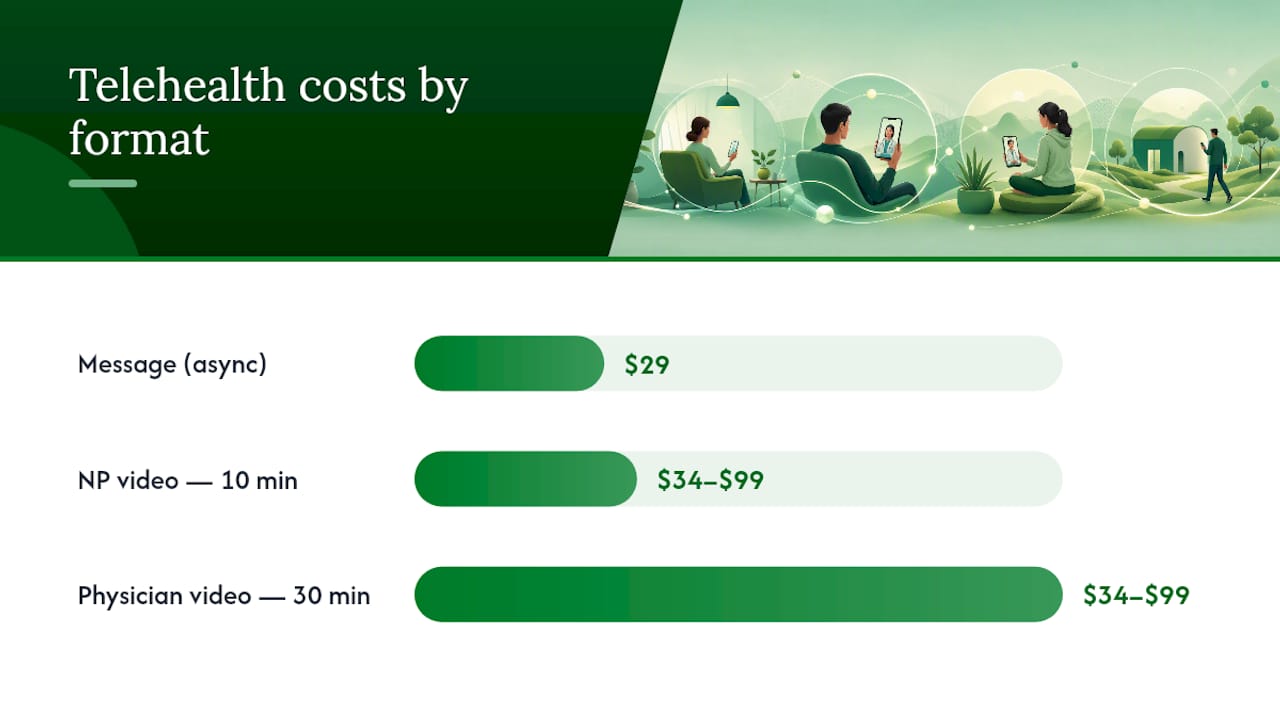
Message-based care sits at the bottom of the price ladder, often starting around $29. It works for simple, well-defined issues: a UTI with classic symptoms, a medication refill, a rash you can photograph clearly. There’s no live back-and-forth, so providers can handle more of these per hour, and that efficiency shows up in the price.
Live video visits cost more, typically starting between $34 and $99 depending on the platform, the provider’s credentials, and how long the appointment runs. A 10-minute check-in with a nurse practitioner prices differently than a 30-minute consultation with a physician for something more complicated.
Specialty and behavioral health visits tend to sit at the higher end. Mental health sessions often run longer than a typical primary care visit, and licensed therapists and psychiatric providers usually charge more per session than general practice. Dermatology consultations, especially ones involving photo review and a treatment plan, also skew higher than a basic message visit.
A few reference points worth keeping in mind:
Peer-reviewed research complicates the “telehealth is always cheaper” assumption for mental health specifically. Episode charges for behavioral health can end up comparable to in-person care once you factor in session length and follow-up frequency, even though the visit itself happens on a screen.
The consultation fee is just one line item in the real cost of getting treated. Budget separately for the prescription, any testing, and the possibility that you’ll need to see someone in person anyway.
Pharmacy costs catch people off guard the most. A telehealth provider can write a prescription in five minutes, but the cash price at the pharmacy for that same medication can range from a few dollars to well over $100 depending on the drug and pharmacy. Call ahead or check a pricing app before you fill it.
Other add-ons to expect:
State rules also matter here. Prescribing controlled substances by telehealth has specific federal restrictions that have shifted multiple times since 2020, and some states limit what a telehealth provider can prescribe without an in-person exam first.
Pro Tip: Ask the provider directly, during the visit, “What will this prescription likely cost at a pharmacy?” Most clinicians have a rough sense and would rather tell you than have you find out at the counter.
Lowering your total spend takes a bit of homework before you book, not after.
If you expect to need multiple visits over the year, a subscription telehealth plan can also work out cheaper than paying per visit, especially for conditions that need regular check-ins.
Pro Tip: Screenshot the price page before you book. Some platforms adjust promotional pricing, and having your own record protects you if the charge on your statement doesn’t match what you saw.
Medicare Part B covers a wide range of telehealth services, and the cost-sharing structure works the same way it does for in-person care. Once you’ve met your annual Part B deductible, you typically pay 20% coinsurance for a covered telehealth visit, the same share you’d pay if you walked into a doctor’s office.
The bigger question for 2026 is access, not price. Telehealth flexibilities that expanded during the pandemic, including which providers can bill Medicare for virtual visits and from where, are authorized through December 31, 2027. That means beneficiaries should have continued access through 2026 without a coverage cliff, though it’s worth confirming with your specific plan since some Medicare Advantage plans layer on their own telehealth rules.
For anyone with private insurance, coverage is far less predictable:
For most minor, non-emergency issues, yes. A Penn Medicine analysis of a large matched dataset found telemedicine episodes averaged around $96 in charges compared to $509 for in-person episodes treating the same conditions. That gap holds up well for things like sinus infections, mild rashes, or medication refills.

Urgent care and the ER earn their higher price tags when you actually need what telehealth can’t provide: in-person testing, imaging, wound care, or evaluation of symptoms that could be serious. Chest pain, deep cuts, or anything with rapid onset belongs in person, full stop.
The real risk with telehealth is the double-visit scenario. If a virtual visit ends with “you need to be seen in person,” you’ve paid for two encounters instead of one. Ask upfront how likely that is for your symptoms before choosing the cheaper route.
AM Rx runs on the same principle that makes self-pay telehealth work for uninsured patients: post the price, deliver the care, skip the surprises. The platform offers same-day virtual visits across primary care, mental health, weight loss, erectile dysfunction, birth control, skincare, and more, with prescription delivery built into the same visit.
Self-pay visits through AM Rx don’t automatically generate an insurance claim. That matters for patients who want to keep certain treatment private, whether that’s a mental health concern or a sensitive prescription, though you can request insurance be used where it applies.
The clearest savings for uninsured patients come from platforms that post a flat cash price upfront and offer message-based care for issues that don’t need a live conversation. Predictability is what turns a one-time telehealth visit into a plan you can actually budget around.
Before booking anything, confirm the visit format, the posted price, what’s included, and whether follow-up testing or referrals get billed separately.
Pro Tip: If you’re treating something recurring, like ongoing mental health support or weight management, ask whether a subscription model works out cheaper than paying per visit over a year.
Most advice about telehealth pricing treats the visit fee as the whole answer. It isn’t. The research points clearly toward a two-part cost: what you pay the provider and what you pay everyone downstream of that visit, the pharmacy, the lab, the follow-up appointment you didn’t expect to need.
The conventional wisdom that “telehealth is always cheaper” holds up well for ambulatory conditions, backed by real cost data, but it gets shakier for behavioral health, where session length and recurring visits erode the price advantage. Readers deserve that nuance instead of a blanket claim.
If there’s one habit worth adopting, it’s this: treat the posted visit price as a floor, not a total. Ask about prescription costs before you leave the appointment, not after you’re standing at the pharmacy counter. That single question, asked out loud during the visit, prevents more billing surprises than any amount of research done beforehand.
— Bryan
You’ve seen the range: $29 for a quick message visit, up to $90 or more for video and specialty care, plus whatever the pharmacy or lab charges on top. AM Rx is built around that reality. Pricing is posted before you book, visits happen the same day in most cases, and prescriptions get sent for delivery without a separate errand to the pharmacy counter.

Whether you need a primary care visit, ongoing mental health support, or a prescription refill without the wait, you can check the visit format and price before you commit to anything. Confirm your symptoms fit a virtual visit, then book a same-day appointment and know the cost going in.
Medicare telehealth flexibilities are authorized through December 31, 2027, so coverage should continue through 2026 for most Part B services. Private insurance coverage varies by plan, so confirm your specific benefits before booking.
Telehealth is typically cheaper for minor, non-emergency conditions, with one large analysis finding average episode charges of about $96 for telemedicine versus $509 for in-person care. Urgent care becomes the better value when you need testing, imaging, or hands-on treatment telehealth can’t provide.
Most private insurers and Medicare continue to cover telehealth services, though copays and in-network requirements vary widely by plan. Self-pay platforms like AM Rx offer an alternative for patients who are uninsured or prefer not to file a claim.
Confirm the posted cash price, whether the visit is message-based or live video, and whether prescriptions, labs, or referrals will be billed separately. Platforms with transparent, upfront pricing make it easier to budget for the full episode of care.