Yes. A licensed U.S. telehealth provider can order lab tests electronically, the same way an in-person doctor would. After your virtual visit, you’ll get a requisition or a set of instructions telling you where to complete the sample: a partner lab like Labcorp or Quest Diagnostics, a mobile phlebotomist who comes to you, or an at-home kit. Before you head anywhere, confirm the lab is in your insurance network and that the order has actually landed in the lab’s system.
TL;DR:
- Most telehealth lab orders are routed electronically into partner lab systems within a few business days, but delays may occur for prior authorization or holidays.
- In-lab draws at Labcorp or Quest Diagnostics remain the most widely accepted insurance-friendly option, with results typically returning in a few days.
- Mobile phlebotomy services and at-home kits offer greater convenience for those with mobility issues or specific panels that do not require immediate processing.
- Insurance coverage usually treats telehealth-ordered labs the same as in-person orders, but prior authorization may still cause delays or denials, which can often be resolved with specific diagnosis codes.
- Most common tests ordered via telehealth include CBCs, metabolic panels, lipid panels, thyroid tests, and STI screenings, with turnaround times ranging from a few days to two weeks depending on the sample type.
The process starts the moment your provider decides you need bloodwork. They review your symptoms during the video visit, select the specific tests, and generate an electronic requisition that routes directly into a lab network’s system, most often Labcorp OnDemand or Quest Health. This isn’t a fax machine situation anymore; it’s a digital handoff between your provider’s platform and the lab’s intake system.
You’ll typically hear about your order through one of a few channels:
Most orders show up within a few business days. Weekends and holidays push that timeline back, so a Friday afternoon visit might not produce a usable requisition until Monday. If your visit requires prior authorization or an in-network check, expect that timeline to stretch further; your provider or the lab should flag the delay rather than leave you guessing.
Providers pick the collection method based on clinical need. A basic metabolic panel might send you to any nearby Labcorp draw site, while a test requiring careful handling or a same-day turnaround might call for mobile phlebotomy instead. Mobility limitations factor in too. Research on telehealth integration with diagnostic services shows this electronic routing is becoming standard practice, not a workaround.
You generally have three paths, and each fits a different situation.
In-lab draws at Labcorp or Quest Diagnostics offer the widest test menu and the best insurance acceptance. You can walk in at many locations or schedule ahead, and you’ll need government-issued photo ID plus your requisition, printed or pulled up on your phone. This is the default choice for most panels because these networks have contracts with nearly every major insurer.
Mobile phlebotomy, including Quest Mobile, sends a phlebotomist to your home or office. It’s the better option if you’re managing a chronic condition that limits travel, juggling a demanding work schedule, or simply live far from a draw site. Expect an added convenience fee in many cases, and insurance coverage for that fee varies by plan, so it’s worth a quick call to your insurer first.
At-home kits work well for specific panels like STI screening or certain hormone tests that don’t require immediate lab processing. These are typically self-pay, and your results depend entirely on you following collection and shipping instructions precisely. A late or improperly stored sample can void the whole test.
| Option | Cost / insurance | Convenience | Best for | Typical turnaround |
|---|---|---|---|---|
| In-lab (Labcorp/Quest) | Highest insurance acceptance rates | Travel to a draw site | Standard panels, insured patients | a few days |
| Mobile phlebotomy | Variable coverage, added fee common | Comes to you | Mobility limits, busy schedules | Some days plus scheduling |
| At-home kit | Usually self-pay | No travel needed | STI screens, some hormone panels | Includes shipping time |
Before you drive anywhere, call the location or check its online scheduler to confirm they can process your specific requisition. National chains post real-time appointment availability, and booking ahead cuts wait times significantly.
Most insurers treat a telehealth-ordered lab test exactly like one ordered in a doctor’s office, but prior authorization can still apply depending on the test and your plan. Certain specialty panels, genetic testing, and some hormone workups get flagged for review regardless of how the order originated.
A few steps cut down on delays and surprise bills:
Ongoing federal efforts to modernize electronic prior authorization systems are chipping away at these delays, but prior auth remains one of the most common friction points in telehealth lab ordering right now.
If a claim comes back denied, don’t assume that’s final. Contact your provider, explain the denial reason, and ask them to resubmit with a more specific diagnosis code. That single fix resolves a large share of denials tied to coding rather than actual coverage gaps.
Pro Tip: Take a screenshot of your insurance verification call, including the rep’s name and reference number, before your lab appointment. If a claim gets denied later, that record speeds up the appeal.
Telehealth providers commonly order a CBC, comprehensive metabolic panel, lipid panel, A1C, thyroid panel, and STI screens. Some of these need a venous blood draw at a lab; others, like certain glucose checks, can work with a fingerstick sample. MedlinePlus breaks down what each panel actually measures if you want the specifics before your draw.
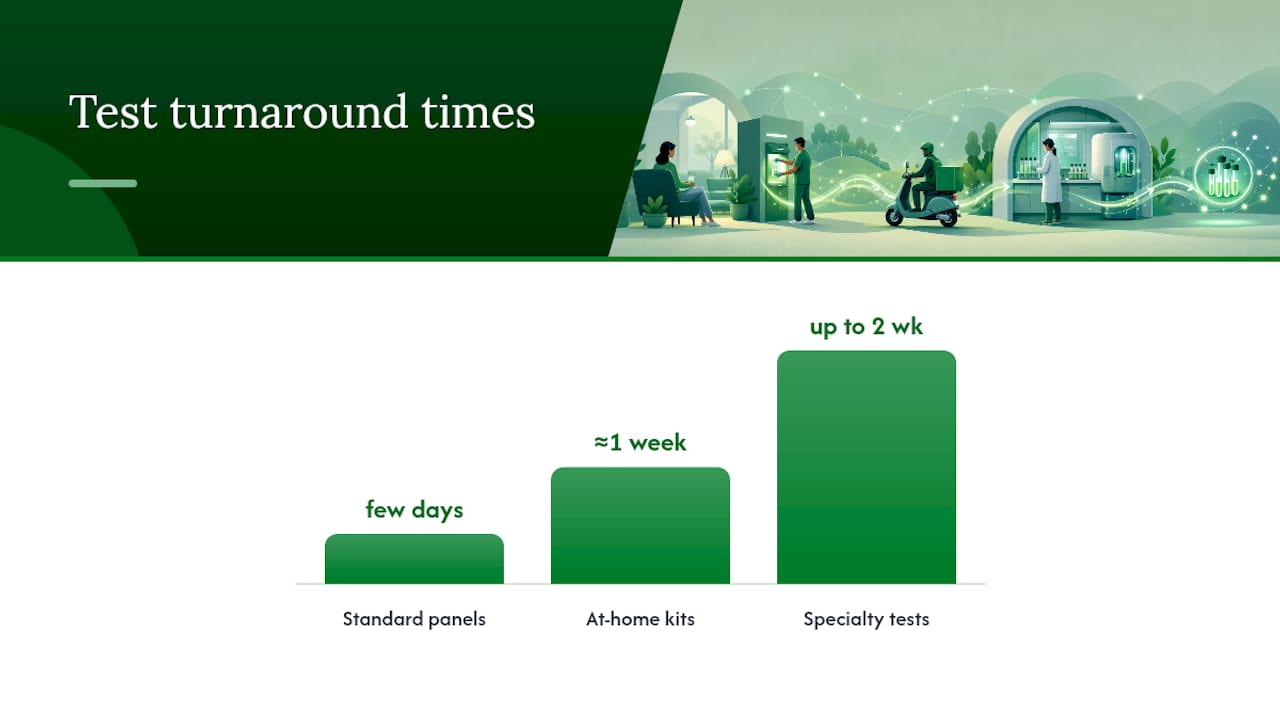
Standard panels typically return results within a few days at major labs. At-home kits add shipping time on both ends, often pushing total turnaround to about a week. Specialty tests, like certain genetic panels or advanced hormone workups, can take up to two weeks.
Not every test suits an at-home kit. Anything requiring immediate lab processing, a larger venous sample, or precise temperature control during transit is a poor fit for mail-in collection; your provider should steer you toward in-lab draws for those.
Results usually land back in your patient portal first, with your provider reviewing them and reaching out for a follow-up telehealth visit if anything needs discussion. Fasting tests, like A1C or a lipid panel, require prep the night before, so CDC guidance on diabetes testing is worth a quick read if that’s on your order.
A little prep prevents the most common headache: showing up and getting turned away.
Pro Tip: Save your requisition as a photo in your phone’s camera roll, not just in an email. Draw sites sometimes have spotty Wi-Fi, and a saved image loads faster than digging through your inbox.
AM Rx builds lab ordering directly into its virtual care model. A clinician reviews your symptoms during a same-day video visit, generates an electronic order when testing is warranted, and coordinates with lab networks so you’re not left chasing down a requisition on your own.
Here’s what that looks like in practice:
If you’re getting ready to book, the consent to telehealth page walks through what to expect before your appointment.
Telehealth lab orders remove a real barrier: the days when you had to sit in a waiting room just to get a requisition slip. The workflow now runs through secure electronic systems, and your results come back through the same portal your provider uses, which keeps your information private and your care coordinated rather than scattered across disconnected visits. If you need help getting a lab-enabled telehealth visit set up, reach out to AM Rx.
— Bryan
Skipping the waiting room doesn’t mean skipping the bloodwork. AM Rx builds lab ordering into the same virtual visit where your provider evaluates your symptoms, so you leave with a same-day appointment, a clinical review, and an electronic requisition already routed to a lab, rather than a referral slip and a second phone call to figure out next steps.

AM Rx also helps with the insurance side: confirming coverage details and documenting medical necessity so prior authorization doesn’t stall your results. Once your order is in, you can complete the draw at an in-lab location, through mobile phlebotomy, or with an at-home kit, whichever fits your schedule and the test your provider ordered. If you’re dealing with a primary care concern that might need bloodwork, AM Rx’s primary care service is built around exactly this kind of visit. Ready to get started? Book a telehealth visit and get your lab order moving the same day.
This article is general information, not a substitute for advice from a qualified doctor. Consult a qualified healthcare professional about your own circumstances before acting on anything here.
Yes. Licensed U.S. telehealth providers can order lab tests electronically and route them to partner labs, mobile phlebotomy services, or at-home kits, the same way an in-person doctor would.
Telehealth policy, including Medicare telehealth flexibilities, has been subject to periodic extensions in recent years; check the HHS telehealth patient page for the current status, since rules can change and vary by insurance type.
Major direct-to-consumer telehealth platforms generally can order labs when a clinician determines testing is clinically necessary, following the same electronic requisition process used across the industry, including at AM Rx.
Several large platforms compete for that title depending on how you measure it (visit volume, states served, or specialties covered), and rankings shift year to year as usage patterns change.
The order number or lab code may not match what’s in the lab’s system. Contact your telehealth provider right away so they can resend or correct the requisition before you reschedule.
At-home kits work well for specific panels like STI screening, but they depend entirely on correct sample handling and shipping, and they’re not suited for tests requiring immediate processing or larger venous samples.