Propranolol can quiet the physical symptoms of performance anxiety, the racing heart, shaking hands, and trembling voice, but it generally does not erase anxious thoughts themselves. Most people use it as a single as-needed dose taken about an hour before a performance, and that use depends on a clinician first ruling out asthma, certain heart conditions, and uncontrolled diabetes. It is a tool for the body, not a cure for nerves.
TL;DR:
- Propranolol effectively reduces physical symptoms like trembling, rapid heart rate, and sweating but does not address underlying anxiety or negative thoughts.
- The typical dose ranges from 10 to 40 milligrams taken one to two hours before a performance, with effects lasting about four to six hours.
- It is contraindicated in individuals with asthma, certain heart conditions, or uncontrolled diabetes, and requires screening before prescription.
- Studies support its use mainly for situational performance anxiety, with limited evidence for broader social anxiety or generalized fear.
- Safety and efficacy are best tested through a low-stakes trial dose on an ordinary day before using it for important events.
Propranolol is a nonselective beta-blocker, meaning it blocks both β1 and β2 adrenergic receptors throughout the body. When adrenaline floods your system before a recital or a big presentation, those receptors are what drive your heart rate up, make your hands shake, and tighten your vocal cords into that telltale wobble. By blocking them, propranolol blunts the peripheral side of the stress response rather than touching the brain centers that generate fear itself.
That distinction matters for anyone deciding whether this drug fits their situation. Because propranolol mainly acts on the body’s adrenergic receptors rather than higher cognitive circuits, it tends to leave memory, focus, and content recall largely intact. A musician who takes it before a recital usually still remembers the piece. A student still recalls the material. What changes is whether their hands shake while they play or their voice cracks while they answer questions.
Propranolol is lipophilic, which means it crosses into the central nervous system more readily than some other beta-blockers. A clinical overview from NCBI Bookshelf documents this off-label use for situational anxiety and notes that this CNS penetration helps explain occasional neuropsychiatric side effects like vivid dreams or low mood, even though the drug’s primary job is peripheral.
What propranolol typically affects:
What it usually does not change is the subjective sense of dread or the racing thoughts that come with anticipating a high-stakes moment. That’s a separate problem, often better addressed with preparation, breathing technique, or therapy.
The evidence base for propranolol in performance settings is older and smaller than many people expect, but it is also fairly consistent in what it shows. Early crossover and randomized trials in musicians, surgeons, and students found that a single dose reliably reduced tremor and measurable physiological arousal, and in some cases improved objective performance scores compared with placebo. Selected clinical trials in these settings reported steadier hands and lower heart rates during timed tasks, though the studies involved modest numbers of participants and varied widely in how they measured “performance.”
A systematic review of propranolol for stage fright concludes that beta-blockers reliably reduce peripheral symptoms of performance anxiety, but that the evidence does not support routine use for generalized social anxiety disorder. That’s an important line to draw. Stage fright tied to one specific event is a different animal from a chronic, pervasive fear of social situations, and the drug’s evidence base maps far more cleanly onto the former.
Clinical overviews echo this pattern. A psychiatry review in Focus notes that beta-blockers reduce physiological symptoms when taken one to two hours before a performance, but are not considered first-line agents for generalized social anxiety, precisely because they blunt the body’s response without doing much for the cognitive and emotional symptoms that define broader anxiety disorders.
A few limitations run through nearly all of this research:
The upshot: if your performance anxiety shows up mainly as a shaking bow hand, a cracking voice, or a pounding heart that throws off your timing, the evidence supports propranolol’s use for that specific problem. If your anxiety is more about dread, catastrophic thinking, or avoidance that extends well beyond the event itself, the same evidence suggests you’ll need a different or additional approach.
Dosing for situational use is intentionally simple, because the whole point is a short-acting fix for a specific event rather than an ongoing regimen. Literature and clinical practice commonly cite a range rather than one fixed number, and your prescriber will adjust based on your weight, sensitivity, and prior response.
The practical takeaway is that “enough” is individual. Some people feel fully steadied at 10 milligrams, others need closer to 40. That’s exactly why a trial run on a low-stakes day, covered in a later section, matters more than any generic number.
Propranolol is generally well tolerated for short-term, as-needed use, but it is not risk-free, and a short screening conversation with a clinician before the first dose is what makes it safe. The official prescribing information on DailyMed lists the cardiovascular, pulmonary, and metabolic warnings that matter most for this kind of screening.
Some conditions rule propranolol out entirely:
Other situations call for extra caution rather than an automatic no:
Common, usually mild side effects include light-headedness, fatigue, cold hands, and vivid dreams. These tend to show up most at higher doses or in people who are especially sensitive to blood pressure changes. If you experience a sudden drop in blood pressure, fainting, unusually slow heartbeat, or wheezing, stop and seek medical care rather than waiting it out.
Pro Tip: Check your pulse and blood pressure (if you have a home cuff) about an hour after a trial dose, not just right before your event, since that’s often when effects peak.
The single biggest mistake people make with propranolol is treating the first dose like a dress rehearsal for the real event. It should be the opposite: your first dose belongs on an ordinary, low-stakes day, far from anything that matters, so you learn how your body reacts before you ever depend on it.
Pairing the drug with rehearsal habits and breathing work, rather than relying on it alone, tends to produce the steadiest results, and resources like BreatheFree’s guide to deep breathing offer techniques that specifically target the shortness of breath and voice wobble that often accompany stage fright.
Using propranolol to manage performance anxiety raises questions that go beyond pharmacology. In precision sports where a steady hand is part of the skill being judged, such as certain shooting or archery disciplines, beta-blockers are explicitly regulated, and athletes need to check their governing body’s rules before use. Auditions and competitive performances in music or theater generally don’t carry the same formal bans, but fairness questions can still surface informally among peers.
For most performers, the more useful framing is that propranolol manages a symptom rather than enhancing a skill. It won’t make someone a better musician or a sharper speaker; it simply removes a physical obstacle, shaking hands or a trembling voice, that was getting in the way of skill they already had.
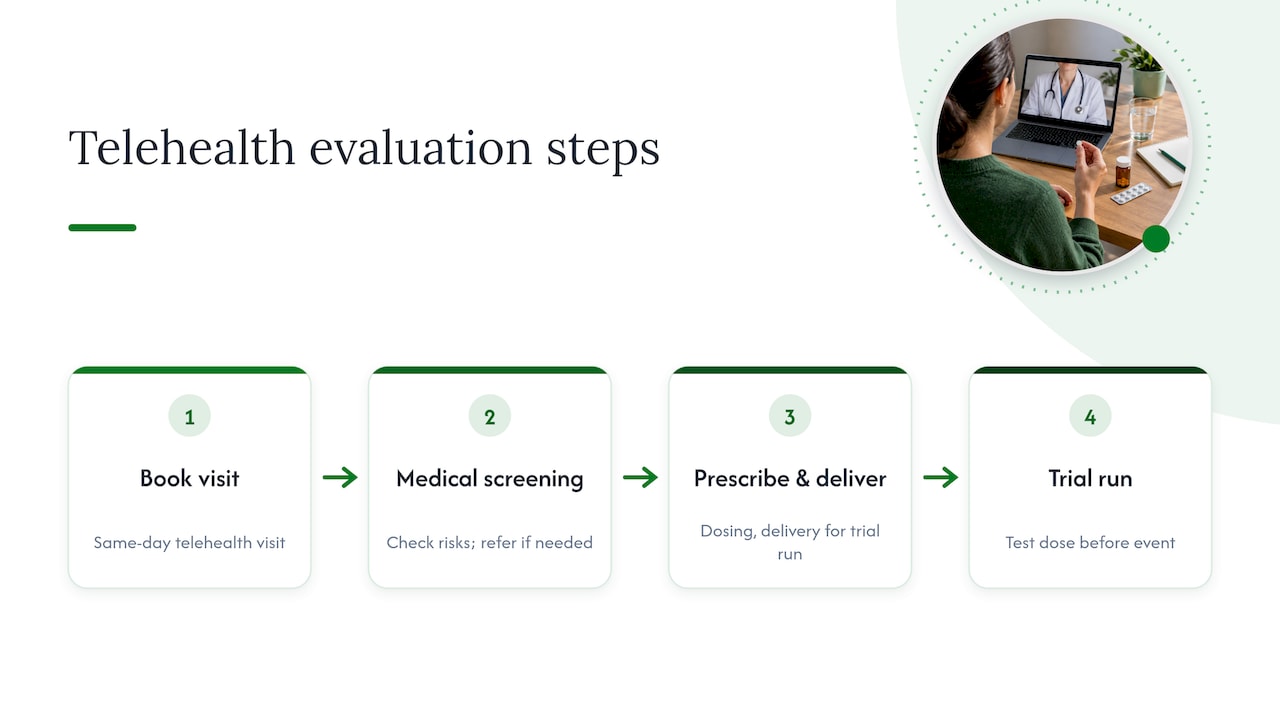
Screening for propranolol doesn’t require an in-person cardiology workup for most healthy adults, but it does require a real conversation about heart and lung history, current medications, and how the person has responded to stress in the past. Remote evaluation works well here because the screening questions, asthma history, heart rhythm issues, insulin use, are things a patient can answer accurately from home, and a same-day telehealth visit can get a trial dose into someone’s hands well before an audition or a presentation deadline arrives. The goal in any setting is the same: confirm there’s no contraindication, agree on a sensible starting dose, and build in that low-stakes trial run before the day that actually matters.
— Bryan
If you’re weighing whether propranolol fits your situation, the fastest safe path is a same-day telehealth visit rather than waiting weeks for an in-person slot. Through our performance anxiety evaluation, we screen for the heart, lung, and metabolic issues that matter before prescribing, walk through dosing and timing for your specific event, and arrange prescription delivery so you have time for a proper trial run beforehand.

This service is well suited for situational anxiety tied to a specific event, such as auditions, recitals, or big presentations, where symptoms are mainly physical. If you have a known heart rhythm disorder, asthma that’s poorly controlled, or another complex condition, an in-person specialist visit is the safer starting point, and we’ll say so during screening rather than prescribing around it. For broader mental health support beyond a single event, our mental health services cover ongoing anxiety and depression care as well. Book a visit to obtain a clinician-reviewed plan before your next high-stakes moment.
This article is general information, not a substitute for advice from a qualified doctor. Consult a qualified healthcare professional about your own circumstances before acting on anything here.
Propranolol generally helps with the physical symptoms of performance anxiety, such as a racing heart, shaky hands, and a trembling voice, by blocking the adrenaline-driven response that causes them. It typically does not remove the underlying anxious thoughts, so people with more generalized worry often need additional strategies like rehearsal, breathing work, or therapy alongside it.
There is no single “best” medicine, since the right option depends on whether symptoms are mainly physical or more cognitive and emotional. Propranolol is the most studied option for the physical symptoms of situational performance anxiety, while medications for generalized anxiety disorders work differently and target different symptoms, which is why a clinician evaluation matters before choosing.
Doctors aren’t opposed to propranolol itself, but clinical overviews note it isn’t considered a first-line treatment for generalized social anxiety disorder, since it mainly blunts physical symptoms rather than the cognitive and emotional core of the condition. It also carries contraindications, including asthma, certain heart conditions, and insulin-treated diabetes, that require screening before use.
For many people, 20 milligrams fall within the commonly cited single-dose range of 10 to 40 milligrams used for situational anxiety, and it may be enough depending on individual sensitivity and body weight. Because response varies, a low-stakes trial dose beforehand is the best way to confirm whether that amount controls your symptoms or whether your prescriber needs to adjust it.