Telemedicine can diagnose and treat most common hair-loss patterns, including androgenetic alopecia and diffuse telogen effluvium, without an office visit. A systematic review of teledermatology in alopecia found that a substantial share of patients monitored remotely improved or regrew hair, backing what dermatologists already suspected: photos plus history are enough to start treatment in the majority of cases.
Before you book anything, do three things:
If your pattern is straightforward, a virtual hair loss doctor through a service like AM Rx can review your case and prescribe the same day.
Telemedicine effectively diagnoses and treats most common hair-loss patterns, but success depends on consistent follow-up and appropriate lab monitoring, not just getting a prescription.
| Point | Details |
|---|---|
| Most patterns fit telemedicine | Androgenetic alopecia and uncomplicated diffuse shedding respond well to remote diagnosis and treatment. |
| Watch for red flags | Patchy bald spots, scarring, or sudden severe loss need in-person dermatology, not a virtual visit. |
| Timelines take patience | Expect reduced shedding by 8 to 12 weeks and visible regrowth around 3 to 6 months of consistent use. |
| Insurance coverage varies | Hair loss is often classified as cosmetic, so check whether your diagnosis code affects reimbursement. |
| AM Rx offers a full pathway | AM Rx provides video consults, hair-loss blood tests, and prescription delivery with structured follow-up. |
The systematic review on teledermatology in alopecia and the PubMed database offer deeper reading on outcomes and study methods discussed here.
This article is general information, not a substitute for advice from a qualified doctor. Consult a qualified healthcare professional about your own circumstances before acting on anything here.
A typical online hair loss consultation starts with an intake form covering your medical history, current medications, family history of balding, and any recent illness, weight change, or stress that might explain shedding. You’ll upload photos from three or four angles, since clinicians rely heavily on image quality to distinguish patterned thinning from diffuse loss or patchy bald spots.
Some platforms handle straightforward cases asynchronously: you submit photos and answers, a clinician reviews them within a day or two, and you get a treatment plan without ever getting on a call. Others require a scheduled video visit, especially for first-time patients or ambiguous presentations where the clinician wants to ask follow-up questions directly.
When labs are warranted, most platforms coordinate with a local LabCorp or Quest draw site, or arrange home phlebotomy in some markets.
Pro Tip: Shoot your photos against a plain background with your hair dry and parted the way you normally wear it. Wet or freshly styled hair hides thinning that a clinician needs to see.
Androgenetic alopecia, the classic pattern of thinning at the crown or receding hairline, is the textbook case for remote care. Diffuse telogen effluvium, where shedding is even across the scalp and tied to a stressor like illness, surgery, or a crash diet, also responds well to virtual diagnosis in uncomplicated cases.
Certain signs mean you need a dermatologist’s hands on your scalp, not a screen:
Pregnancy and breastfeeding rule out finasteride and oral minoxidil entirely, and anyone planning pregnancy soon should flag that upfront so the clinician can choose a safer path.
Low-dose oral minoxidil requires medical supervision: it can cause fluid retention, a faster heart rate, and lowered blood pressure, so clinicians typically monitor blood pressure and ask about heart conditions before prescribing. It is not recommended during pregnancy or breastfeeding. Discuss these risks with a physician before starting.

Topical minoxidil remains the workhorse: applied daily, it typically slows shedding within a couple of months and produces visible regrowth after several more months, according to clinical literature on hair-loss treatment timelines. Oral low-dose minoxidil has gained ground fast as an alternative for people who find the topical formula messy or irritating, though it requires more attentive blood pressure monitoring.
For men, finasteride blocks the conversion of testosterone to DHT, the hormone most responsible for pattern baldness, and is typically judged by month three to six of consistent use. Women with androgen-sensitive thinning sometimes get spironolactone instead, since finasteride carries pregnancy risk.
Many clinicians combine two treatments from the start. Many patients notice reduced shedding within a few months, but full regrowth usually takes steady use over a longer period before the mirror shows a clear difference.
Before your appointment, gather your photo set, a full medication list, and notes on any hair treatments you’ve already tried, including over-the-counter minoxidil or supplements. Clinicians want to know what’s failed before they recommend what’s next.
After the visit, most services deliver medication either through e-prescription to your local pharmacy or direct shipment. Your first follow-up usually lands around the two to three month mark, timed to when reduced shedding should be noticeable if the treatment is working. Track your shedding, any side effects, and new growth with monthly photos so the follow-up conversation has something concrete to compare against.
Teledermatology for alopecia holds up reasonably well in the published literature, though the evidence isn’t as deep as it is for something like acne.
A systematic review of teledermatology in alopecia found that a meaningful share of patients monitored remotely showed improvement or regrowth over the study period, with satisfaction generally high among those who completed virtual follow-up.
Separate review-level research also points to strong patient satisfaction with teledermatology for both initial hair-loss assessments and ongoing monitoring. The catch: many of the underlying studies are small, methods vary widely between them, and follow-up periods are often too short to confirm long-term regrowth outcomes.
The practical takeaway is straightforward. Telemedicine is a legitimate first step for most hair-loss patients, but it works best when you commit to the follow-up schedule rather than treating the first visit as a one-and-done fix.
Topical minoxidil can cause scalp irritation or unwanted facial hair in the first few weeks. Oral minoxidil carries a higher chance of fluid retention and a faster heart rate, which is why clinicians check blood pressure at baseline and periodically after that. Finasteride’s most discussed side effect is reduced libido, reported by a minority of users and usually reversible after stopping.
Pro Tip: Increased shedding in the first month of minoxidil is normal, not a sign of failure. It’s old hairs clearing out to make room for a new growth cycle.
Be wary of any platform promising guaranteed regrowth or skipping screening questions about pregnancy, blood pressure, or liver history. Those are the questions a real clinician always asks.
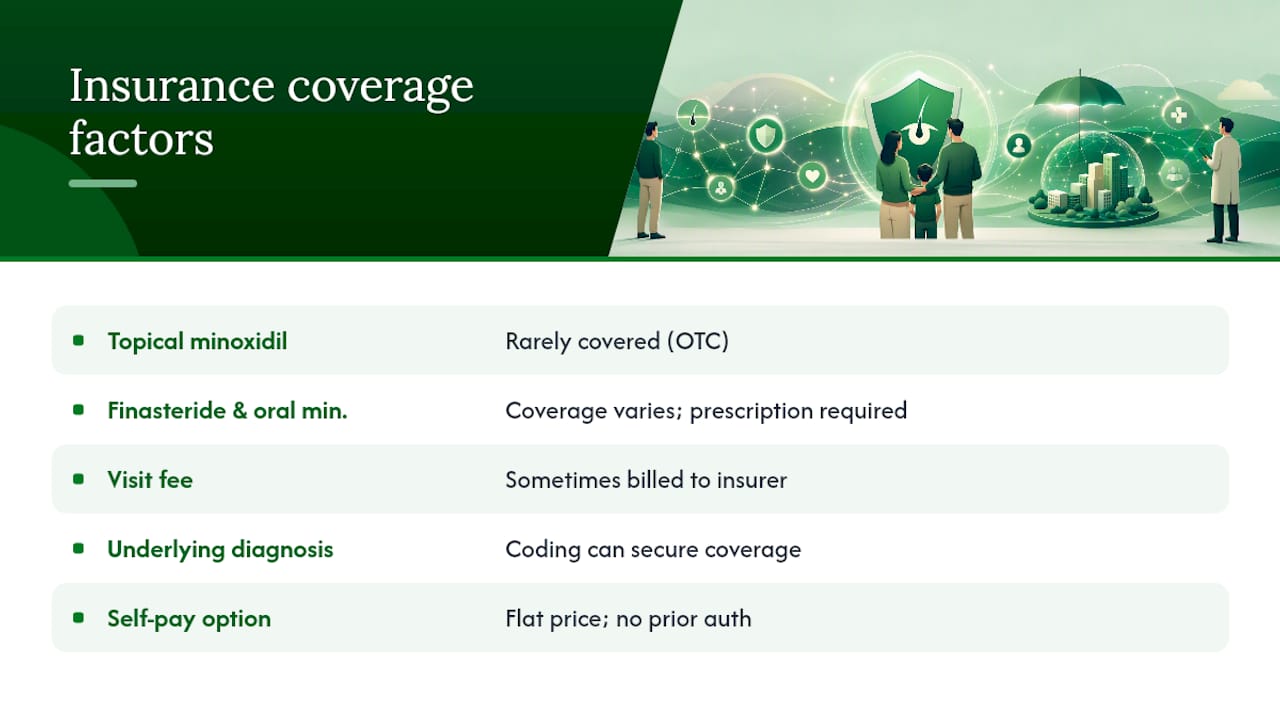
Coverage for hair-loss telemedicine is inconsistent because most insurers still classify hair loss treatment as cosmetic rather than medically necessary, even when an underlying condition like thyroid dysfunction or iron deficiency is driving it. That classification means many plans won’t reimburse the visit fee or the prescription itself, particularly for medications like topical minoxidil, which is available over the counter and rarely covered regardless of how it’s prescribed.
Finasteride and oral minoxidil fare a little better since they require a prescription, but plan coverage still varies by insurer and by whether your diagnosis code ties the hair loss to a recognized medical cause. Some telehealth platforms bill insurance directly for the visit itself even when the medication is self-pay, which lowers your out-of-pocket cost for the consultation even if you’re paying cash for the prescription.
If a documented condition, like polycystic ovary syndrome or a thyroid disorder, is contributing to your shedding, ask your provider to code the visit accordingly. That single step can be the difference between a covered visit and a denied claim. Self-pay models with transparent flat pricing are worth considering if your plan doesn’t cover hair-loss care at all. They remove the guesswork of prior authorizations and let you know the full cost before you commit to treatment.
AM Rx gives you a direct path from noticing thinning hair to holding a prescription, without a referral or a weeks-long wait for a dermatology slot.

The platform runs hair loss blood tests when your clinician suspects a hormonal or nutritional cause behind your shedding, then prescribes from a full menu that includes oral minoxidil, topical formulas, and finasteride based on what your evaluation actually shows. Same-day video appointments mean you’re not stuck waiting weeks just to start, and structured follow-ups keep your treatment plan on track instead of leaving you guessing whether it’s working. If your case turns out to need a specialist’s second opinion, a partner service like Sinava can connect you with one.
If you’d rather start with a broader look at what AM Rx treats for hair loss, its hair loss page walks through the options before you commit to a visit. When you’re ready, the consent to telehealth page is the actual first step: it’s short, and it’s what unlocks your first video consult.
The biggest failure point in hair-loss treatment isn’t diagnosis. It’s adherence. People start minoxidil, see shedding at week three, panic, and quit right before it would have worked. A good telehealth provider catches that panic at the 8 to 12 week follow-up instead of letting you disappear. Pick a service that schedules that check-in and orders labs when something doesn’t add up, not one that hands you a script and vanishes.
Finasteride is the main prescription option for blocking DHT, the hormone responsible for most male pattern baldness, and clinicians typically evaluate its effect after three to six months of daily use.
Yes. Licensed clinicians on telemedicine platforms like AM Rx can prescribe topical minoxidil, oral minoxidil, and finasteride after reviewing your photos, history, and any relevant lab work.
Public reporting has linked McConaughey to hair transplant procedures rather than a medication regimen, which falls outside what telemedicine platforms prescribe or manage remotely.
Public interviews attribute her hair care approach mainly to topical and cosmetic products rather than prescription medication, a different category from the finasteride or minoxidil regimens telehealth clinicians typically prescribe for diagnosed hair loss.