Most men with erectile dysfunction can be helped. The standard approach starts with lifestyle changes and oral medication, then moves to devices, injections, or surgery only if those simpler steps fall short. Oral PDE5 inhibitors, the first-line drug class, produce success rates up to about 76% for PDE5 inhibitors when used correctly.
That said, not every option fits every man, and some carry real risks. Nitrate medications (often prescribed for chest pain) can interact dangerously with PDE5 inhibitors, and injection therapy carries a small but urgent risk of priapism, an erection lasting more than four hours that requires emergency treatment.
The full menu of ED treatment options, roughly in order of invasiveness, looks like this:
Statistical snapshot: PDE5 inhibitors work for roughly three out of four men who use them properly, making them the most effective starting point for most cases that aren’t complicated by nerve damage, severe vascular disease, or medication interactions.
Most ED responds to a stepwise plan that starts with lifestyle changes and oral PDE5 inhibitors before escalating to devices, injections, or surgery.
| Point | Details |
|---|---|
| Start least invasive | Lifestyle changes and oral PDE5 inhibitors resolve most cases before devices or injections are needed. |
| PDE5 inhibitors work best used correctly | Success rates reach up to 76% when taken on an empty stomach and paired with sexual stimulation. |
| Nitrates are an absolute stop sign | Combining PDE5 inhibitors with nitrate medication can cause a dangerous blood pressure drop. |
| Injections carry a real emergency risk | An erection lasting more than four hours from ICI therapy needs immediate medical attention. |
| AM Rx handles initial evaluation and prescribing | Telehealth visits cover PDE5 prescriptions and testosterone assessment, with referral for injections or surgery. |
Clinicians don’t pick a treatment out of a hat. They ask about onset (sudden versus gradual), morning erections, relationship context, and medications you’re already taking. That conversation shapes everything that follows, and it’s supposed to be a two-way discussion. The AUA guideline calls for informing men about every option that isn’t contraindicated, then deciding together based on your goals and risk tolerance.
A stepwise progression from least to most invasive is common, but it’s not a rigid ladder everyone climbs in order. A healthy 35-year-old with performance anxiety needs a different path than a 68-year-old with diabetes and a stent.
Reversible contributors get addressed alongside (not instead of) direct ED treatment:
Pro Tip: Bring your full medication list to your first visit, including supplements. Interactions with nitrates or alpha-blockers are the single most common reason a treatment plan gets delayed.
Erectile dysfunction is often an early warning sign of cardiovascular disease, since the small vessels in the penis tend to show damage before the larger ones in the heart do. Treating the underlying condition sometimes treats the ED, too.
The changes with the best track record are simple to list, harder to sustain:
Expect months, not days, before lifestyle changes show up in the bedroom. Most men pursue medication or devices at the same time rather than waiting to see if diet and exercise work alone.
Four drugs dominate this category: sildenafil, tadalafil, vardenafil, and avanafil. All four work the same way, by relaxing blood vessel walls in the penis, but none of them create an erection on their own. Sexual stimulation still has to happen. This is the most common reason men conclude a medication “didn’t work” when it was never given the chance to.
Timing matters more than most men realize. Sildenafil absorbs poorly after a heavy, fatty meal, so taking it on an empty stomach roughly an hour before sex gives it the best shot. Tadalafil is the outlier: it stays active for up to 36 hours, which is why some men take a low daily dose instead of timing it around sex. Vardenafil and avanafil sit somewhere in between, with avanafil working faster for men who dislike planning ahead.
The safety issue that overrides everything else: PDE5 inhibitors combined with nitrate medications (common for angina) can cause a dangerous, sometimes fatal drop in blood pressure. Anyone on nitrates needs a different treatment path entirely. Other side effects, headache, flushing, nasal congestion, and occasionally visual changes, are usually mild and dose-related.
Statistical snapshot: These drugs work for up to 76% of men overall, but real-world response rates suffer when men skip the stimulation requirement or take the wrong dose relative to food. Proper counseling on timing closes much of that gap.
If oral medication is the right next step, AM Rx can evaluate your history and send a prescription for tadalafil or sildenafil without an in-person visit.
Testosterone replacement is not a general ED fix. It’s a targeted treatment for men whose blood work confirms clinically low testosterone, and even then it doesn’t guarantee results. Among men with confirmed low levels, roughly a third see meaningful improvement in erectile function once testosterone is restored to a normal range. The rest may still need a PDE5 inhibitor on top of it.
Delivery comes as topical gel, injections (weekly or biweekly), or subcutaneous pellets. Most men notice changes in libido and energy within a few weeks, with erectile improvements, if they happen, following after.
Because testosterone therapy carries its own risks, monitoring isn’t optional:
AM Rx offers testosterone evaluation and treatment for men whose lab work supports it.
A vacuum erection device (VED) works by creating negative pressure around the penis inside a plastic cylinder, drawing blood into the tissue. A constriction ring slides down to the base afterward to trap that blood in place, usually for no longer than 30 minutes.
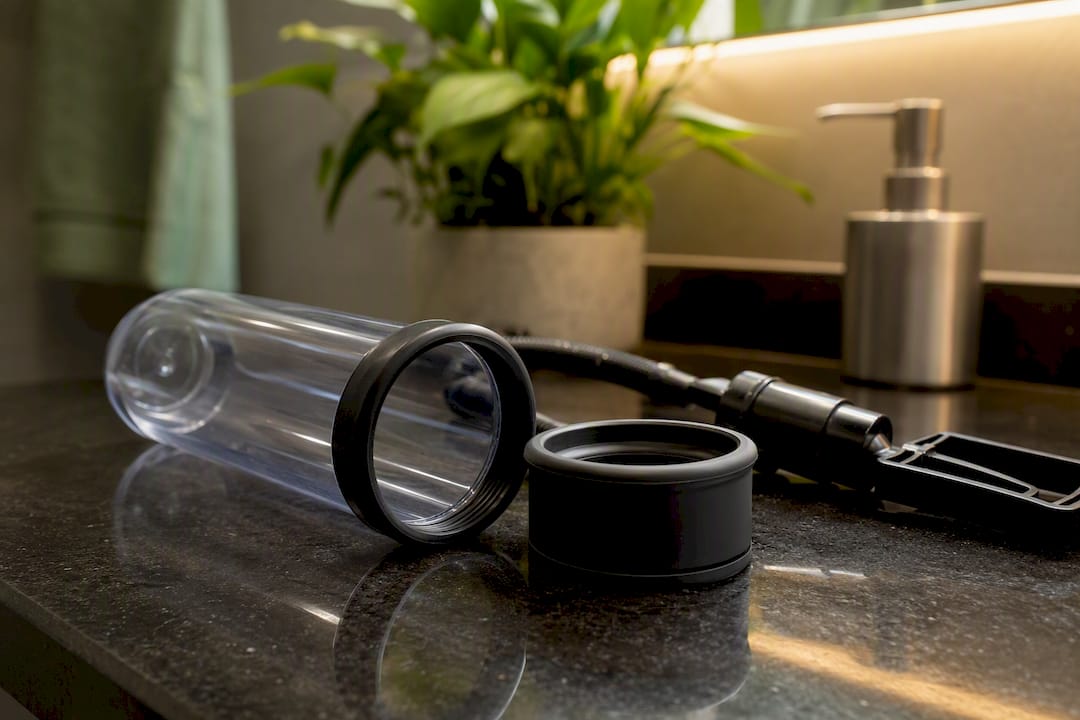
Erection rates with proper use are high. Patient and partner satisfaction averages around 77%, though a meaningful minority find the mechanics too disruptive to intimacy to stick with it long term. Common complaints include bruising, a cold or numb sensation at the tip, and altered ejaculation because the ring restricts semen release.
Pro Tip: Practice alone the first few times. Fumbling with a pump and ring for the first time with a partner watching adds performance pressure to a device that otherwise works well.
Men on blood thinners or with bleeding disorders should talk to a clinician before using a VED, since the negative pressure increases bruising risk.
MUSE (medicated urethral system for erection) delivers alprostadil, a vasodilator, directly into the urethra via a small applicator. It’s inserted a few minutes before sex, and the first dose should always happen under office supervision so a clinician can confirm the technique and starting dose.
Efficacy runs lower than injections, and the most common complaint, penile pain from the medication itself, causes a fair number of men to discontinue it. MUSE tends to appeal to men who want to avoid needles but can’t take oral PDE5 inhibitors due to nitrate use or another contraindication.
Intracavernosal injection (ICI) therapy delivers medication, usually alprostadil alone or a compounded combination like TriMix or QuadMix, directly into the erectile tissue with a fine needle. It sounds intimidating, but most men report the injection itself is far less painful than they expected.
Effectiveness is high, including for men who’ve already failed oral medication, which makes it one of the most reliable options for refractory cases. Compounding pharmacies prepare the combination mixes, and your first several doses need to happen in the office so a clinician can titrate the dose and confirm technique.
Statistical snapshot: ICI therapy remains one of the most effective non-surgical options available for men whose ED doesn’t respond to pills, but the trade-off is a real risk profile that requires patient education upfront.
Surgery sits at the far end of the treatment spectrum, reserved for men whose ED hasn’t responded to medical management or who prefer a permanent solution over ongoing injections or pumps. A penile prosthesis is the main surgical option, and satisfaction rates among men who choose it tend to be high, largely because they’ve already tried everything else.
Two designs dominate: malleable rods that stay semi-rigid, and inflatable two-piece or three-piece devices that a man inflates and deflates as needed. Inflatable models feel more natural but have more moving parts that can eventually need replacement. Infection is the main surgical risk, occurring in a small percentage of cases and requiring device removal if it happens.
Not every case of ED starts in the blood vessels. Performance anxiety, relationship conflict, and past trauma can all produce the same physical symptom, and no pill fixes an anxious mind. When a psychogenic component is suspected, counseling sometimes resolves the problem entirely without medication.
Even when ED has a clear physical cause, therapy tends to improve outcomes when it’s added alongside medical treatment, partly by addressing the anxiety that builds after a few disappointing encounters.
These three therapies get a lot of attention online, and none of them are ready to replace standard care. Low-intensity extracorporeal shockwave therapy has produced mixed results in clinical studies, and professional guidelines still classify it as investigational rather than a first-line or even reliable second-line option.
Platelet-rich plasma injections and stem cell therapy show early promise in small studies, but neither has enough high-quality, controlled research behind it to count as standard treatment. Clinics marketing these as proven cures are getting ahead of the evidence.
If you’re drawn to one of these approaches, ask whether it’s offered through a registered clinical trial rather than a cash-pay clinic promising guaranteed results. That distinction matters for both your safety and your wallet.
Walking into a clinical conversation with a few questions prepared makes the visit far more productive. Consider covering:
Some symptoms need same-day attention rather than a scheduled follow-up. Seek urgent care for an erection lasting more than four hours, sudden and complete loss of erectile function after a specific event, or any new lump, curvature, or sign of infection in the penis.
Pro Tip: Ask your clinician for a follow-up timeline before you leave the visit. A four-to-six-week check-in is typical for medication adjustments, and having it on the calendar prevents months of quietly settling for a treatment that isn’t quite working.
Video-based care is a genuinely good starting point for a large share of ED cases, particularly the first evaluation and oral medication management. AM Rx can review your history, screen for contraindications like nitrate use, and send a prescription without requiring an office visit, all with same-day scheduling.
Telehealth has real limits, though. In-office training for injection therapy, surgical consultation for a penile prosthesis, and complex vascular testing all require hands-on care that a video visit can’t replace.
Shared decision-making and prescription safety checks (screening for nitrate use, cardiac history) happen at every visit, in keeping with the AUA’s guidance on discussing every viable option with the patient.
The conventional advice on ED treatment spends too much time ranking drugs against each other and not enough time on how men actually use them. The research is clear that PDE5 inhibitors work for most men who try them, yet a meaningful share of “failures” trace back to timing a dose around a heavy meal, skipping the stimulation requirement, or giving up after one disappointing attempt instead of adjusting the dose.
What’s underrated is the psychological layer. A man who gets a working prescription but never addresses the anxiety from months of ED often still struggles, not because the drug failed, but because the mind didn’t get the memo. Pairing medication with even a few counseling sessions changes outcomes more than switching between sildenafil and tadalafil ever will.
My honest read: start simple, use it correctly, and don’t mistake one bad night for proof that a treatment doesn’t work. The men who do best treat this as a process with a clinician, not a single purchase decision.
If lifestyle changes and a conversation with a clinician sound like the right next step, AM Rx makes that first move simple. Book a video visit, complete a brief health evaluation, and a licensed provider reviews your history for contraindications like nitrate use before sending a prescription, often the same day.

Everything ships discreetly to your door once approved, and follow-up visits happen from home if your dose or medication needs adjusting. AM Rx does not perform in-office injection training, surgical implants, or advanced vascular testing. For those, your provider will refer you to an appropriate specialist rather than pretend a video visit can cover it. What AM Rx handles well is the part most men get stuck on: starting the conversation and getting a safe, correctly dosed prescription without waiting weeks for an in-person appointment.
Ready to talk to a provider? Review the consent to telehealth details and visit the ED treatment page to schedule your first visit.
This article is general information, not a substitute for advice from a qualified doctor. Consult a qualified healthcare professional about your own circumstances before acting on anything here.
Oral PDE5 inhibitors like sildenafil and tadalafil are the most successful first-line treatment, with success rates up to about 76% for PDE5 inhibitors when taken correctly with sexual stimulation.
Low-intensity shockwave therapy, PRP, and stem cell injections are the newest approaches under study, but all three remain investigational rather than standard care.
Yes. ED affects blood flow and rigidity, not sensation, so most men retain normal genital sensitivity and can still experience arousal and orgasm.
Combining vigorous cardiovascular exercise, roughly 45 minutes three times a week, with medical treatment such as PDE5 inhibitors or testosterone therapy (when indicated) offers the most reliable path to improvement.