AM Rx is the recommended telehealth TRT option for U.S. adults who meet guideline-based criteria and want clinically supervised, DEA-compliant care delivered from home. Here is why it stands out:
The clinical bar is specific: you need both compatible symptoms and confirmed low morning total testosterone on repeated tests. Normal morning testosterone runs 300–1,000 ng/dL, though lab reference ranges vary. A single low reading is not enough. Clinicians also check LH and prolactin to distinguish primary from secondary hypogonadism, and men over 40 typically receive a baseline PSA before starting.
Symptoms that point toward hypogonadism include low libido, reduced spontaneous erections, fatigue, loss of muscle mass, and sparse beard growth, among other clinical signs. These are the signals that, paired with confirmed low labs, make a patient a genuine candidate.
The Endocrine Society recommends against TRT for men whose only concern is age-related testosterone decline without accompanying sexual dysfunction or clinically confirmed hypogonadism. Shared decision-making and objective lab confirmation are required before initiating therapy.
TRT is not indicated when:
| Candidate criteria | Details |
|---|---|
| Symptoms present | Low libido, fatigue, reduced erections, muscle loss |
| Confirmed low TT | Two fasting morning tests below lab reference range |
| Secondary causes ruled out | LH, prolactin, and pituitary workup if needed |
| No active contraindications | No prostate/breast cancer, no uncontrolled heart failure |
| Prostate screening (age-based) | PSA baseline for men over 40 before initiating |
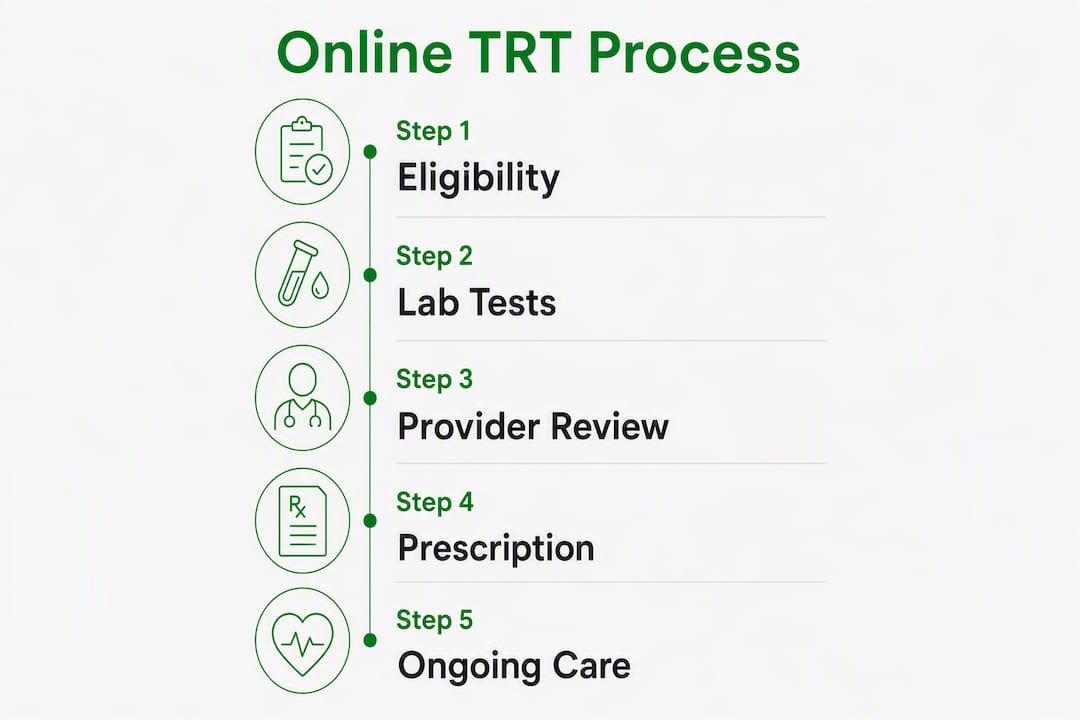
The process is more structured than most people expect. Here is the typical flow:
Formulation options matter. Injectable testosterone is often lower cost and delivers predictable dosing. Intramuscular formulations are preferred on cost-effectiveness grounds by some clinical guidelines, while topical gels offer daily convenience but carry a documented risk of accidental secondary exposure to children or partners. Some platforms, including AM Rx, also offer enclomiphene, a non-testosterone option that stimulates the body’s own production and may be appropriate for men concerned about fertility.
Symptom improvement typically begins within weeks for libido and energy, with fuller effects on body composition taking several months.
TRT is safe for the right patient with proper oversight. Without it, the risks are manageable but real.
Common side effects:
Less common but serious:
Monitoring checklist (per clinical guidance):
A hematocrit above 54% during therapy warrants stopping or referring to hematology. That threshold is not arbitrary; it marks the point where clotting risk rises meaningfully.
Pro Tip: If your labs shift unexpectedly between visits, contact your provider before your next scheduled appointment. Do not wait. A hematocrit creeping toward 50% or a sudden PSA jump needs a conversation now, not at the annual check.

The wrong provider is one that guarantees a prescription before reviewing your labs. That is the clearest red flag in this space. A legitimate platform requires objective baseline labs before writing any prescription.
Provider checklist:
Online TRT platforms often list membership fees that do not include lab costs or medications. Always ask for the total cost before committing.
Questions to ask at your first visit:
AM Rx maps directly to what a guideline-aligned telehealth TRT provider should look like. Here is how:
Getting organized before you log on saves time and improves the quality of your first visit.
Privacy note: AM Rx uses HIPAA-compliant e-prescribing for all controlled substances. Your prescription follows DEA rules, which means a provider review is required before each refill cycle, not just at initiation.
Guideline-aligned online TRT requires confirmed low testosterone on two separate tests, documented symptoms, and ongoing lab monitoring at 3–6 months and annually.
| Point | Details |
|---|---|
| Eligibility requires two criteria | Confirmed low morning testosterone plus compatible symptoms, not age alone. |
| DEA Schedule III rules apply | Testosterone requires a valid prescription and provider oversight for every refill. |
| Monitoring is non-negotiable | Baseline labs, 3–6 month recheck, then annual panels including hematocrit and PSA. |
| Hematocrit threshold matters | Stop or refer to hematology if hematocrit exceeds 54% during therapy. |
| AM Rx covers the full checklist | Licensed providers, DEA-compliant workflows, lab monitoring, enclomiphene option, and insurance handling. |
Testosterone therapy has a reputation problem it does not entirely deserve. The concern is not TRT itself. It is the corner of the market that treats a prescription as a product to be sold rather than a clinical decision to be made carefully. When a platform skips baseline labs or guarantees a prescription before reviewing your history, it is not offering healthcare. It is offering a transaction.
The telehealth model, when built around Endocrine Society standards and DEA-compliant prescribing, actually improves access to care for a condition that many men avoid discussing with a doctor in person. That is a genuine public health benefit. The barrier to getting evaluated drops. The stigma around men’s hormonal health softens. And for men who genuinely have hypogonadism, getting diagnosed and treated can meaningfully improve quality of life.
What matters is that the platform you choose treats the clinical criteria as non-negotiable, not as a formality. Mandatory baseline labs, a real follow-up schedule, and a provider who will tell you “not yet” if your labs do not confirm the diagnosis: those are the signals of a platform worth trusting.
If you have been putting off getting evaluated because the process seemed complicated or the options felt unclear, AM Rx removes most of that friction. Your first visit covers a full symptom review, lab orders, and a clinical discussion about whether TRT or an alternative like enclomiphene fits your situation. Prescriptions follow DEA-controlled-substance rules, monitoring is built in, and insurance is handled where applicable.

Ready to find out where you actually stand? Book your telehealth visit at AM Rx and get a clear answer from a licensed U.S. provider, without leaving home.
This article is general health information, not medical advice. Confirm current clinical guidelines and your individual eligibility with a qualified healthcare provider.
Consult primary guidelines and speak with your provider before starting or changing any hormone therapy. Guidelines evolve, and your individual health history determines what is appropriate for you.