Coverage is possible but still the exception, not the rule: insurers pay for GLP-1 drugs far more readily when you’re treating diabetes or another qualifying condition than when weight loss is the only reason for the prescription. If your plan won’t cover it outright, the Medicare GLP-1 Bridge demonstration, manufacturer copay programs, and telehealth providers that handle insurance verification and prior authorization paperwork can all cut your wait and your cost.
TL;DR:
- Insurance coverage for weight loss GLP-1 drugs is more likely when prescribed for diabetes or other qualifying conditions rather than weight loss alone.
- Commercial plans and marketplace plans vary greatly, with many requiring prior authorization and often excluding weight-loss indications from coverage.
- Insurers typically demand documented BMI of at least 27 or 30, proof of prior weight loss attempts, and successful failure of cheaper drugs before approving GLP-1 prescriptions.
- Medicare’s coverage for weight-loss drugs is expanding temporarily through the GLP-1 Bridge program starting in July 2026, with a $50 copay for eligible beneficiaries.
- Filing detailed appeals, using copay assistance programs, and verifying coverage through telehealth providers can improve chances of approval after insurance denial.
Where you get your insurance determines almost everything about whether a GLP-1 prescription gets approved. Four buckets matter, and each one plays by different rules.
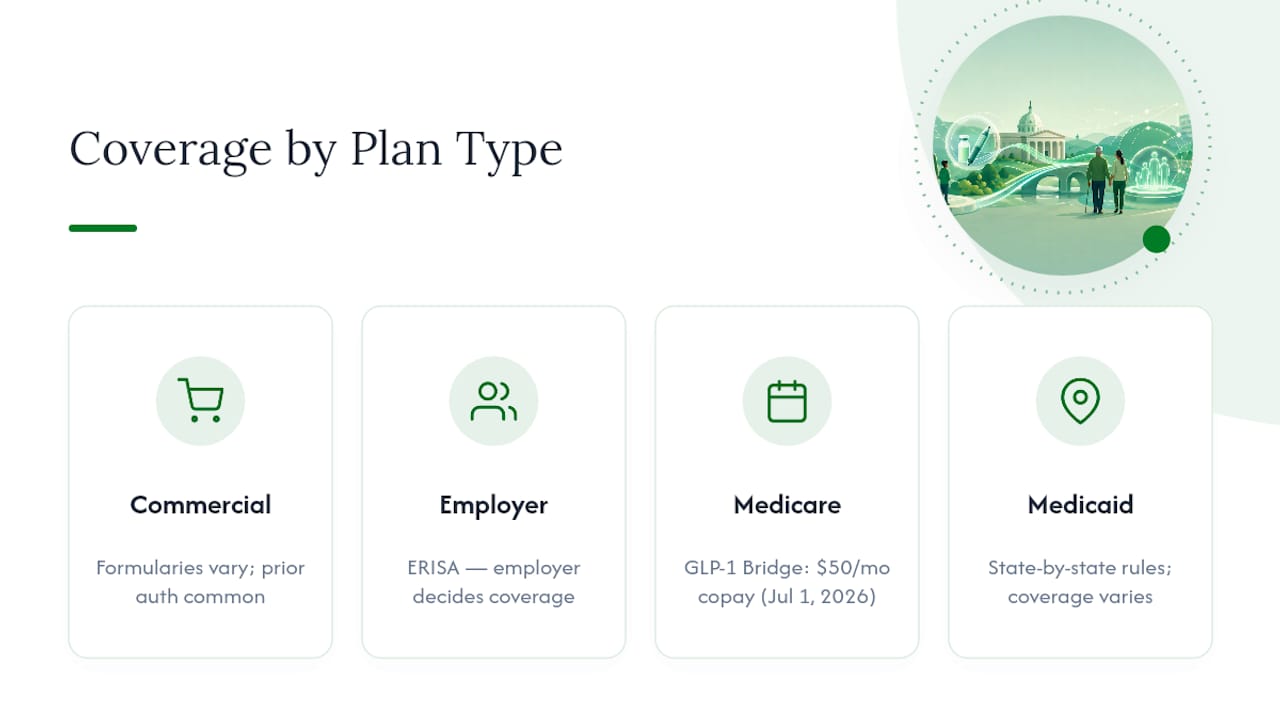
Commercial plans (the ones you get through an ACA marketplace or buy directly) are the most unpredictable. Formularies differ carrier to carrier, and most require prior authorization before they’ll fill a weight-loss prescription. Coverage is far more likely when the drug treats diabetes or a cardiovascular condition than when weight loss is the stated indication, and specialty-tier drugs often carry coinsurance instead of a flat copay, which can mean paying a percentage of a very expensive drug rather than a fixed dollar amount. Marketplace plans specifically tend to exclude weight-loss GLP-1s almost entirely, according to Healthinsurance.
Employer-sponsored and self-insured plans add another layer of complexity. Because these plans are governed by federal ERISA rules rather than state insurance law, the employer (not a state regulator) decides what’s covered. That means two people working in the same city, for two different companies, can have wildly different benefits. Your first call should go to HR or the plan’s pharmacy benefit manager, not your insurance card’s customer service line.
Medicare has historically excluded weight-loss-only prescriptions from Part D. That’s changing, at least temporarily: the GLP-1 Bridge demonstration launching July 1, 2026, lets eligible Part D beneficiaries access select GLP-1 weight-management drugs for a $50 monthly copay during the pilot period. Outside that program, Medicare still generally covers the same drugs when prescribed for diabetes or another medically accepted condition.
Medicaid is the least predictable of all. Coverage decisions are made state by state, and some states pulled back weight-loss GLP-1 benefits in 2025 and 2026 while others expanded them. If you’re on Medicaid, check your state’s current preferred drug list before assuming anything.
Insurers don’t take a prescriber’s word for it. They want documentation, and the criteria are more standardized than most patients expect.
Prior authorization submissions typically combine your BMI, weight history, lab work, and a clinician’s letter of medical necessity, all of which have to align with the specific criteria your insurer publishes for that drug. This is also why the same medication, say a GLP-1 like semaglutide, gets approved instantly for one patient with diabetes and denied outright for another patient using it strictly for weight management. The diagnosis code attached to the prescription, not the drug itself, often decides the outcome.
Pro Tip: Ask your prescriber to cite the exact BMI figure, comorbidity, and prior treatment dates in the medical necessity letter, matching the insurer’s own published criteria word for word. Vague letters get denied; specific ones that mirror the insurer’s language get approved faster.
A denial isn’t the end of the road. It’s usually the start of a paperwork process that a lot of patients give up on too early, and that’s a mistake given how often complete appeals succeed.
If your plan requires a specialty-pharmacy referral or a formal letter of medical necessity, your doctor or a telehealth provider can typically submit that on your behalf rather than leaving you to navigate insurer portals alone.
Before you assume anything about your plan, get answers to a specific set of questions, ideally in writing.
Having this ready before you call saves you from playing phone tag for weeks while your prescription sits unfilled.
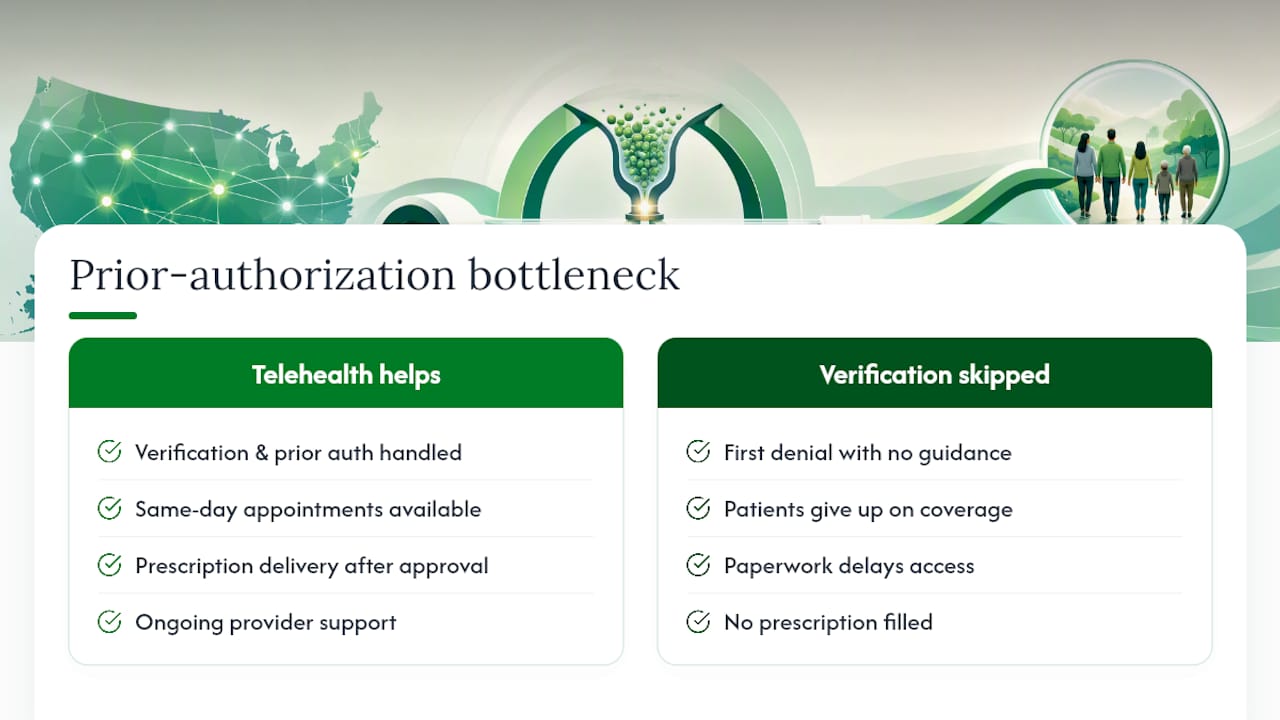
The biggest gap in this whole system isn’t whether a drug works. It’s whether a patient can get through the paperwork fast enough for it to matter. Most people who give up on GLP-1 coverage don’t give up because their insurer said no forever, they give up because the first no came with no explanation of what to submit next.
Some telehealth platforms handle insurance verification and prior authorization documentation directly and offer prescription delivery once a medication is approved. Patients may get access to same-day appointments and ongoing provider support, without any promise that a specific plan will cover a specific drug. That verification step is the one most people skip, and it’s usually the one that decides everything.
— Bryan
AM Rx is the faster route to a real answer on coverage, not another round of hold music with your insurer. Instead of guessing whether your plan covers GLP-1 weight loss injections, you get a licensed provider who checks your benefits, handles prior authorization submissions, and coordinates prescription delivery if you’re approved, all from one telehealth visit instead of separate calls to your doctor, your pharmacy, and your insurer.

Nothing here guarantees your specific plan will cover a specific drug. What AM Rx can do is get you a straight answer faster and handle the paperwork that usually stalls approvals. Start your consent to telehealth and get your coverage checked before you spend another month waiting.
This article is general information, not a substitute for advice from a qualified doctor. Consult a qualified healthcare professional about your own circumstances before acting on anything here.
Coverage depends heavily on your plan and the reason for the prescription; it’s far more common when the drug treats diabetes or another qualifying condition than when weight loss alone is the diagnosis.
It’s a demonstration launching July 1, 2026, that lets eligible Part D beneficiaries access select GLP-1 weight-management drugs for a $50 monthly copay during the pilot period.
Most ACA-compliant plans cover preventive birth control at no copay under separate federal rules, but that mandate doesn’t extend to weight-loss medications, which face their own prior authorization requirements.
Most insurers use a threshold of BMI 30 or higher, or BMI 27 or higher with a qualifying comorbidity like type 2 diabetes or sleep apnea.
Yes. AM Rx verifies insurance benefits and can submit prior authorization documentation on your behalf, though no provider can guarantee a specific plan will approve a specific drug.
You can file an appeal with a detailed letter of medical necessity, explore manufacturer copay assistance if you have commercial insurance, or ask your provider about lower-cost formulary alternatives.