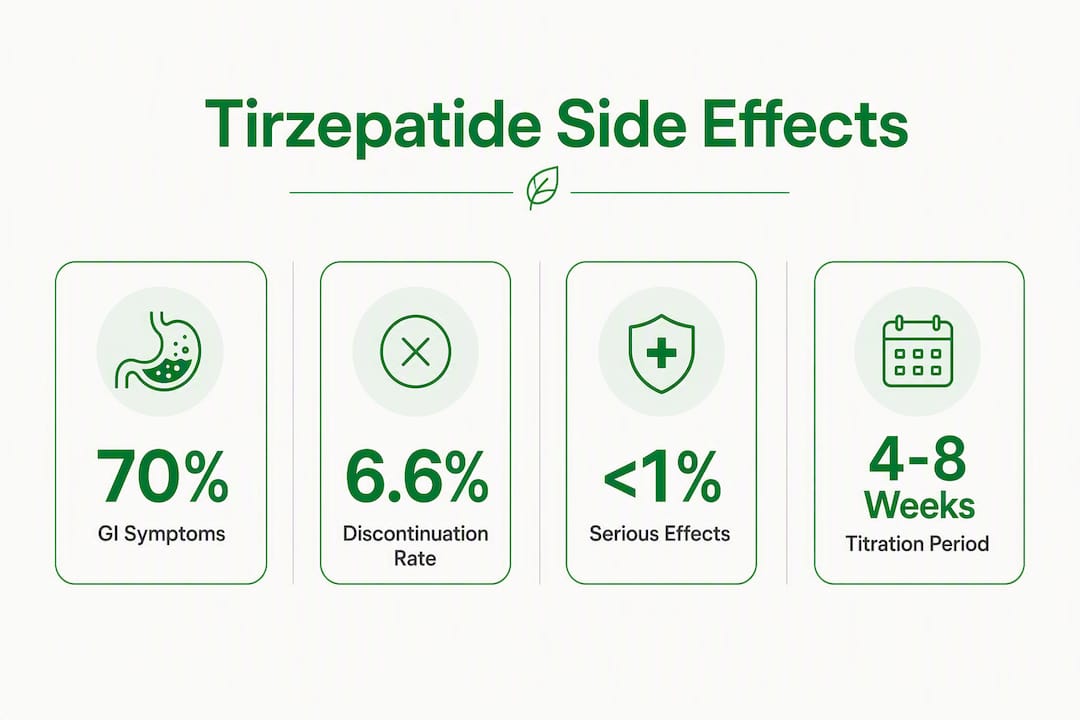
The most common tirzepatide side effects are gastrointestinal: nausea, vomiting, diarrhea, constipation, decreased appetite, dyspepsia, and abdominal pain. Most of these occur during dose escalation and ease as your body adjusts. The single most important immediate action is to stay hydrated, eat smaller meals, and contact your prescriber if symptoms are severe or persistent.
Red-flag symptoms requiring urgent care:
According to the MOUNJARO prescribing information, overall gastrointestinal adverse reaction rates in pooled placebo-controlled trials were higher with Mounjaro at increasing doses compared to placebo. That gap is significant, but the majority of patients who experience GI symptoms do not discontinue treatment. Knowing what to expect and how to respond makes a real difference in staying on therapy safely.
Tirzepatide is approved by the FDA under two brand names: Mounjaro (for type 2 diabetes management) and Zepbound (for chronic weight management). Both contain the same active ingredient and carry the same side-effect profile.
The GI symptoms that show up most often with tirzepatide are not random. They follow a predictable pattern tied to how the drug works and how quickly the dose increases.

Nausea is the most frequently reported symptom, often peaking in the hours after an injection and typically feeling worse after larger or fatty meals. Vomiting occurs less often but can follow uncontrolled nausea, especially in the first weeks at a new dose. Diarrhea tends to come and go rather than persist continuously, while constipation affects a different subset of patients and can alternate with loose stools. Decreased appetite is partly intentional from the drug’s mechanism but can feel uncomfortable when it leads to early satiety or food aversion. Dyspepsia (indigestion, bloating, or a burning sensation) and abdominal pain round out the list of common side effects reported in at least 5% of trial participants.
The timing matters. Most of these symptoms cluster during the titration phase, the weeks when your dose is being increased. Once the dose stabilizes, many patients see a noticeable improvement.
“Nausea, vomiting, and diarrhea most commonly occur while the dose is being increased and tend to decline with continued treatment.” — Mounjaro patient information, Eli Lilly
At home, the first-line response is straightforward: drink water consistently throughout the day, eat four to five small meals instead of two or three large ones, and avoid high-fat or heavily spiced foods on injection days.
Pro Tip: Avoid eating to the point of fullness on the day of your injection. Tirzepatide slows how quickly your stomach empties, so a meal that felt fine before starting the medication can suddenly feel like too much. Stopping at about 70–80% full prevents a lot of the post-injection nausea.
Tirzepatide is a dual GIP and GLP-1 receptor agonist. It activates two hormone pathways that your gut and brain use to regulate hunger and digestion. The GLP-1 pathway, in particular, slows gastric emptying, which means food moves through your stomach more slowly than usual.

That slowing is intentional. It contributes to earlier satiety and reduced caloric intake. But it also explains why nausea, bloating, and a sense of fullness after small amounts of food are so common, especially early on. Your digestive system is adapting to a new pace.
The appetite suppression works through both central (brain) and peripheral (gut) signaling. Reduced appetite is a therapeutic effect, but when it becomes severe food aversion or leads to inadequate fluid intake, it becomes a side-effect concern. Altered bowel habits, whether diarrhea or constipation, reflect the same disruption to normal gut motility.
One practical implication that catches patients off guard: if you are scheduled for surgery or a procedure requiring anesthesia, tell your anesthesiologist you are taking tirzepatide. Slowed gastric emptying raises the risk of aspiration under anesthesia, and many anesthesiologists now request a longer pre-procedure fasting window or a temporary hold on the medication.
Most people on tirzepatide experience only the GI symptoms described above. But a smaller group encounters reactions that are less common and considerably more serious. Knowing the warning signs can prevent a manageable problem from becoming a medical emergency.
Acute pancreatitis is the most important serious risk. Symptoms include severe abdominal pain that starts suddenly, often radiates to the back, and does not improve with position changes. If you experience this, stop taking tirzepatide and go to an emergency room. Do not wait to see if it resolves.
Acute gallbladder disease, including gallstones (cholelithiasis) and gallbladder inflammation (cholecystitis), has been reported with tirzepatide use. Symptoms include upper right abdominal pain, fever, and jaundice. This requires prompt medical evaluation.
Severe hypersensitivity reactions, including anaphylaxis and angioedema, have been reported postmarketing. Signs include facial or throat swelling, difficulty breathing, a rapid or irregular heartbeat, and a sudden drop in blood pressure. This is a 911 situation.
Acute kidney injury (AKI) is typically secondary to dehydration from prolonged vomiting or diarrhea rather than a direct drug effect on the kidneys. Postmarketing reports have included cases requiring dialysis. Staying hydrated is not just comfort advice; it is kidney protection.
“Postmarketing reports have described acute pancreatitis (including hemorrhagic and necrotizing pancreatitis), acute kidney injury sometimes requiring dialysis, and anaphylaxis/angioedema.” — MOUNJARO FDA prescribing information
Thyroid C-cell tumors were observed in rodent studies at clinically relevant exposures. Human relevance is unknown, but tirzepatide carries a boxed warning: it is contraindicated in patients with a personal or family history of medullary thyroid carcinoma (MTC) or Multiple Endocrine Neoplasia syndrome type 2 (MEN 2). Report any neck lump, hoarseness, or difficulty swallowing to your provider immediately.
Severe hypoglycemia is a risk specifically for patients who also take insulin or sulfonylureas (such as glipizide or glimepiride). Tirzepatide itself has a low hypoglycemia risk in people not on those agents, but the combination can push blood sugar dangerously low. Your prescriber may reduce your insulin or sulfonylurea dose when starting tirzepatide.
Additional postmarketing signals include gallbladder disease, diabetic retinopathy complications, and hair thinning (alopecia), though the frequency of these events is not precisely established from trial data alone.
The numbers from the pivotal trials give you a concrete sense of how likely each reaction is.
| Adverse Reaction | Placebo | Mounjaro 5 mg | Mounjaro 10 mg | Mounjaro 15 mg |
|---|---|---|---|---|
| Any GI adverse reaction | placebo 20.4% | 37.1% | 39.6% | 43.6% |
| Nausea | — | up to 18% | up to 18% | up to 18% |
| Diarrhea | — | up to 17% | up to 17% | up to 17% |
| Decreased appetite | — | up to 11% | up to 11% | up to 11% |
| Vomiting | — | up to 9% | up to 9% | up to 9% |
| Constipation | — | reported ≥5% across doses | reported ≥5% across doses | reported ≥5% across doses |
Source: MOUNJARO FDA prescribing information
The dose-dependent pattern is clear: GI adverse reactions climb with each dose increase. That is exactly why the standard titration schedule moves slowly, typically holding at each dose level for four weeks before stepping up.
Discontinuation rates due to GI side effects also rise with dose: 3.0% at 5 mg, 5.4% at 10 mg, and 6.6% at 15 mg, compared to 0.4% in the placebo group. Most patients who stop do so during titration, not after reaching a stable dose.
The takeaway from these numbers: the majority of patients at every dose level do not discontinue because of GI symptoms. The side effects are real and common, but with incidence up to 43.6% for any gastrointestinal reaction and up to 18% for nausea, they are manageable for most people with the right strategies in place.
Good management starts before symptoms become severe. The strategies below work best when you start them on day one, not after nausea has already disrupted a week of meals.
At-home measures:
When to call your clinician:
Clinicians have several tools beyond lifestyle advice. Slower dose titration, staying at a lower dose for longer than the standard four weeks, is the most effective way to reduce GI burden without stopping therapy. Temporary dose reduction is another option. For persistent nausea, antiemetic medications (such as ondansetron or promethazine) can be prescribed. If you are on insulin or a sulfonylurea, your prescriber should review those doses early in your tirzepatide course to reduce hypoglycemia risk.
Pro Tip: During the first 4–8 weeks of titration, set a phone reminder every two hours to take a few sips of water or an oral rehydration drink. Dehydration from reduced appetite and mild GI symptoms can sneak up gradually. Consistent small fluid intake is more effective than trying to catch up after you feel thirsty.
For patients who want to review contraindications and red-flag symptoms before their next visit, having that reference on hand makes the conversation with your provider more specific.
A thorough intake conversation prevents most of the serious complications. Whether you are starting tirzepatide for the first time or reporting new symptoms, these are the details your clinician needs.
Before starting:
“Bring a written list of all your current medications, including over-the-counter drugs and supplements, to your first tirzepatide visit. Interactions with glucose-lowering agents are the most clinically significant, but absorption timing for other oral medications matters too.” — MedlinePlus tirzepatide drug information
When reporting symptoms:
Note the date symptoms started, how severe they are on a 1–10 scale, whether they are getting better or worse, and your current hydration and food intake. For injection-site reactions or visible symptoms like jaundice, a photo uploaded through your patient portal gives your provider more to work with than a verbal description alone.
Patients using tirzepatide for weight loss should also flag any significant mood changes, as neuropsychiatric signals have appeared in postmarketing monitoring across the GLP-1 class.
Stopping tirzepatide is not like stopping a daily vitamin. There are real physiologic changes to anticipate.
In the short term, appetite returns, often noticeably within days to weeks. For patients who had significant appetite suppression, the return of hunger can feel abrupt. Weight regain is common after discontinuation, particularly without a concurrent behavioral or dietary program in place.
GI symptoms, if they were present, typically resolve after stopping. Nausea and diarrhea linked to the drug’s mechanism do not persist once the medication clears your system.
For patients on concurrent glucose-lowering therapy, stopping tirzepatide can shift glycemic control in either direction. If your insulin or sulfonylurea dose was reduced when you started tirzepatide, it may need to be increased again after stopping. Monitor blood sugar more closely in the first two weeks after discontinuation and contact your prescriber for dose guidance.
If you are stopping because of a serious adverse reaction, such as suspected pancreatitis or a severe allergic response, seek emergency care first and report the event to the FDA through MedWatch. Your prescriber should also be notified as soon as possible so they can document the reaction and adjust your treatment plan.
Tirzepatide’s most common side effects are gastrointestinal, dose-dependent, and usually transient, but a small subset of patients experience serious reactions that require prompt medical attention.
| Point | Details |
|---|---|
| GI effects are dose-dependent | Overall GI adverse reaction rates increase with dose compared to placebo. |
| Most symptoms occur during titration | Nausea, vomiting, and diarrhea peak during dose escalation and typically ease once the dose stabilizes. |
| Red-flag symptoms need urgent care | Severe abdominal pain, jaundice, throat swelling, or signs of dehydration require immediate medical attention. |
| Hydration prevents serious complications | Dehydration from GI losses is the most common path to acute kidney injury; consistent fluid intake is protective. |
| AM Rx offers same-day telehealth support | Virtual visits through AM Rx allow fast dose adjustments, antiemetic prescriptions, and lab orders without an ER trip. |
The conversation most patients need before starting tirzepatide is not the one they usually get. The standard handoff is a prescription and a pamphlet. What actually helps is a specific, honest preview: here is what the first four weeks will feel like, here is what is normal, and here is the exact threshold at which you should call us.
What I find most underestimated in telehealth practice is how much the timing of that conversation matters. Patients who receive proactive counseling before their first injection are far less likely to stop the medication unnecessarily. They recognize nausea as expected rather than alarming. They know to sip fluids rather than wait until they feel sick. That preparation alone keeps people on therapy long enough to see results.
The other thing worth saying plainly: the serious risks, pancreatitis, severe allergic reactions, AKI, are real but uncommon. The peer-reviewed literature on tirzepatide adverse events confirms that the vast majority of patients experience only the manageable GI effects. Framing the serious risks accurately, neither dismissing them nor catastrophizing them, is what builds the kind of patient trust that leads to good outcomes.
Telehealth is genuinely well-suited to this medication. Patients can message their provider the morning after an injection, upload a photo of an injection-site reaction, or get a same-day antiemetic prescription without driving to a clinic. That speed matters when the alternative is a patient quietly stopping their medication because nausea felt unmanageable and they did not want to bother anyone.
Side-effect management for tirzepatide is not a one-time conversation. It is an ongoing process of monitoring, adjusting, and communicating, and that works best when your provider is easy to reach.

AM Rx is built for exactly this. Through same-day virtual visits, you can get a dose adjustment, an antiemetic prescription, or a lab order without waiting weeks for an in-person appointment. Providers review your full medication list to catch hypoglycemia risks before they happen, and the platform supports ongoing follow-up so that a rough week at a new dose does not turn into a reason to quit.
If you are currently experiencing side effects or want to start tirzepatide with proper clinical oversight, book a telehealth visit with AM Rx today. Same-day appointments are available, and your provider can address dose questions, prescribe supportive medications, and order labs when needed, all from your phone or computer.
The sources below are the most authoritative references for tirzepatide’s safety profile. For personal medical advice, always consult your healthcare provider.
To report a side effect to the FDA: Use the MedWatch Online Voluntary Reporting Form or call 1-800-FDA-1088. Reporting helps the FDA monitor real-world safety signals beyond clinical trials.
This article provides general health information and is not a substitute for professional medical advice. Always consult your prescriber or a qualified healthcare provider for guidance specific to your situation.