Semaglutide side effects are primarily gastrointestinal — nausea, vomiting, diarrhea, constipation, and abdominal pain — which affect most patients to some degree, especially during dose escalation. Serious reactions are uncommon, but a few require immediate action. Harvard Health’s summary of a Harvard and CDC study confirms that serious semaglutide side effects are rare, with GI complaints accounting for the bulk of what patients actually experience. This applies across all three FDA-approved forms: Ozempic (injectable, for type 2 diabetes), Wegovy (injectable, for weight management), and Rybelsus (oral tablet).
Act immediately if you experience any of the following:
For non-urgent GI symptoms (mild nausea, loose stools, reduced appetite), contact your prescriber at your next scheduled visit or send a message through your patient portal.
Pro Tip: Save your clinician’s after-hours line and your nearest urgent care address in your phone before your first injection. You will not want to search for them when you feel sick.
Semaglutide’s most common side effects are gastrointestinal, typically peak during dose escalation, and often improve within 4–8 weeks at a stable dose — but specific red-flag symptoms require immediate action.
| Point | Details |
|---|---|
| GI effects are expected | Nausea, vomiting, diarrhea, and constipation affect most patients and usually ease within 4–8 weeks at a stable dose. |
| Titrate slowly | Starting at the lowest dose and escalating gradually is the most effective way to reduce early GI side effects. |
| Hydration prevents AKI | Vomiting and diarrhea cause fluid loss that can lead to acute kidney injury; drink consistently and monitor urine output. |
| Know the red flags | Severe upper abdominal pain, throat swelling, neck lumps, or sudden vision changes require same-day or emergency care. |
| AM Rx for supervised care | AM Rx offers same-day telehealth visits for dose adjustments, medication reviews, and urgent semaglutide guidance. |
The FDA prescribing information via DailyMed identifies five adverse reactions occurring in at least 5% of patients: nausea, vomiting, diarrhea, abdominal pain, and constipation. Headache, dizziness, and fatigue also appear in Wegovy trial data. Injection-site reactions (redness, swelling, bruising at the injection point) are generally mild and resolve on their own.
| Adverse Reaction | Semaglutide (Wegovy trials) | Placebo |
|---|---|---|
| Nausea | A significant portion of patients | A smaller portion of placebo patients |
| Diarrhea | A significant portion of patients | A smaller portion of placebo patients |
| Vomiting | A notable fraction of patients | A smaller fraction of placebo patients |
| Constipation | A notable fraction of patients | A smaller fraction of placebo patients |
| Abdominal pain | A substantial number of patients | Fewer placebo patients |
| Headache | Some patients | Some placebo patients |
| Fatigue | Some patients | Some placebo patients |
Figures sourced from Wegovy safety profile data; individual trial results vary.
Timing matters here. According to WebMD’s review of semaglutide adverse reactions, GI symptoms tend to appear during the first weeks of treatment or after each dose increase, then ease as your body adjusts. Most patients see meaningful improvement within 4–8 weeks at a stable dose. Some take up to 2–3 months to reach full tolerance, particularly at higher maintenance doses.
A few practical moves reduce the worst of it: eat smaller meals, choose low-fat and low-fiber foods on injection days, avoid lying down right after eating, and stay well hydrated. If nausea is persistent, ask your prescriber whether a short course of an antiemetic like ondansetron makes sense for you.
Pro Tip: Inject Ozempic or Wegovy at night before bed. Many patients find that sleeping through the peak nausea window — roughly 6–8 hours post-injection — makes the first several weeks far more tolerable. Check with your clinician before changing your injection timing.
Most people on semaglutide never encounter these. But when they do occur, the window for acting quickly is narrow.
Acute pancreatitis. Severe, persistent upper abdominal pain that radiates to the back, often with nausea and vomiting, is the hallmark. Stop the medication and go to the emergency department. Do not wait to see if it passes.
Acute kidney injury (AKI). Severe vomiting or diarrhea causes fluid loss that can stress the kidneys. Postmarketing reports documented AKI in patients with significant dehydration from GI reactions. Watch for dark urine, dramatically reduced urine output, or swelling in the legs. Call your clinician the same day.
Gallbladder disease. Gallstones and cholecystitis have been reported, and rapid weight loss itself raises gallstone risk. Right-upper-quadrant pain, especially after eating fatty food, warrants a same-day call.
Hypersensitivity and anaphylaxis. Rash, itching, and hives are milder signals. Throat tightening, difficulty breathing, or a sudden drop in blood pressure are emergencies. Call 911.
Diabetic retinopathy complications. Patients with pre-existing diabetic eye disease who experience rapid glucose improvement may see a temporary worsening of retinopathy. Any sudden vision change — blurring, floaters, loss of peripheral vision — means a same-day call to your clinician.
Thyroid C-cell tumor warning. Rat studies showed thyroid C-cell tumors at clinically relevant exposures. Whether this translates to humans is not yet established, but the FDA label carries a boxed warning. MedlinePlus advises patients to report any neck lump, hoarseness, difficulty swallowing, or shortness of breath immediately.
Red-flag rule: If a symptom is severe, sudden, or involves your airway, kidneys, or eyes, do not message your portal and wait. Call 911 or go directly to the emergency department.
Some patients carry risk factors that change the calculus significantly. Knowing yours before your next visit lets you ask the right questions.
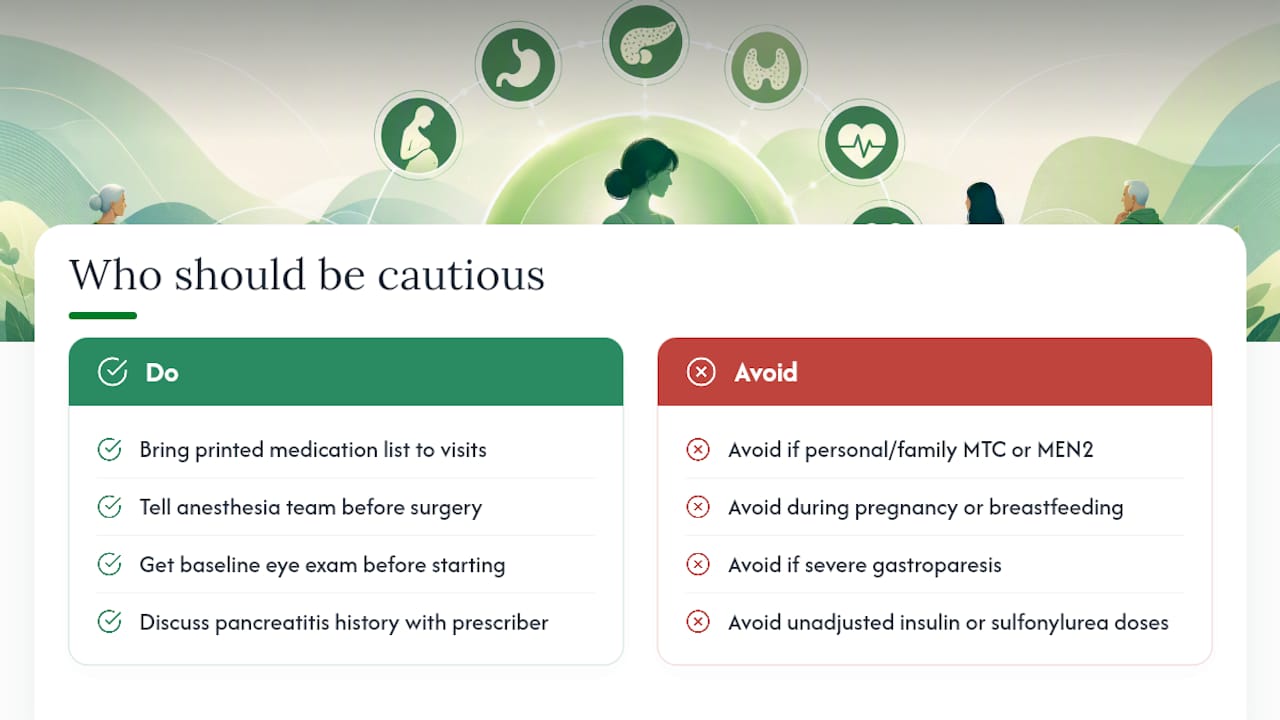
Absolute contraindications. Semaglutide is contraindicated in anyone with a personal or family history of medullary thyroid carcinoma (MTC) or Multiple Endocrine Neoplasia type 2 (MEN 2). There is no safe dose threshold for these patients.
Pregnancy and breastfeeding. Semaglutide is not recommended during pregnancy. Weight loss during pregnancy carries fetal risk, and animal data raised developmental concerns. Women of childbearing age should use effective contraception and stop semaglutide at least two months before a planned pregnancy. Breastfeeding safety has not been established.
History of pancreatitis. Patients with prior pancreatitis episodes are not automatically excluded, but the risk-benefit discussion with your prescriber is critical. Clinicians typically monitor more closely and have a lower threshold for discontinuation.
Severe gastroparesis. Semaglutide slows gastric emptying. In patients who already have significantly delayed gastric emptying, this can worsen symptoms substantially and complicate blood sugar management.
Concurrent insulin or sulfonylureas. Combining semaglutide with insulin or a sulfonylurea (like glipizide or glimepiride) raises hypoglycemia risk. The FDA prescribing information recommends reducing insulin or sulfonylurea doses when starting semaglutide and monitoring blood glucose more frequently during the adjustment period.
Pre-existing diabetic retinopathy. Rapid glycemic improvement can temporarily worsen retinopathy. Patients with known eye disease should have a baseline ophthalmology exam before starting and follow up within the first few months.
Elective surgery. Tell your anesthesia team about semaglutide use before any procedure. Slowed gastric emptying raises aspiration risk, and your surgical team may adjust fasting instructions or pause the medication in advance.
Before your next appointment: Write down every medication you take (including insulin, sulfonylureas, and OTC drugs), your personal and family history of thyroid disease or pancreatitis, and any history of kidney disease or eye complications. Your prescriber needs this list to set the right monitoring plan.
Pro Tip: Bring a printed medication list to every telehealth or in-person visit. Clinicians catch more drug interactions when they can see the full picture at once rather than relying on memory.
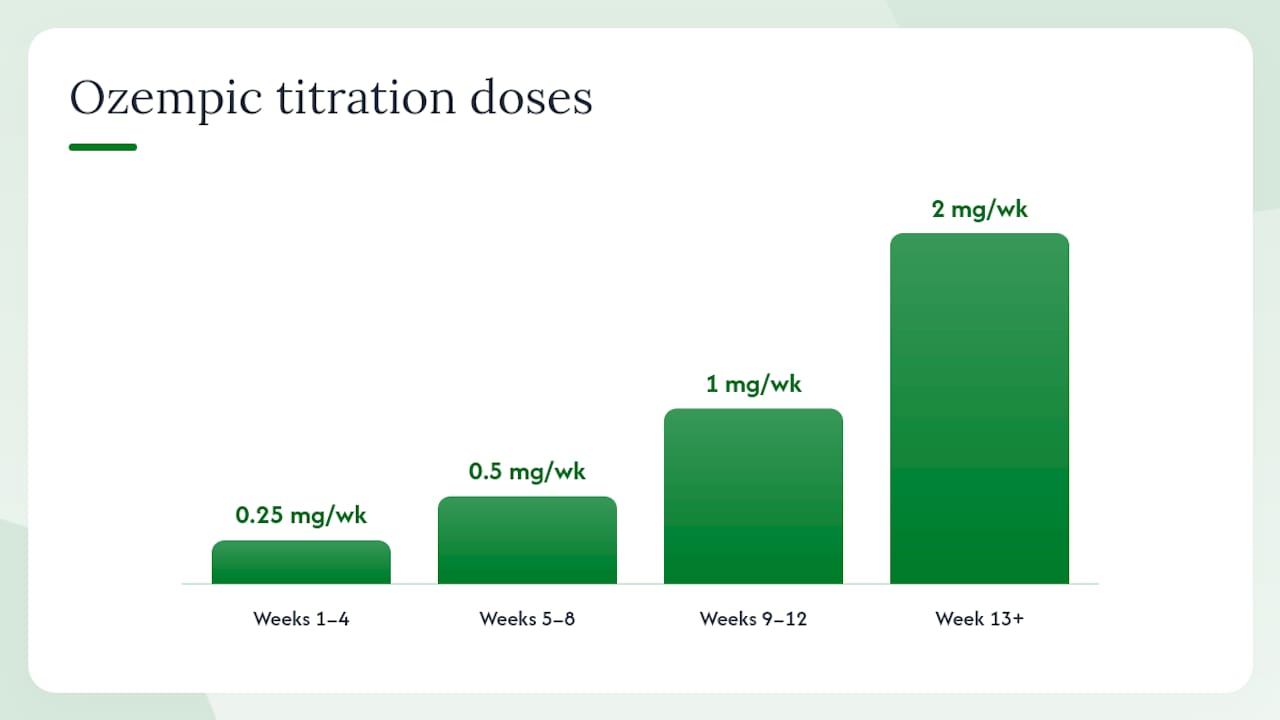
The single most effective strategy is titration: starting at the lowest dose and increasing slowly. Drugs.com confirms that a “start low, go slow” approach is the most practical way to reduce early GI side effects and improve long-term tolerability.
Typical titration steps (Ozempic example):
Wegovy follows a longer escalation schedule over approximately 16–20 weeks to reach the 2.4 mg maintenance dose. Rybelsus (oral) starts at 3 mg daily for 30 days, then 7 mg, then 14 mg.
Diet and hydration during treatment:
Managing hypoglycemia risk. If you take insulin or a sulfonylurea alongside semaglutide, check your blood glucose more frequently during the first 4–8 weeks. Your prescriber may reduce your insulin or sulfonylurea dose proactively. Know the symptoms of low blood sugar: shakiness, sweating, confusion, and rapid heartbeat.
When antiemetics are appropriate. Ondansetron (Zofran) or promethazine can help patients who cannot tolerate nausea well enough to stay on treatment. This is a short-term bridge, not a long-term fix. Coordinate with your clinician before starting any antiemetic.
If side effects become intolerable:
Pro Tip: Six questions worth asking at your next follow-up: (1) Should I pause my dose escalation given my current symptoms? (2) Do I need a blood glucose or kidney function check? (3) Is an antiemetic appropriate for me? (4) Should I adjust my insulin or sulfonylurea dose? (5) When should I get an eye exam? (6) What symptoms should make me call you immediately rather than wait?
The FDA prescribing information on DailyMed and Wegovy trial summaries provide the clearest picture of frequency and risk.
One important limitation: postmarketing adverse event reports are voluntary, which means the true incidence of rare events is difficult to quantify precisely. The rates in clinical trials reflect controlled conditions; real-world patients often have more comorbidities and take more concurrent medications. That context does not make the warnings less relevant. It means the monitoring guidance matters even more outside a trial setting.
Key figure: Harvard Health’s review of the Harvard and CDC study found that serious side effects from semaglutide are uncommon in real-world use, with GI complaints representing the dominant safety signal.
Triage this clearly. The wrong level of care wastes time in both directions.
Call 911 or go to the emergency department immediately:
Contact your clinician the same day:
Send a portal message or call on the next business day:
Before you call, have this information ready:
The conversation I have most often with patients on semaglutide goes something like this: “I feel terrible — should I stop?” The answer is almost never a flat yes or no. GI symptoms during the first 4–8 weeks are expected, and stopping prematurely means losing the therapeutic benefit before the body has had time to adjust. The real question is whether the symptom is tolerable and transient, or whether it is a signal of something more serious.
In practice, the monitoring plan for most patients includes a check-in at 4 weeks after each dose increase, a metabolic panel at baseline and at 3 months, and an eye exam for anyone with pre-existing retinopathy. If nausea is severe enough to cause meaningful dehydration, that is a clinical event, not just a nuisance. Pausing the escalation schedule is a legitimate and common clinical decision. Pushing through severe symptoms to hit a target dose faster rarely ends well.
The patients who do best are the ones who communicate early. A message saying “I’ve had nausea for 10 days and I’m barely eating” is far more useful than silence followed by a crisis call. Telehealth makes that communication easier because patients do not have to wait weeks for an in-office slot to ask a straightforward question about their dose.
Managing semaglutide well means having a clinician available when your dose changes, not just when you first fill the prescription. AM Rx offers same-day telehealth visits for patients who need a medication review, a titration adjustment, or urgent guidance on a new symptom — without waiting weeks for an in-office appointment.

A typical AM Rx visit for semaglutide concerns covers your current dose, recent side effects, any glucose medication adjustments needed, and a clear plan for your next escalation step. If your symptoms suggest something that needs in-person evaluation, your AM Rx clinician will tell you directly and help you triage appropriately. Prescription refills, monitoring coordination, and follow-up are all handled through the same platform.
If you are already on semaglutide and want a clinician to review your current dose and symptom pattern, start with AM Rx’s telehealth consent and onboarding to book a same-day visit. You can also explore AM Rx’s weight loss program to understand the full scope of supervised care available.
This article provides general health information and is not a substitute for professional medical advice. Confirm current prescribing guidance and your individual risk factors with your clinician or pharmacist.
The most serious risks are acute pancreatitis, severe allergic reactions (anaphylaxis), acute kidney injury from dehydration, and thyroid C-cell tumors (based on animal data). Severe upper abdominal pain, throat swelling, or significantly reduced urine output all require emergency or same-day care.
GI side effects typically peak during the first few weeks of treatment and after each dose increase. Most patients see improvement within 4–8 weeks at a stable dose, though some take up to 2–3 months to fully adjust.
Long-term concerns include gallbladder disease (gallstones and cholecystitis), diabetic retinopathy worsening in patients with pre-existing eye disease, and the thyroid C-cell tumor signal from animal studies whose human relevance remains under study. Regular monitoring with your clinician addresses these risks.
Clinical evidence shows that most patients regain a significant portion of lost weight after discontinuing semaglutide, because the medication’s appetite-suppressing effects stop when treatment ends. Continued lifestyle support and clinician follow-up are important for maintaining results.
Yes. Platforms like AM Rx offer same-day virtual visits for dose adjustments, medication reviews, and guidance on new or worsening symptoms, making it practical to get clinical input without waiting for an in-office appointment.