Yes, you can refill prescriptions online, and for most routine medications a pharmacy app or telehealth request is faster than calling anyone. The exception is controlled substances like Xanax or oxycodone, which federal rules restrict from most remote refill paths. For everything else, from blood pressure medication to birth control, an online request typically clears in a few hours to a couple of days.
Before you start, have these ready:
If your current pharmacy doesn’t have an online portal, or your prescriber is hard to reach, starting a telehealth visit with a licensed provider is often the quickest way to get a new e-prescription sent where you need it.
Most routine prescription refills can be completed online within hours, but controlled substances almost always require an in-person exam under federal rules.
| Point | Details |
|---|---|
| Pick the right channel | Use pharmacy apps for existing scripts, telehealth when refills ran out or you need a new authorization. |
| E-prescribe beats phone transfers | Asking your prescriber to e-prescribe directly to a pharmacy is faster than pharmacy-to-pharmacy calls. |
| Controlled substances need extra steps | Xanax and oxycodone refills typically require an in-person exam under DEA and HHS rules. |
| Confirm insurance before ordering | Check formulary tier and prior authorization requirements to avoid checkout delays. |
| AM Rx handles eligible refills fast | Licensed clinicians review your history and e-prescribe to your chosen pharmacy, often same visit. |
The right channel depends on what you’re refilling and how fast you need it. Here’s how each one actually works.
Pharmacy portal or app. Log into your pharmacy’s website or app, select the prescription from your medication list, choose pickup or delivery, and submit. Most chains confirm within a few hours.
Mail-order or home delivery. Set up an account with your mail-order benefit (often tied to your insurance), add the prescription number, and select auto-refill if you want it recurring. Expect a longer first-time setup but faster reorders after that.
Patient portal through your health system. Log into MyChart or a similar system portal, request the refill under your medication list, and it routes to your prescriber’s staff for approval before hitting the pharmacy.
Telehealth or online clinic. Submit an intake form describing your current medication and history. A clinician reviews it, either live or asynchronously, and sends the prescription electronically to your pharmacy of choice.
Phone-to-pharmacy digital options. Many pharmacies now accept refill requests through automated text or voice systems tied to your prescription number, no app required.
A quick comparison of what matters most for each:
Pro Tip: The fastest way to move a prescription anywhere is to skip the phone tag entirely. Ask your clinician to e-prescribe directly to the pharmacy you want, rather than asking one pharmacy to call another. Most software sends it in minutes.
After you submit a request, expect pharmacy staff to verify insurance and check for drug interactions before filling, which is why even “instant” digital requests can take a few hours to actually clear.
Online refills work best for patients with an established history on a stable medication and current insurance or payment information on file. If you’ve been on the same blood pressure medication or birth control for months, most channels handle that smoothly.
Controlled substances are a different story. HHS telehealth policy lays out specific requirements around prescribing controlled medications remotely, and many states add their own layers on top. That’s why refilling Xanax online usually isn’t possible without an in-person evaluation, and getting an oxycodone prescription online is even more restricted since it typically requires a documented in-person exam under DEA rules.
For everything outside that category, mostly maintenance medications for chronic conditions, the process runs through standard e-prescribe channels without the added scrutiny.
Useful references for the exact legal boundaries:
Timing varies more than most people expect. Same-day pickup is usually available once a pharmacy confirms your prescription, often within an hour or two. Standard pharmacy processing runs 24 to 72 hours. Mail-order refills typically take several days, and some services now offer same-day home delivery in dense metro areas.
On cost:
Insurance can slow things down if your plan requires prior authorization or the pharmacy suggests a generic substitution you weren’t expecting. Coverage rules and reimbursement structures shift often, so confirming your formulary tier before ordering saves a return trip.
Pro Tip: Call your insurer once a year to ask if any of your regular medications moved formulary tiers. A generic swap you didn’t know about is the single most common reason an online refill gets delayed at checkout.
Moving to a new state, or just switching pharmacies, doesn’t have to stall your refill. The fastest path:
Most maintenance medications transfer without friction this way. Controlled substances are trickier. A DEA-registered pharmacy can transfer certain prescriptions between states, but the rules are narrower than for standard medications. If you’re mid-move and running low, ask your current prescriber about a short bridge supply to cover the gap.
Scams are common enough that the FDA maintains ongoing consumer warnings about them. Before trusting any service with your prescription, check for:
Red flags include no listed phone number, shipping from outside the U.S., or prices dramatically below market rate. If a site can’t clearly explain how it protects your information, walk away.
Pro Tip: Search your state’s board of pharmacy website directly rather than trusting a badge or seal on the pharmacy’s own homepage. Anyone can paste a logo; not everyone can pass a license lookup.
Telehealth refills generally follow one path: you submit intake information, a clinician reviews it, the pharmacy verifies it, and the prescription gets sent electronically.
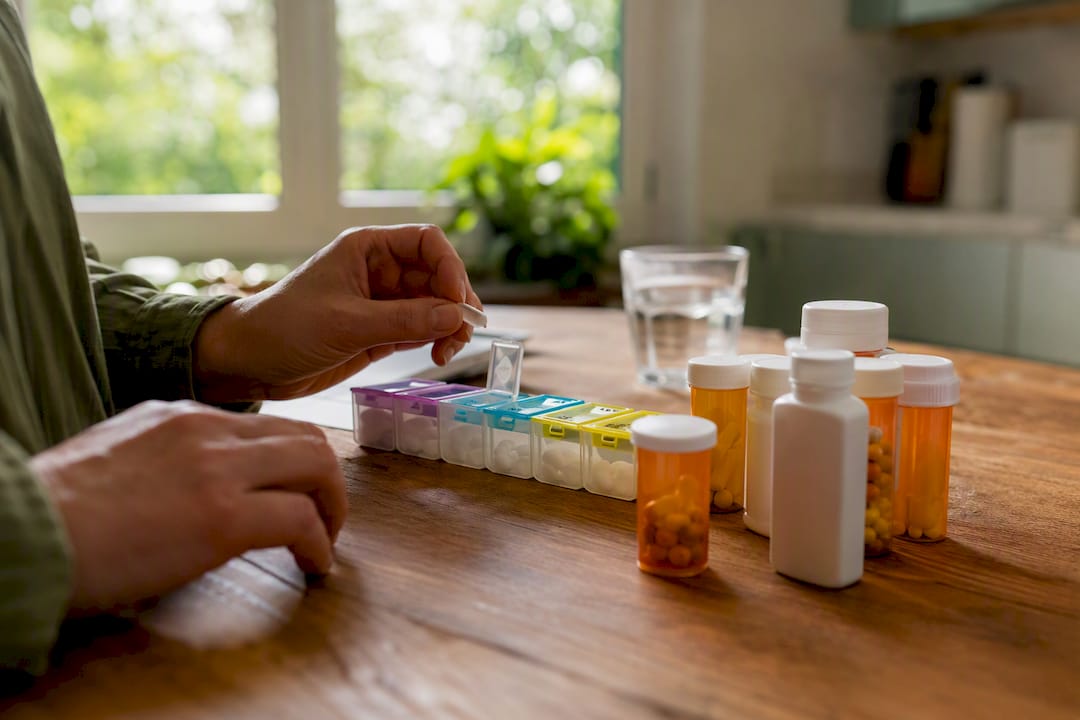
The review itself splits two ways. Synchronous visits involve a live video call, useful for anything that needs a real conversation. Asynchronous reviews, where a clinician reviews your submitted history and pharmacy records without a call, tend to move faster for stable, routine refills since there’s no scheduling involved.
Timing depends on complexity. Routine refills for medications you’ve been stable on often clear within minutes to a few hours. First-time prescriptions or anything involving a dose change usually take longer, since the clinician needs more context.
Telehealth coverage and reimbursement have expanded unevenly across states since the pandemic, which is part of why the exact process can look different depending on where you live and what insurance you carry.
AM Rx runs refill requests through licensed U.S. clinicians who review your history, confirm eligibility, and e-prescribe directly to the pharmacy you choose. For medications where routine review applies, most refill assessments move quickly, often within the same visit.
What you get:
Getting started takes about as long as filling out an intake form. Your information stays private and clinically reviewed the same way it would at an in-person visit, just without the waiting room.
Stable, routine medications you’ve taken for months are exactly what online refills are built for. New symptoms, a dose change, or anything involving a controlled substance usually calls for an in-person exam instead, no matter how convenient the app looks.
The honest answer is that convenience should never outrank clinical judgment. If something feels different about how you’re responding to a medication, that’s worth a real conversation with your prescriber, not a two-click refill.
AM Rx gets you a licensed clinician review and an e-prescription sent to your pharmacy without the hold music, the office visit slots, or the guesswork about whether your refill request actually went through. If you qualify for remote review, most assessments wrap up in one sitting, and your prescription routes straight to the pharmacy you already use.

Eligibility depends on your medication and history. Stable, routine prescriptions typically qualify. Controlled substances still follow the federal restrictions outlined earlier in this guide, so those cases may need an in-person visit instead. If your medication fits, starting your consult takes a few minutes, and you’ll know within your first visit whether your refill can move forward the same day.
For legal boundaries and process details straight from the source:
This article is general information, not a substitute for advice from a qualified doctor. Consult a qualified healthcare professional about your own circumstances before acting on anything here.
Log into your pharmacy’s app or website, request the refill under your medication list, and confirm delivery or pickup. If you’ve run out of refills, a telehealth visit can get a new prescription sent to your pharmacy instead.
Generally no. Xanax is a controlled substance, and federal telehealth prescribing rules require an in-person evaluation for most refills.
It’s unlikely without an in-person exam. Oxycodone falls under strict DEA controlled-substance rules that limit remote prescribing to narrow exceptions.
Ask your prescriber to e-prescribe directly to your new pharmacy, which is faster and more reliable than a pharmacy-to-pharmacy transfer request. Controlled substances may need extra verification depending on state rules.
Yes. AM Rx clinicians review eligible requests and e-prescribe to the pharmacy you choose, typically within the same visit for stable, routine medications.