Yes, many people can start melasma treatment online. A licensed clinician looks at photos or video of your skin, asks about your history, and may prescribe a topical cream that is mailed to you. Some cases still need an in-person exam or a procedure, and this guide explains which ones, what treatment involves, how long it takes and what it costs.
Melasma shows up as tan, brown or gray-brown patches, most often on the cheeks, forehead, upper lip and chin. It is a pigment disorder, not a disease that harms your health. The challenge is that it tends to come back. Sun and visible light, hormones and heat can all set it off again after it fades.
A consensus article by dermatology experts in a 2024 treatment review describes a flexible treatment algorithm. It also notes that some treatments can cause adverse effects and that melasma can be especially difficult in patients with skin of color. That is why a treatment plan is worth having a clinician set up, rather than layering products from the drugstore aisle.
Often, yes, for the first step. Melasma is a visible condition, and a clinician can usually judge it from clear, well-lit photos or a live video call, combined with your history. A virtual visit works best when:
Telehealth rules back up this model. HHS says direct-to-consumer telehealth providers must follow HIPAA and the licensing rules of each state where they treat patients. HHS also notes that providers may use a secure portal to collect information before a visit. In practice, that means your photos and intake form go through a private system, and you should be treated by a clinician licensed in your state.
The details differ by provider, but the flow is usually the same.
To get more out of the visit, write down every product you use on your face, including acids, retinoids and fragrance products. Irritation can darken pigment, so your clinician needs the full list.
The AAD lists the main choices. According to its melasma treatment guidance, clinicians may prescribe hydroquinone, tretinoin with a mild corticosteroid, or a triple-combination cream. Other options include azelaic acid, kojic acid and vitamin C. Tranexamic acid may be considered when other treatments fail, and the dermatologist will discuss your health before prescribing it.
| Option | What it does in plain terms | Typical route |
|---|---|---|
| Hydroquinone | Lightens pigment by slowing its production | Topical, prescription or lower-strength products |
| Tretinoin | Speeds skin turnover so pigment fades | Topical, prescription |
| Triple-combination cream | Combines a lightening agent, a retinoid and a mild steroid | Topical, prescription |
| Azelaic acid | Gentler option that evens skin tone | Topical |
| Kojic acid, vitamin C | Supportive brightening ingredients | Topical, often over the counter |
| Tranexamic acid | Considered when other treatments have failed | Oral, only after a health review |
Which of these is right for you is a clinician’s call, based on your skin, other medicines and any pregnancy plans. Not every telehealth service prescribes every item above. Ask before you pay which medications the clinician can prescribe for melasma, and whether they are the ones you are hoping for.
If you want to understand how one of these works, our piece on tretinoin for hyperpigmentation explains how retinoids are used for uneven skin tone and what irritation to expect.
Melasma creams are not harmless just because they are creams. A few habits help:
The 2024 consensus article mentioned above is a reminder that adverse effects are real and treatment needs to be tailored, especially for darker skin tones.

If you do only one thing alongside a prescription, make it sun protection. The AAD describes rigorous protection as a cornerstone of care: broad-spectrum SPF 30 or higher with iron oxides to block visible light, plus a wide-brimmed hat and shade. It also points to zinc oxide and titanium dioxide as helpful mineral filters.
A practical routine:
One unprotected afternoon can undo weeks of progress, which is the most common reason people think a cream has stopped working.
Be ready for a slow timeline. The AAD says treatment usually takes 3 to 12 months to show results, and it may take longer if the melasma has been there a long time. That is true whether you see a clinician in an office or on a screen.
A sensible way to track it:
A virtual visit is a good start, not a replacement for every exam. Book an in-person appointment with a dermatologist if:
If you are also dealing with scalp or hair concerns and need to find specialists near you, a hair clinic and specialist directory can help you locate in-person care.
A related point: redness and flushing are not melasma. If your concern is red, bumpy or flushed skin, our guide to rosacea treatment through telehealth covers that condition separately.
The cost has two parts: the visit and the products. The prices vary widely by provider, so compare the total, including any membership, the medication and shipping.
Insurance is the surprise for many people. The AAD notes that because melasma treatment is not considered medically necessary, most insurers will not cover it. Plan on paying out of pocket for the visit and probably the cream. Before you book, ask:
If your plan does cover some telehealth costs, our explainer on telehealth copay rules shows how copays generally work for virtual visits.
We see melasma as a condition where convenience matters more than most. The treatment is long, the follow-up is frequent, and people give up because getting to an appointment every few weeks is a hassle. A virtual model removes much of that friction: you can send photos, ask a question by message and adjust a plan without taking time off work.
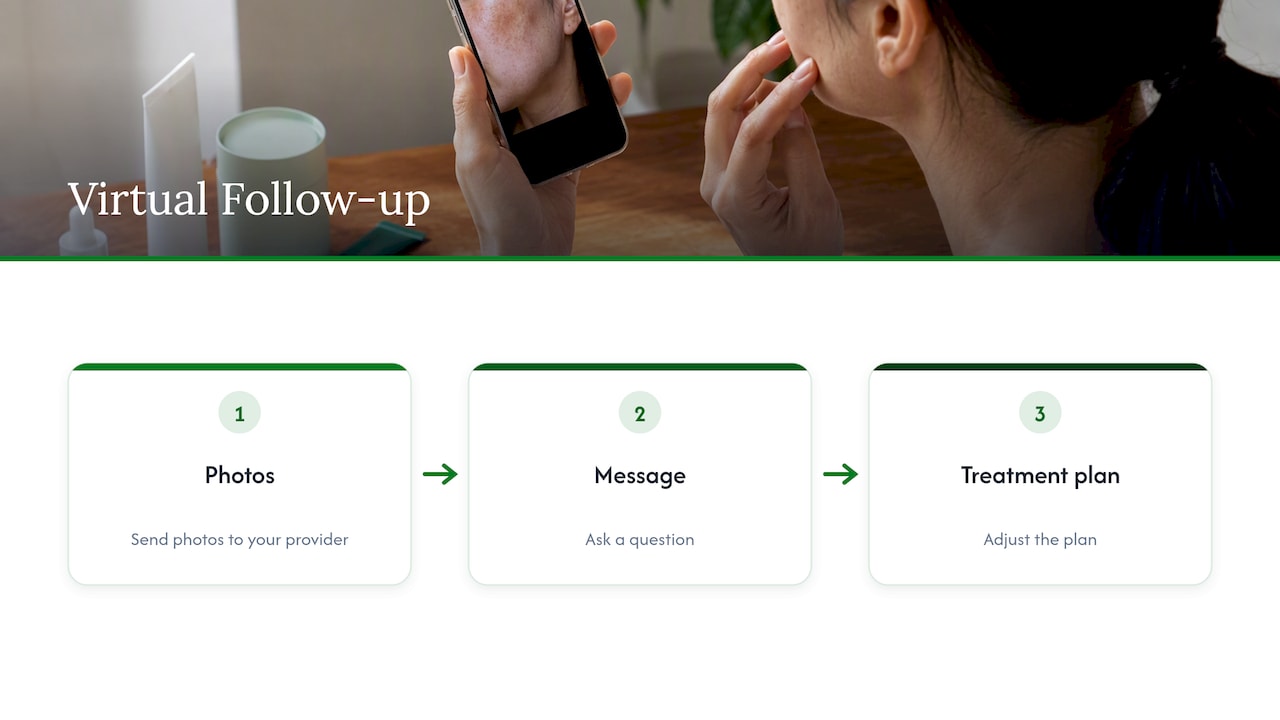
But convenience should never replace judgment. A good online visit does three things. It confirms that the spot looks like melasma and not something else. It matches a treatment to your skin, your health and your plans for pregnancy. And it sets honest expectations: months, not weeks, with sunscreen every day. If a service promises a fast cure, be skeptical.
We also believe in telling you when to go in person. If a patch looks unusual, you should see a dermatologist, and a good provider will say so.
— Bryan
AM Rx offers virtual visits with providers for skin concerns through our online dermatology consultation, with prescriptions delivered to your home and messaging with your provider for follow-up. If you are not sure your concern is melasma, that visit is a way to have a clinician look at it and tell you what makes sense next. We do not publish a price for this service on the page, so check the page for current details before you start.
Often, yes. Melasma has a typical look and pattern, and a clinician can combine clear photos or a live video with your history to make a likely diagnosis. If anything looks atypical, the clinician should send you for an in-person exam.
The AAD lists hydroquinone, tretinoin with a mild corticosteroid and triple-combination creams as prescription options. Azelaic acid, kojic acid and vitamin C are other choices. Your clinician picks based on your skin and health history.
Usually 3 to 12 months, according to the AAD, and longer for melasma that has been present for years. Use monthly photos to judge progress, and keep up daily sunscreen, or the patches may darken again.
Probably not. The AAD says melasma treatment is not considered medically necessary, so most insurers will not cover it. Ask for self-pay pricing for the visit and medication before you commit.
It can be when a licensed clinician reviews your history and monitors you. Tell them about pregnancy plans, other medications and past skin reactions, and report burning, swelling or blistering right away.