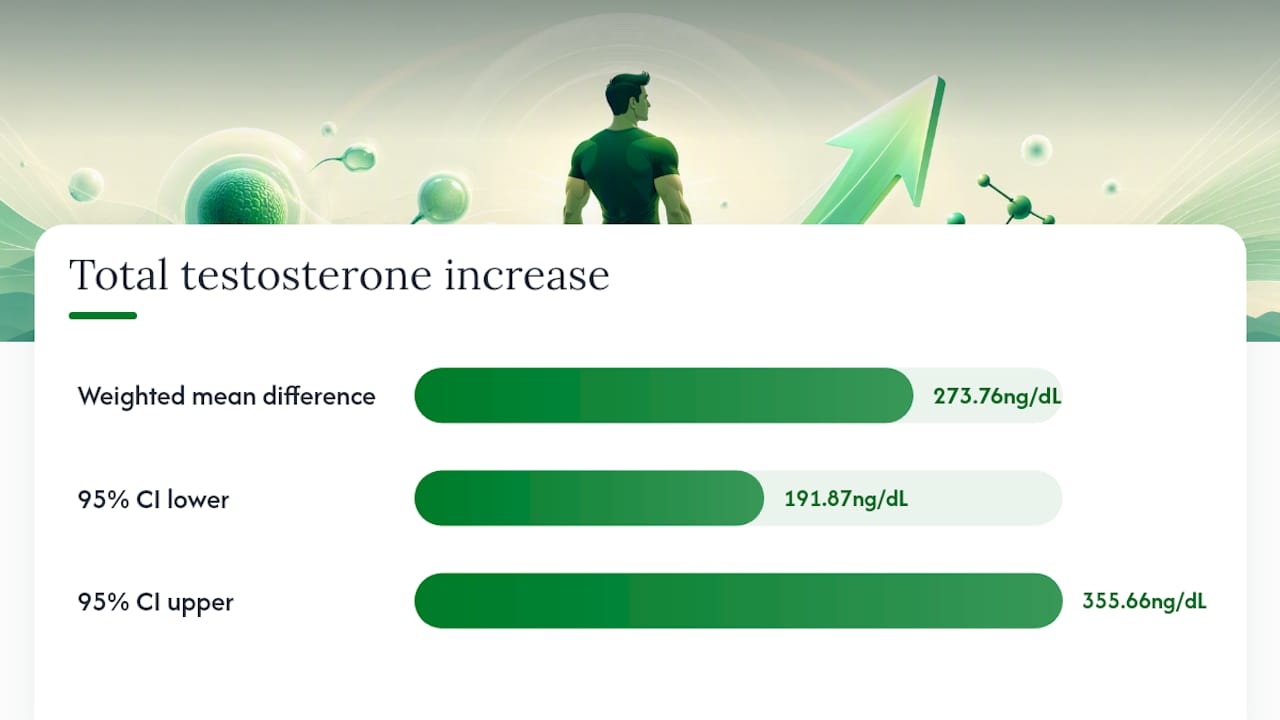
Enclomiphene can meaningfully raise testosterone in men with secondary hypogonadism while preserving sperm production — something no standard testosterone replacement therapy can claim. It does this by stimulating your own hypothalamic-pituitary-gonadal (HPG) axis rather than replacing testosterone from outside, which keeps LH, FSH, and spermatogenesis intact. A 2024 meta-analysis of randomized controlled trials found SERM therapy increased total testosterone by a weighted mean difference of 273.76 ng/dL (95% CI: 191.87–355.66 ng/dL) versus placebo, with significant LH and FSH gains as well.
Three things to understand before going further:
Medical supervision and lab monitoring are non-negotiable throughout treatment.
Enclomiphene is the most fertility-friendly pharmacologic option for secondary hypogonadism, raising testosterone through the body’s own HPG axis while keeping LH, FSH, and sperm production intact — but it requires proper diagnosis, medical supervision, and consistent monitoring to use safely.
| Point | Details |
|---|---|
| Right candidate matters | Enclomiphene works for secondary hypogonadism; men with primary testicular failure are unlikely to respond. |
| Meaningful testosterone gains | A 2024 meta-analysis found SERM therapy raised total testosterone by a mean of 273.76 ng/dL above placebo. |
| Fertility stays intact | Unlike TRT, enclomiphene preserves LH, FSH, and sperm production — confirmed in phase II RCTs. |
| Monitor consistently | Labs at baseline, weeks 4–8, and month 3 (semen analysis); then every 3–6 months throughout treatment. |
| AM Rx next step | AM Rx offers same-day virtual evaluations, lab coordination, and compounding pharmacy management for enclomiphene therapy. |
Your body regulates testosterone through a feedback loop. The hypothalamus releases GnRH, which signals the pituitary to release LH and FSH. LH tells the testes to produce testosterone; FSH drives spermatogenesis. When testosterone (and estradiol converted from it) rises high enough, it feeds back to the hypothalamus and pituitary to slow GnRH and gonadotropin release. In secondary hypogonadism, this axis is underactive — the signal from the brain is too weak, so the testes never get the instruction to produce enough testosterone.
Enclomiphene works by blocking estrogen receptors at the hypothalamus and pituitary. With that feedback signal muted, the brain reads estrogen as low and pushes out more GnRH, which drives LH and FSH higher. The testes respond by producing more testosterone and maintaining sperm output. As PubChem’s compound record confirms, enclomiphene citrate is the trans-isomer of clomiphene and the pharmacologically active agent responsible for this gonadotropin-stimulating effect.
The contrast with conventional testosterone replacement is stark:
The fertility implication is direct: because enclomiphene keeps LH and FSH elevated, the testes keep working. That is the core reason men who want children should know about this option.
The two most-cited phase II randomized trials are Kaminetsky et al. (2013) and Wiehle et al. (2014). Both enrolled men with secondary hypogonadism and tested enclomiphene at doses of 12.5 mg and 25 mg daily against either placebo or testosterone gel.
Statistic callout: The 2024 systematic review and meta-analysis found SERM therapy raised total testosterone by a mean of 273.76 ng/dL above placebo — a clinically meaningful shift for most men with secondary hypogonadism.
The Kaminetsky 2013 phase IIb study is particularly striking on fertility: men taking enclomiphene maintained sperm concentrations well into the fertile range, while men on testosterone gel frequently saw counts fall below thresholds associated with natural conception. The Wiehle 2014 pharmacodynamic study added another useful finding: LH-stimulating effects can persist for at least one week after the last dose, meaning a missed day does not trigger an immediate hormonal crash.
| Dimension | Enclomiphene | Testosterone gel (TRT) | Clomiphene citrate | hCG |
|---|---|---|---|---|
| Total testosterone change | Normalizes TT; median +166 ng/dL in one cohort | Raises TT effectively; can exceed physiologic range | Raises TT; more estrogenic side effects | Raises TT via LH-mimicry |
| LH/FSH response | Both elevated | Both suppressed | Both elevated | LH mimicked; FSH not directly stimulated |
| Fertility/sperm counts | Preserved or improved | Suppressed; often near zero | Preserved; more estrogenic effects | Preserved; FSH may need supplementing |
| Symptom evidence strength | Limited RCT data | Stronger long-term symptom data | Moderate; off-label evidence base | Limited; often used adjunctively |
| Adverse events | Lower estrogenic AEs vs. clomiphene; headache, hot flushes | Polycythemia, skin transfer risk, testicular atrophy | Mood changes, visual disturbances, higher estradiol | Injection burden, cost, gynecomastia risk |
| Access/cost | Off-label/compounded; out-of-pocket | Widely available; often insured | Off-label; lower cost than enclomiphene | Injection; specialist-managed; out-of-pocket |
The TAU review reported enclomiphene produced a median testosterone increase of 166 ng/dL and was associated with significantly fewer estrogenic adverse effects and a smaller estradiol rise than clomiphene — a real practical advantage for men who struggled with mood or libido changes on Clomid.
Three patient scenarios that clarify the choice:
You are likely a reasonable candidate if you meet all of the following:
Before starting, a clinician should order:
Special populations: Older men and men with obesity-related functional hypogonadism may respond, but the testosterone gains tend to be more modest and weight loss often improves the hormonal picture independently. Combining enclomiphene with a weight management plan — including addressing metabolic drivers — can be worth discussing with your clinician.
Phase II trials used 12.5 mg and 25 mg daily oral doses. Most clinicians start at 12.5 mg and reassess at 4–8 weeks before escalating. Some practitioners use 6.25 mg as an initial dose in men who are sensitive to SERMs, though this range has less formal trial support.
Pro Tip: If total testosterone has not risen meaningfully after 8 weeks at 12.5 mg, escalate to 25 mg before concluding the drug is ineffective. If 25 mg still produces a subtherapeutic response at 3 months, consider adding low-dose hCG or referring to a reproductive endocrinologist — some men need combined stimulation.
Enclomiphene is generally well tolerated in the trials conducted so far. Common adverse events reported include headache, hot flushes, nausea, and dizziness — consistent with SERM-class effects across the hypothalamic-pituitary axis. These are usually mild and often resolve within the first few weeks.
The safety comparison with clomiphene is where enclomiphene earns its advantage. A TAU review found adverse-event rates of roughly 13.8% with enclomiphene versus approximately 47% with clomiphene in one analyzed cohort, along with a statistically significant smaller estradiol rise. That estradiol difference matters practically: lower estradiol elevation means less risk of gynecomastia and mood disruption, two of the main reasons men stop clomiphene.
Statistic callout: In cohort data reviewed by the TAU analysis, enclomiphene was associated with a lower adverse-event rate compared with clomiphene, though sample-size and study-design limitations prevent definitive conclusions.
If any red-flag symptom appears, stop treatment and contact your prescribing clinician the same day.
Enclomiphene is not FDA-approved for male hypogonadism. Its manufacturer discontinued development before approval, leaving it in a regulatory gap that patients and clinicians navigate through off-label prescribing and compounding pharmacies. The WJMH position statement from professional societies acknowledges this status directly and recommends use within specialist or research settings given the limited long-term safety data.
Purchasing enclomiphene from unverified online sources without a prescription is both legally risky and medically dangerous. Product purity and dose accuracy cannot be confirmed without pharmaceutical-grade quality controls. Because compounded enclomiphene quality can vary between pharmacies, specialist guidance recommends requesting a certificate of analysis from the compounding pharmacy and using only services coordinated by your clinician.
Enclomiphene is almost always an out-of-pocket expense. Compounded enclomiphene typically costs less than branded testosterone therapies, but prices vary by pharmacy and dose. Ask your clinician or the compounding pharmacy for a price estimate before committing. Some flexible spending accounts (FSAs) and health savings accounts (HSAs) may cover the cost with a valid prescription; check your plan’s rules.
For men interested in non-pharmacologic support alongside treatment, testosterone support approaches from the supplement space are sometimes discussed as adjuncts, though they carry a different and much weaker evidence base than enclomiphene.
The men who come in asking about enclomiphene have usually done their research. They know their testosterone is low, they’ve read about TRT, and then they hit a wall: they want children, or they’re not ready to close that door. That’s where this conversation gets real.

My approach starts with the workup. Two morning testosterone draws, LH, FSH, estradiol, a semen analysis if fertility is the stated goal. If the pattern is secondary — low T with low or inappropriately normal gonadotropins — enclomiphene belongs on the table. I explain that we’re not replacing testosterone; we’re asking the body to make more of its own. That distinction shapes expectations. Most men will reach the normal physiologic range, not the supraphysiologic peaks some associate with TRT. That’s the goal: normal-range optimization, not a lab number arms race.
I set a clear timeline at the first visit: recheck testosterone at six to eight weeks, semen analysis at three months if fertility matters. I tell patients that the LH effect can persist for about a week after a missed dose, so one forgotten pill won’t undo the progress. What I emphasize most is that this is a partnership over months, not a prescription and a goodbye. If the response is partial at 12.5 mg, we escalate. If it’s still inadequate at 25 mg, we talk about adding hCG or referring to a reproductive endocrinologist. The plan adapts to the person, not the other way around.
Shared decision-making here means being honest about what the evidence does and doesn’t show. The RCTs are promising and the fertility data is genuinely encouraging, but long-term symptom data is thin. Men deserve to know that going in. The ones who do best are the ones who understand the trade-offs and stay engaged with monitoring.
Men who want to explore enclomiphene for low testosterone often face a frustrating gap: their primary care doctor isn’t familiar with it, specialist waitlists run months long, and the compounding pharmacy piece adds another layer of coordination. AM Rx closes that gap with same-day virtual consultations, lab ordering, and direct coordination with licensed compounding pharmacies — all from home.

A licensed AM Rx provider reviews your history, orders the right baseline labs, and walks you through whether enclomiphene fits your clinical picture. If it does, the prescription goes to a vetted compounding pharmacy and follow-up monitoring is built into the plan from day one. No guessing about which labs to order or when. To get started, complete your telehealth consent and book your evaluation today. The AM Rx enclomiphene service page has full details on what the visit covers and what to expect next.
The studies below are the primary evidence base for this article. Reviewing them with your clinician will help you ask better questions and set realistic expectations.
These sources reflect the current evidence base, which is promising but limited by sample size and follow-up duration. Discuss the primary studies with your clinician before making any treatment decision.
This article provides general health information and is not a substitute for professional medical advice. Confirm current prescribing practices, lab thresholds, and treatment suitability with a licensed clinician.
Enclomiphene is a reasonable option if your low testosterone is caused by secondary (central) hypogonadism and you want to preserve fertility, but it requires a proper diagnosis and medical supervision before starting — it is not appropriate for primary testicular failure.
In randomized trials, enclomiphene typically raises total testosterone into the normal physiologic range; a 2024 meta-analysis found SERM therapy increased total testosterone by a mean of 273.76 ng/dL above placebo, and one cohort reported a median increase of 166 ng/dL.
Some men do reach the upper-normal range, but enclomiphene is designed to restore physiologic testosterone, not push levels above normal; results depend on baseline testicular function, dose, and individual response, and supraphysiologic peaks are not a realistic or recommended target.
The most effective treatment depends on the cause and your goals: testosterone replacement therapy (TRT) produces the most consistent and rapid TT increases but suppresses fertility, while enclomiphene is the preferred option for men with secondary hypogonadism who want to preserve sperm production. AM Rx providers can help determine which approach fits your specific clinical picture.
LH-stimulating effects can persist for at least one week after the last dose, so testosterone does not crash immediately after stopping; however, without continued treatment, testosterone levels typically return toward baseline over time in men whose underlying HPG-axis dysfunction has not resolved.