Several anxiety medicines are not addictive. SSRIs, SNRIs and buspirone are the usual starting points, and hydroxyzine is a non-controlled option some clinicians use. All of them work differently from benzodiazepines such as Xanax, Ativan and Klonopin, which carry a federal warning for abuse, addiction and dependence. The trade-off is speed: the non-addictive options often take weeks to work, not minutes. This guide explains what “non-addictive” means, how each option compares, and what to ask a clinician before you start or stop anything.
People use “addictive” to cover two different things, and the difference matters when you compare medicines.
Addiction is a pattern of behavior: loss of control, using a drug in unstable or nonmedical ways, and continuing despite harm. Withdrawal is a physical reaction when you stop a substance your body has adapted to. A clinical review of benzodiazepine discontinuation makes this point directly: withdrawal can occur in a patient who is not addicted, because it is a pharmacological consequence of stopping, not proof of compulsive use.
So when you search for a non-addictive anxiety medication, you are really asking three questions:
No medicine is free of all three concerns. Some antidepressants cause discontinuation symptoms if stopped suddenly, even though they are not addictive in the behavioral sense. That is why every option below comes with the same advice: do not change your dose or stop on your own. MedlinePlus says to talk with your provider before changing the dosage or stopping.
Benzodiazepines work fast, which is why they are popular and why they are risky. The FDA required an updated Boxed Warning, its strongest, for the whole class. It covers abuse, misuse, addiction, physical dependence and withdrawal reactions. The same FDA page lists common effects such as drowsiness, dizziness and weakness. It also warns of potentially fatal slowed breathing when benzodiazepines are combined with opioids or alcohol.
Guidance on duration is consistent:
If you already take a benzodiazepine and are worried, the answer is not to quit cold. Withdrawal can include headache, muscle pain, restlessness and insomnia, and in severe cases seizures, according to Health Canada. The FDA tells clinicians to use a gradual taper to reduce acute withdrawal reactions. Any stop-and-start plan should be made with the clinician who prescribes it. If you want to see what a mapped-out evidence-based withdrawal timeline looks like for another substance, it shows why gradual, planned reduction beats quitting abruptly.
Here is how the main non-benzodiazepine choices compare.
| Option | Examples | What to know |
|---|---|---|
| SSRIs | sertraline (Zoloft), escitalopram (Lexapro), paroxetine (Paxil) | First-line for many anxiety disorders; not addictive; gradual onset |
| SNRIs | venlafaxine (Effexor), duloxetine (Cymbalta) | First-line alongside SSRIs; gradual onset |
| Buspirone | buspirone | Non-habit-forming; takes weeks; not sedating |
| Hydroxyzine | hydroxyzine (Vistaril) | Antihistamine; not controlled; can cause tiredness |
| Others | gabapentin, beta-blockers | Sometimes used; discuss fit with a clinician |
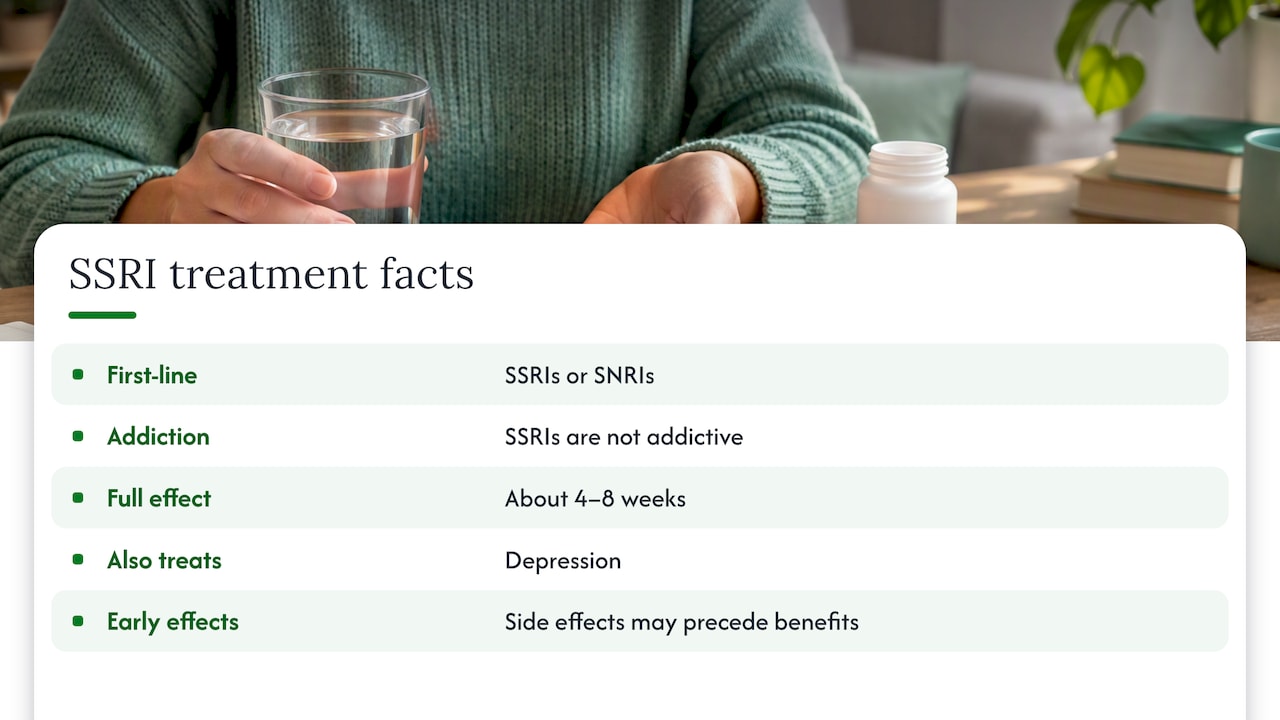
The VA guide lists SSRIs or SNRIs as first-line drug treatments for anxiety disorders. The Anxiety and Depression Association of America says SSRIs are generally considered first-line, are not addictive, and need a gradual dose build-up of about 4 to 8 weeks before the effect on anxiety is full and consistent.
That slow start surprises people. You may feel little in the first couple of weeks, and early side effects can show up before benefits do. It does not mean the medicine failed. It means the dose is still being built. Ask your prescriber what to expect week by week, and when to check in.
An SSRI also treats depression, which often travels with anxiety. That is a practical advantage if both are part of your picture.
Side effects vary by person. One worth knowing about, especially for men: FDA labeling for an SSRI notes that use in men may cause sexual side effects, such as delayed or failed ejaculation, decreased libido and erectile dysfunction. This is a common reason people stop treatment, so raise it early. Clinicians have options, including dose changes or adding or switching medicines. Our overview of bupropion for sexual side effects explains one of them.
For a closer look at how this class is prescribed through telehealth, see our guide to SSRI prescribing via telehealth.
SNRIs such as venlafaxine and duloxetine are grouped with SSRIs as first-line choices in the VA guide cited above. They are a common next step when an SSRI is not a good fit. They are not benzodiazepines, and they follow the same slow-onset pattern, so plan for weeks, not days.
MedlinePlus describes buspirone as a non-habit-forming anti-anxiety medicine and lists it with SSRIs and SNRIs as a common medicine for generalized anxiety disorder. It does not sedate in the way benzodiazepines do. Like the antidepressants, it takes a couple of weeks before you notice a difference, so it is a poor fit for in-the-moment panic and a better fit for steady, daily management.
Hydroxyzine is an antihistamine approved for anxiety. NAMI says it is not a controlled substance and lacks the same addiction risk as lorazepam, alprazolam and clonazepam. It can still cause tiredness or dizziness, so ask about driving and alcohol. MedlinePlus notes that hydroxyzine and gabapentin may act more quickly than SSRIs, SNRIs or buspirone, which is why some prescribers consider them when relief is needed sooner.

Propranolol is sometimes used for the physical side of anxiety, such as a racing heart before a presentation. It does not treat worry itself. We explain how clinicians approach it in our guides on propranolol for performance anxiety and propranolol for anxiety online. Whether it suits you depends on your blood pressure, heart rate and other conditions, so it needs a prescriber’s review.
The honest tension is this: the medicines with no addiction risk generally do not work in the first hour. The medicines that do are the ones with the strongest warnings.
A practical way to think about it:
For PTSD specifically, VA/DoD material notes that even short-term, as-needed benzodiazepine use is often unsupported by data and can cause swings in blood levels. If trauma is part of your anxiety, say so, because it changes the plan.
Bring specifics. A useful visit usually covers:
If you feel at risk of harming yourself, do not wait for an appointment. In the U.S., call or text 988, the Suicide & Crisis Lifeline, or go to the nearest emergency room.
We see the same pattern again and again: someone searches for a non-addictive anxiety medication because they fear getting hooked, then abandons treatment because the first two weeks of an SSRI felt unimpressive. The medicine was not wrong. The expectations were.
Our view is that the right question is not only “is it addictive?” but “what is the plan?” A good plan names the medicine, the likely timeline, the side effects to watch, a check-in date and a way to stop safely. That is where a virtual visit helps. You can start with a licensed provider from home, message them when something feels off, and adjust without taking a half day off work. We also think cost should be clear before you commit, which is why we wrote up what online anxiety medication costs.
We do not think any one drug is right for everyone, and we do not prescribe on demand. Every treatment decision comes from a provider’s evaluation of you.
— Bryan
If you want to talk through options with a licensed provider, our Anxiety & Depression care lets you complete a video visit from home. Your provider reviews your history, discusses whether a non-addictive option fits, and can send a prescription to your pharmacy or arrange delivery if one is appropriate. Same-day appointments and ongoing messaging with your provider are part of the experience, and we can work with insurance where it applies. Our guide on how to get antidepressants online walks through what the process looks like.

Visit availability and what is prescribed depend on your evaluation, state rules and medical history.
There is no single best one. SSRIs and SNRIs are the first-line choices in VA guidance, and buspirone is described by MedlinePlus as non-habit-forming. The best fit depends on your symptoms, other conditions and side-effect tolerance, so a clinician should choose with you.
No. The Anxiety and Depression Association of America describes SSRIs as not addictive. They can still cause discontinuation symptoms if stopped suddenly, so taper under a prescriber’s direction.
Common alternatives are SSRIs, SNRIs, buspirone and hydroxyzine, plus therapy such as CBT. MedlinePlus also mentions gabapentin as an option that may act more quickly. Benzodiazepines are usually kept for short-term use when rapid control is needed.
SSRIs typically need a gradual dose increase over about 4 to 8 weeks for full, consistent effects. Buspirone also takes a couple of weeks. Hydroxyzine may act sooner, according to MedlinePlus.
No. Stopping abruptly can cause withdrawal, including seizures in severe cases. The FDA advises a gradual taper, so ask your prescriber to plan one.