Metformin can help some people lose a modest amount of weight, but it is not a strong weight-loss drug and it is not FDA-approved for that purpose. Doctors prescribe it off-label, most often for people with prediabetes, insulin resistance or a high metabolic risk. Expect a few pounds, not dozens, and expect it to work only alongside changes in food and activity.
Below, we cover what the research shows, what dosing usually looks like, the side effects and safety limits, and how metformin compares with newer options.
Sometimes, and not much. Metformin lowers the sugar your liver makes and improves how your body responds to insulin. Weight loss is a side effect of that, not the design. WebMD’s review describes it as a drug that may help you lose a modest amount or prevent gain, with results generally smaller than with semaglutide or tirzepatide.
The numbers fit that description:
So if you ask whether metformin is good for weight loss, the honest answer is: it is a small tool that works better for some people than others. Experts quoted in a review of its mechanisms in human obesity treat it as an adjunct, not a primary weight-loss agent.
Plan on a range, not a promise.
| Timeframe | What the data suggest |
|---|---|
| First year | Average of about 5.5 pounds in long-term studies; roughly one in three people reach 5% or more (WebMD) |
| Several years | Greater, more durable loss in people who took it consistently (DPPOS safety and weight data) |
| Belly fat | Waist circumference fell more in highly adherent participants in the same study |
Can you lose 20 pounds on metformin? Some individuals do, especially when they also change what they eat and move more. But 20 pounds is well beyond the average, and you should not choose a treatment expecting to be the exception.
Adherence is the quiet variable. In the DPPOS data, people who took metformin consistently showed larger and longer-lasting weight and waist changes than those who took it rarely, with benefits seen for up to 10 to 15 years. A drug you skip does nothing.
Stanford Medicine and Harvard researchers reported in 2024 that metformin raises levels of lac-phe, an appetite-suppressing molecule that the body also makes during intense exercise. It is an early finding, but it fits what clinicians already say: metformin supports lifestyle change. It does not replace it.
Metformin for weight loss tends to make the most sense for adults who have:
It is a weaker fit if your main goal is a large, fast change in weight, or if you have kidney, liver or heart problems that make it unsafe. A clinician needs your labs and history before saying which group you fall in.
There is no FDA-approved dose for weight loss, so the right amount is a prescriber’s decision. What we can describe is the general pattern.
The standard approach is to start low and go slow. St. Jude’s patient guidance describes starting around 500 mg once daily and increasing gradually over several weeks so your body can adjust. Taking it with meals helps with stomach symptoms. One review of trials notes that a commonly studied dose is about 1,700 mg a day, but studies vary and your prescriber may land elsewhere.
Practical points to raise at your visit:
Never use someone else’s prescription or buy metformin from a source that does not require a prescriber’s evaluation.
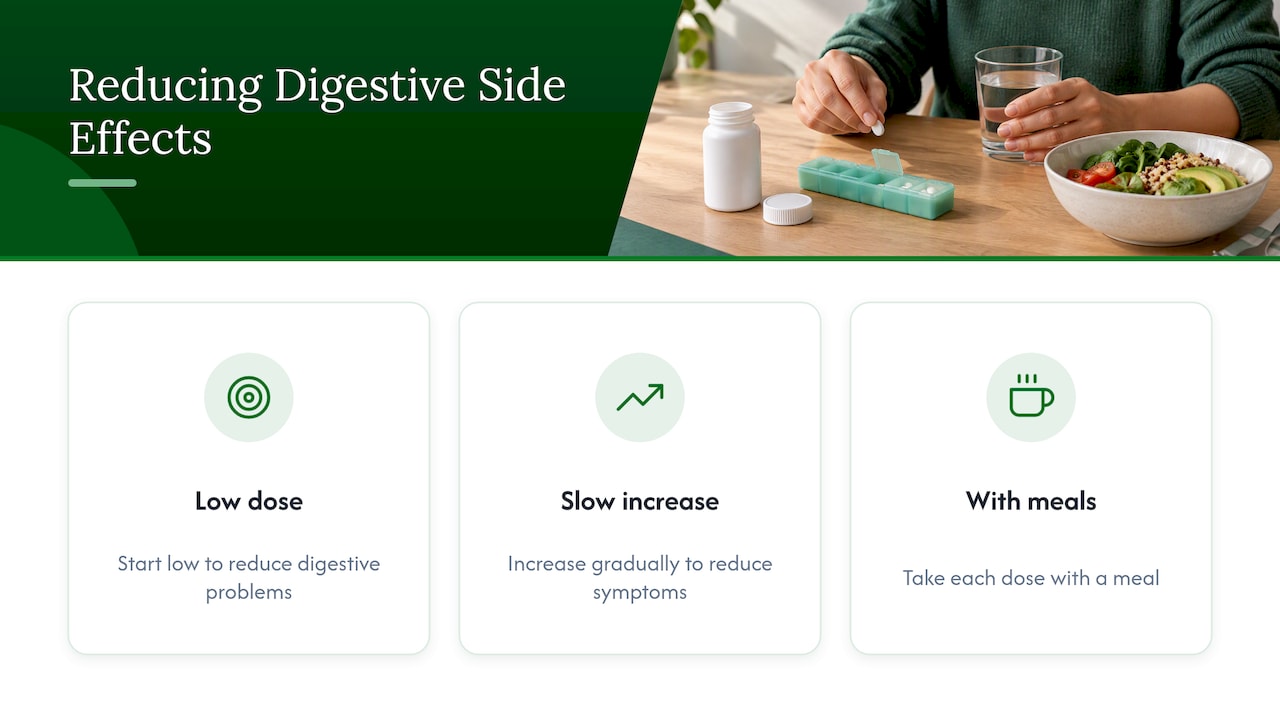
The most common problems are digestive: diarrhea, nausea and stomach pain. They are usually worst early on. Starting low, increasing slowly and taking each dose with a meal are the standard ways to reduce them. If symptoms are severe or do not settle, tell your prescriber. They may change the formulation or the pace.
Metformin can also lower vitamin B12 over time. The FDA labeling for metformin products says to monitor blood counts annually and notes that B12 deficiency can occur. Ask whether your prescriber wants B12 checked, especially if you notice numbness, tingling or unusual fatigue.
The rare but serious risk is lactic acidosis. It is why kidney function is checked first.
If you are pregnant, planning pregnancy or breastfeeding, discuss it with your clinician before starting. Do not stop a metformin prescription you were given for diabetes without talking to the prescriber who wrote it.
The comparison most readers are really asking about is metformin versus Ozempic. Metformin’s average effect is a few pounds. Semaglutide and tirzepatide are FDA-approved anti-obesity medicines (as Wegovy and Zepbound) with considerably larger effects, as WebMD notes. They also carry their own side effects, cost considerations and eligibility rules.
| Metformin | GLP-1 medicines | |
|---|---|---|
| FDA-approved for weight loss | No (off-label) | Yes, for specific products |
| Typical effect | Modest | Larger |
| Common side effects | Diarrhea, nausea, stomach pain | Nausea and other digestive effects |
| Often considered when | Prediabetes, insulin resistance, mild goals | BMI or health conditions meet criteria |
They are not always either-or. A clinician may weigh your labs, other conditions and goals. If you are curious where you stand, our overview of GLP-1 eligibility explains the usual criteria, and our guide to GLP-1 nausea remedies covers the side effect people ask about most.
Most people who search for metformin want a pill that makes weight loss easier. We understand that, and we want you to hear the less exciting version early: metformin is useful for the right person, and a poor choice as a shortcut.

The patients we hear from are usually busy. They have tried a diet or two, they are not sure whether their numbers justify medication, and they do not have time for three appointments to find out. What helps them most is a real evaluation: a provider who looks at their history, current medicines and goals, then explains the options in plain language, including the option of not taking a drug.
That is how we think about weight care at AM Rx. The medicine matters, but so do follow-up, side-effect support and honest expectations. A few pounds from metformin can be worth having if you have prediabetes. It is not worth taking if it delays a better-fitting treatment.
— Bryan
If you want a clinician to look at your situation, our online weight loss visit lets you meet a provider by video from home, discuss which medication options may fit your history, and handle prescriptions and delivery in one place. We also work with insurance where applicable. Whether any particular medicine is right for you is decided by the provider after reviewing your health information.
If you also want help with sleep, mood or a primary care checkup alongside weight, primary care is on the same platform.
Yes, some can. Trials in adults with overweight or obesity and without diabetes show a small average reduction in BMI, with wide differences between individuals. It is considered off-label use, so it needs a prescriber’s review.
For weight loss alone, semaglutide generally produces larger results than metformin. But better depends on your health history, eligibility, cost and side-effect tolerance. A clinician can compare them for you.
In the Diabetes Prevention Program follow-up, people who took metformin consistently saw greater reductions in waist circumference than people who took it inconsistently. That is not the same as targeted fat loss, and the effect is modest.
Doses are increased over several weeks, so any weight change is gradual. Most studies measure results at around a year. If you see no change after a few months at your target dose, ask your prescriber whether it is worth continuing.