Telehealth is defined as the delivery of healthcare services through digital communication technology, and it is now the most effective tool for removing the access barriers that keep millions of people from getting mental health care. Understanding how telehealth reduces mental health barriers requires looking at three distinct problem areas: logistics, cost, and stigma. Research shows that telehealth visits average $96 compared to $509 for in-person care. That price gap alone changes who can realistically afford to start therapy. Getamrx builds its mental health services around exactly this model, connecting patients to licensed providers without the friction of traditional clinic visits.
Telehealth removes the logistical wall that stands between most people and their first therapy appointment. Transportation, parking, scheduling conflicts, and long wait times are not minor inconveniences. For someone managing depression or anxiety, each one of those obstacles is a reason to cancel and never reschedule.
The impact is especially clear in rural and underserved areas. Patients in counties without a practicing psychiatrist can now access telepsychiatry services through a smartphone or laptop. Broadband access remains uneven, but the geographic reach of telehealth still far exceeds what any brick-and-mortar clinic can offer.

Appointment continuity is another major gain. Telehealth reduces no-show rates and improves session consistency, which is critical for mental health treatment. Missing appointments breaks therapeutic momentum in ways that are hard to recover from.
Telehealth removes these specific access barriers:
Pro Tip: Set up a dedicated, private space at home before your first telehealth session. A quiet room with a closed door, good lighting, and a stable Wi-Fi connection makes the session feel more like real therapy and less like a video call.
Cost is the most cited reason people delay or abandon mental health treatment. Telehealth directly cuts that cost at multiple points in the care cycle. A telemedicine visit costs $96 on average, roughly one-fifth the cost of an in-person outpatient visit at $509. That difference compounds quickly across a treatment course of weekly sessions.
The direct visit fee is only part of the picture. Indirect burdens like travel time, parking fees, lost work productivity, and childcare costs add real dollars to every in-person appointment. Removing those hidden costs makes consistent care financially sustainable for working adults and parents.
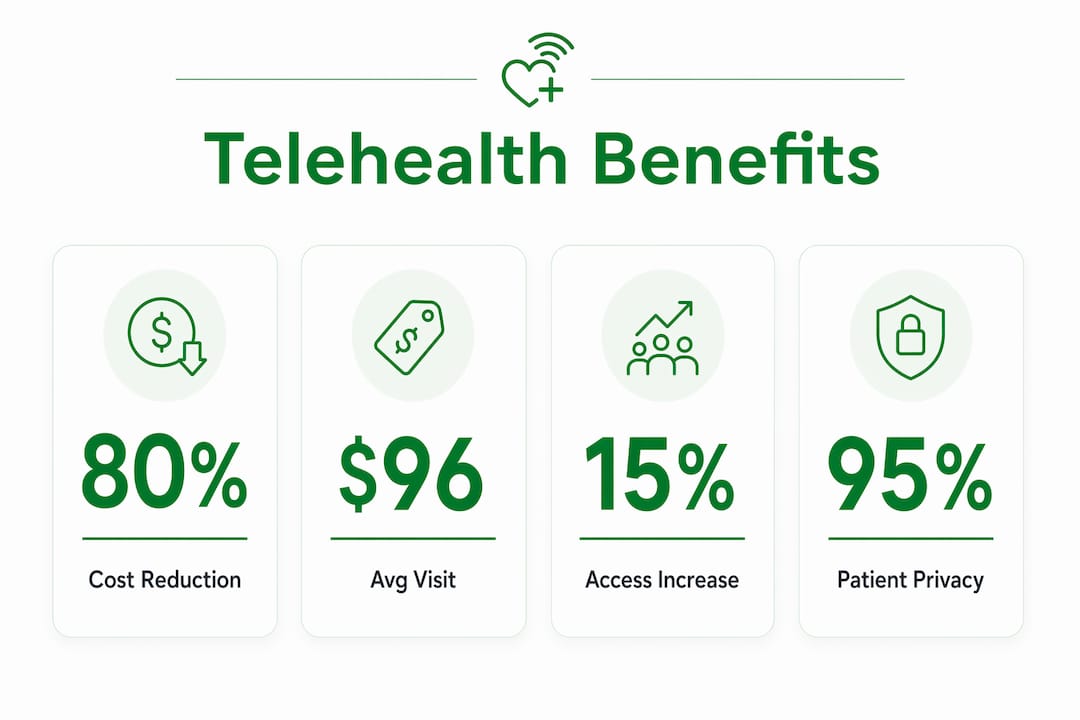
Policy also plays a measurable role. States with favorable telehealth reimbursement policies saw a 15% greater increase in mental health utilization and 7% better patient outcomes. That means reimbursement policy is not just an administrative detail. It directly determines whether patients get care at all.
| Cost Factor | In-Person Care | Telehealth |
|---|---|---|
| Average visit charge | $509 | $96 |
| Travel and parking | $15–$40 per visit | $0 |
| Lost work time | 2–4 hours per visit | Minimal |
| Childcare costs | Often required | Rarely required |
| Follow-up visit frequency | Higher | Lower |
Lower episode charges also encourage earlier care initiation. Telemedicine’s lower costs help prevent the delays that worsen mental health outcomes over time. Starting care earlier, even at a lower-cost entry point, produces better long-term results than waiting until a crisis forces action.
Pro Tip: Before your first telehealth appointment, call your insurance provider and ask three specific questions: Does my plan cover telehealth mental health visits? Is this provider in-network? What is my copay or deductible for virtual sessions? Insurance coverage for telehealth varies widely, and confirming these details upfront prevents surprise bills.
Stigma is the barrier that cost and logistics cannot fully explain. Many people who can afford therapy and live near a clinic still do not go. The fear of being seen walking into a mental health office, or of a coworker noticing a calendar block labeled “therapy,” keeps real people from getting real help.
Telehealth removes that exposure entirely. Sessions happen at home, on a personal device, with no waiting room and no visible clinic visit. That privacy lowers the psychological cost of seeking help, particularly for men, for people in tight-knit communities, and for anyone whose cultural background treats mental health care as a private or shameful matter.
Telehealth is recognized as an evidence-based modality that is often superior for patients with social anxiety. The home environment removes waiting room triggers and reduces the exposure-related stress that can make in-person therapy feel threatening before it even begins. That is not a workaround. It is a clinically meaningful advantage.
Over 80% of telehealth patients report satisfaction with virtual sessions and often prefer them for reasons of convenience and privacy. High satisfaction rates matter because they predict continued engagement, and consistent engagement is what produces outcomes in mental health treatment.
Telehealth mitigates these stigma-related barriers:
Telehealth is not the right fit for every patient or every condition. Understanding where it falls short is as important as understanding where it excels.
High-acuity crisis situations require in-person care. Telehealth does not replace emergency psychiatric intervention, physical exams, or inpatient stabilization. Patients in active crisis need traditional settings with trained staff on-site.
Therapeutic alliance takes longer to build over video. Patients often need an adjustment period before rapport over video feels as natural as in-person connection. This is normal and manageable, but worth knowing before the first session.
Licensing and insurance rules vary by state. A provider licensed in one state cannot always treat a patient in another. Insurance coverage rules add another layer of variability that patients must verify before starting care.
The digital divide limits access for some populations. Older adults, low-income households, and rural communities with poor broadband access face real technology barriers. Telehealth expands access broadly but does not eliminate the gap for everyone.
Not all therapy modalities translate well to video. Some trauma-focused treatments and group therapy formats work better in person. A good provider will tell you when in-person care is the stronger clinical choice.
The most effective approach combines telehealth and in-person care based on clinical need. Routine maintenance sessions, medication management, and talk therapy work well virtually. Crisis intervention, initial assessments for complex conditions, and certain specialized treatments work better face to face. Treating these as complementary rather than competing options produces the best outcomes.
Telehealth reduces mental health barriers by cutting visit costs by up to 80%, removing logistical obstacles, and giving patients the privacy they need to seek care without stigma.
| Point | Details |
|---|---|
| Cost reduction is significant | Telehealth visits average $96 versus $509 for in-person care, making consistent treatment affordable. |
| Logistics barriers disappear | No travel, parking, or childcare requirements means fewer missed appointments and better continuity. |
| Privacy reduces stigma | Home-based sessions remove public visibility, making it easier for stigmatized groups to seek help. |
| Policy shapes access | States with strong reimbursement policies show 15% higher mental health utilization rates. |
| Limitations are real | High-acuity crises and some specialized therapies still require in-person care. |
The clinical evidence for telehealth in mental health care is now strong enough that calling it a “workaround” misses the point entirely. It is a validated treatment modality with specific advantages that in-person care simply cannot replicate for certain patients.
What I find most underappreciated is the role of indirect barriers. The conversation about mental health access tends to focus on cost, but the research is clear that removing travel time and childcare friction often matters more than the visit fee itself. A patient who can attend a 30-minute session during a lunch break, from a parked car if necessary, is a patient who actually stays in treatment. That consistency is where outcomes are built.
The stigma piece is also more nuanced than most people acknowledge. For men in particular, and for patients from communities where mental health care carries social risk, the privacy of a home session is not just convenient. It is the difference between seeking care and not seeking care at all. That is a clinically significant distinction.
My honest advice: do not wait for a crisis to try telehealth. The lower cost and lower friction make it the right entry point for anyone who has been putting off a first appointment. The mental health services at Getamrx are built around exactly this principle. Start where you are, with what you have, and let the evidence do the rest.
— Bryan
Getamrx connects patients to licensed mental health providers through a straightforward virtual platform, with same-day appointments available and transparent insurance handling built into the process. There is no waiting room, no commute, and no ambiguity about what your visit will cost.

Patients who are new to virtual care can review the telehealth consent process directly on the Getamrx site before booking. The platform covers mental health alongside primary care, weight management, and other services, so your care does not have to live in separate silos. If you have been putting off a first appointment because of cost, scheduling, or privacy concerns, Getamrx is built to remove exactly those obstacles. Visit the mental health page to see current provider availability and get started.
Telehealth visits average $96 compared to $509 for in-person outpatient care, making virtual sessions roughly five times less expensive per visit.
Telehealth is effective for most outpatient mental health conditions, including depression, anxiety, and PTSD. High-acuity crisis situations and conditions requiring physical examination still require in-person care.
Home-based sessions remove public visibility entirely, eliminating the fear of being seen at a clinic. Research shows over 80% of telehealth patients prefer virtual sessions partly for this reason.
Coverage varies by plan and state. Patients should confirm copay amounts, deductible rules, and in-network provider status with their insurer before the first session to avoid unexpected charges.
Research shows telehealth produces comparable outcomes to in-person therapy for most conditions. A 94.7% rate of patients using telepsychiatry required no follow-up crisis intervention, demonstrating strong clinical stability in remote behavioral health care.