Yes, telehealth can get you emergency contraception quickly. Over-the-counter levonorgestrel (Plan B) requires no visit at all, while a virtual consult can put prescription ulipristal (ella) or an IUD referral in motion within minutes. The catch is timing: every hour after unprotected sex narrows your options, so act now and let the telehealth visit run in parallel with a pharmacy trip if you can make one.
TL;DR:
- Telehealth providers can prescribe ulipristal (ella), which remains effective up to 120 hours after unprotected sex, offering a longer window than levonorgestrel.
- Rapid intake and clinical review can deliver prescriptions within an hour, but timely pharmacy pickup or courier delivery are crucial for effectiveness.
- Body weight influences the choice of EC method, with higher-weight individuals often advised to use ella or consider an IUD for maximum effectiveness.
- The cost of emergency contraception varies by method and insurance coverage, with OTC levonorgestrel typically costing $40 to $50, and ella generally being more expensive.
- Telehealth offers a quick, private route to emergency contraception, but concurrent pharmacy visits or in-person procedures like IUD placement are needed for the most effective options.
A telehealth emergency contraception visit moves faster than most people expect. You fill out an intake form covering the timing of unprotected sex, current medications, allergies, and weight. Weight matters because it factors into which EC pill a provider recommends, a detail most people never think to mention on their own. A licensed clinician reviews your answers, sometimes with a brief video or messaging exchange, then either sends a prescription to a nearby pharmacy or arranges delivery.
The workflow generally looks like this:
Some platforms run 24/7 specifically because EC is time-sensitive; UCSF’s Beyond the Pill protocol treats rapid turnaround as a core requirement, not a bonus feature, for exactly this reason. On privacy, reputable platforms encrypt intake data, limit staff access to what’s clinically necessary, and don’t require you to explain your situation to anyone beyond the provider reviewing your case.
Telehealth can point you toward three distinct options, and the right one depends on how much time has passed and your body weight.
Levonorgestrel (Plan B and generics) sits on pharmacy shelves without a prescription, and the FDA’s approval of Opill as the first nonprescription daily oral contraceptive reflects a broader regulatory shift toward OTC access for contraceptive care in the U.S. Levonorgestrel works best within 72 hours, and effectiveness drops the longer you wait.
Ulipristal acetate (ella) requires a prescription, which is where telehealth earns its keep. According to Mayo Clinic’s drug information, ella stays effective up to 120 hours after unprotected sex, a full two days longer than levonorgestrel. Clinicians often steer higher-weight patients toward ella because some progestin-only pills lose potency at higher body weights, a nuance most OTC shoppers never learn from a pharmacy shelf label.
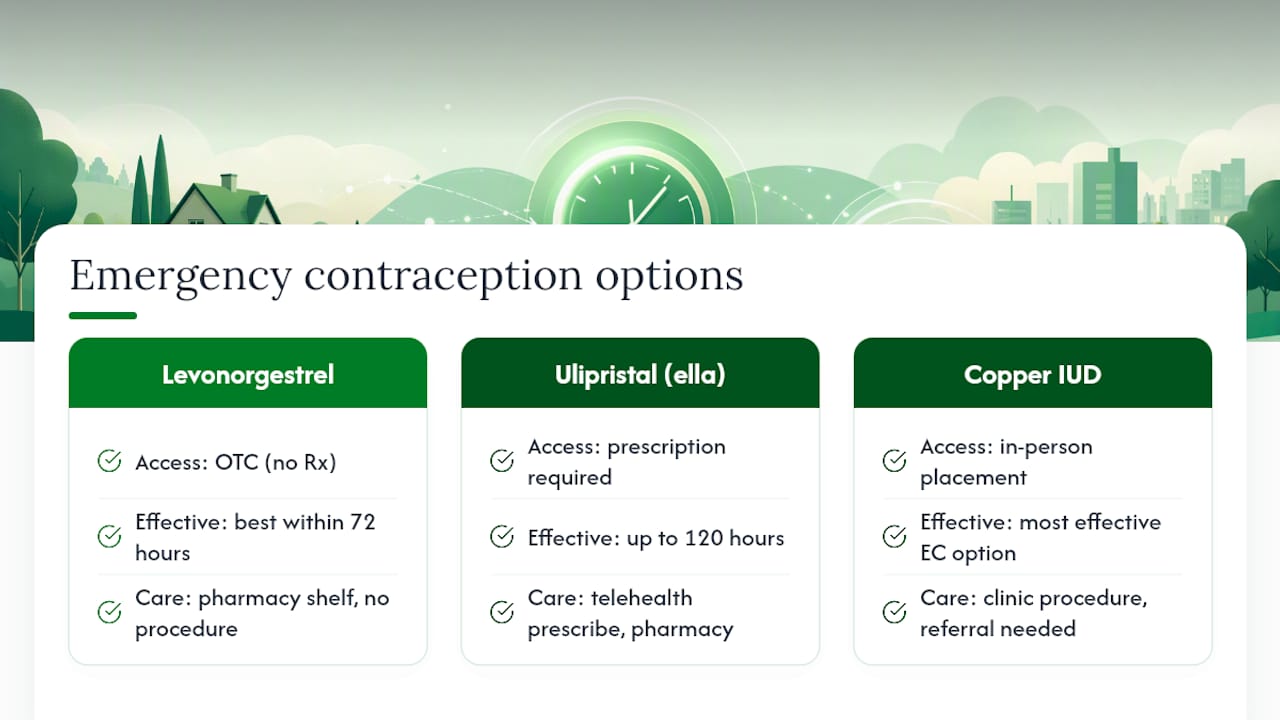
Copper IUD placement is the most effective EC option available, but it requires an in-person procedure. Telehealth’s job here is triage: a same-day virtual visit can confirm you’re a candidate and fast-track a referral so you’re not calling clinics cold.
Pro Tip: If you’re near the upper end of the effectiveness window for levonorgestrel, don’t guess. A five-minute telehealth consult can tell you whether ella gives you a meaningfully better shot.
Because timing is the single biggest barrier to effective emergency contraception, a provider offering round-the-clock access and direct pharmacy coordination meaningfully raises your odds of getting the right pill inside its effective window.
OTC levonorgestrel typically runs $40 to $50 at most retail pharmacies, though generic versions can cost less. Ulipristal (ella) tends to run higher out-of-pocket, and insurance coverage varies by plan, so it’s worth asking your telehealth provider whether they bill insurance directly or require self-pay upfront.
A few ways to keep costs down:
Some states allow pharmacists to prescribe contraception directly, another rapid-access route worth checking, though availability varies by state and by which pharmacies participate.
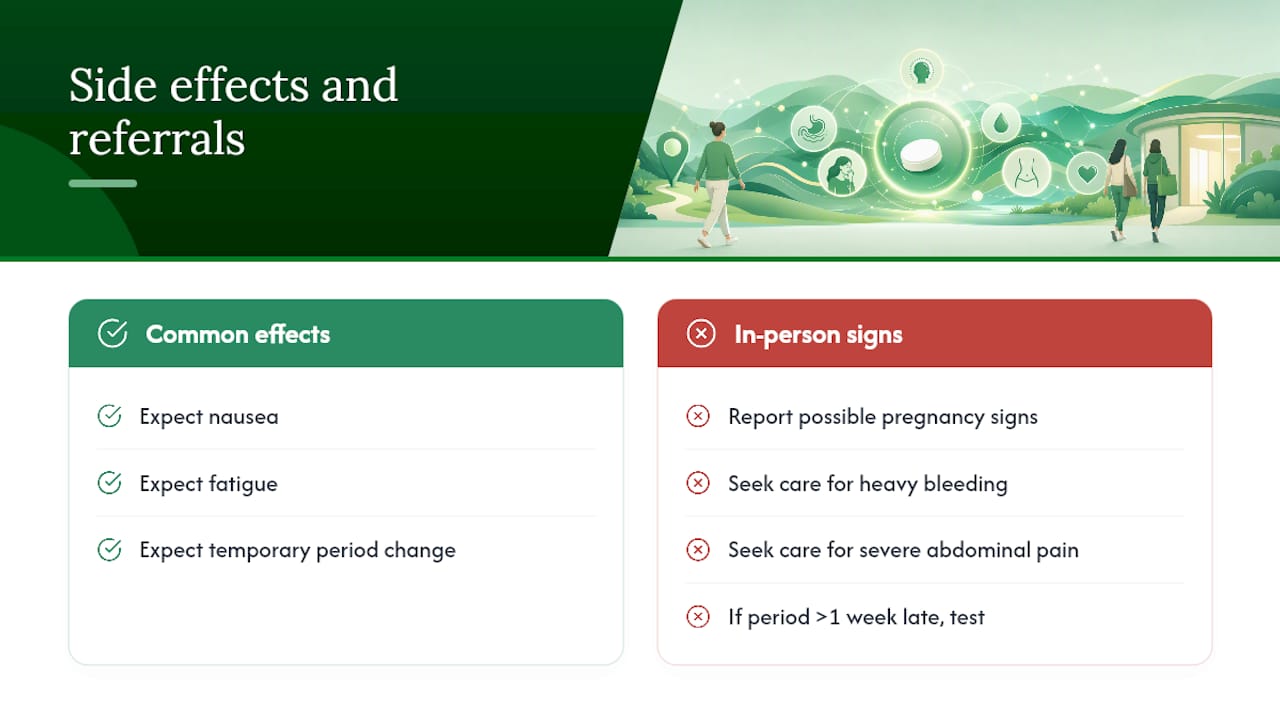
Levonorgestrel and ulipristal both carry a solid safety track record. DailyMed’s official labeling lists nausea, fatigue, and temporary changes to your next period as the most common effects, and serious complications are rare.
Telehealth providers will redirect you to in-person care if you report signs of possible existing pregnancy, heavy or prolonged bleeding, or severe abdominal pain. If your period is more than a week late after taking EC, take a pregnancy test and follow up with a provider, virtual or in-person, to rule out pregnancy and discuss ongoing birth control.
AM Rx builds its telehealth visits around the same principle UCSF’s contraceptive care protocol emphasizes: speed shouldn’t come at the expense of clinical rigor. Same-day video consults connect you with a licensed provider who reviews timing, weight, and health history before recommending levonorgestrel, ella, or an IUD referral. Prescriptions route straight to your pharmacy, and AM Rx handles insurance verification so you’re not stuck guessing about coverage mid-crisis.
When a case calls for something beyond what telehealth can safely manage, such as a same-day IUD placement, providers refer out quickly rather than delaying care. Every visit runs through the same consent and privacy framework AM Rx uses across its other services, so your information stays between you and your provider.
AM Rx skips the waiting-room math entirely. Book a video consult, get assessed by a licensed provider on the timing and method that fits your situation, and walk away with either an electronic prescription sent to your pharmacy or delivery arranged, often the same day.

There’s no separate portal to hunt through for EC specifically. The same platform that handles routine birth control also covers emergency contraception, prescription refills, and insurance handling in one place, which matters when you’re trying to move fast and don’t want three different logins standing between you and a pharmacy pickup. If cost or coverage is on your mind, AM Rx providers can walk you through what your insurance covers before you commit to a visit.
Ready to get started? Review the telehealth consent process and book your visit now.
This article is general information, not a substitute for advice from a qualified doctor. Consult a qualified healthcare professional about your own circumstances before acting on anything here.
Yes. Telehealth providers, including AM Rx, can evaluate you virtually and send a prescription for ongoing birth control to your pharmacy, often during the same visit where emergency contraception is discussed.
Yes, levonorgestrel (Plan B and its generics) remains legal and available over the counter nationwide, a status the FDA’s approval of Opill reinforced by expanding nonprescription contraceptive access further.
Yes. Levonorgestrel-based emergency contraception has no age or gender restriction at the register, so anyone can purchase it on your behalf without ID or a prescription.
Yes, both routine birth control and emergency contraception like ella can be prescribed through a telehealth visit, with the prescription sent electronically to a pharmacy for same-day pickup in most cases.
Most straightforward cases move from intake to a sent prescription within an hour, though actual pickup or delivery time depends on your local pharmacy’s hours and whether courier delivery is available in your area.